Your Complete Guide to Pursuing a Bachelor’s in Mechanical Engineering in Germany

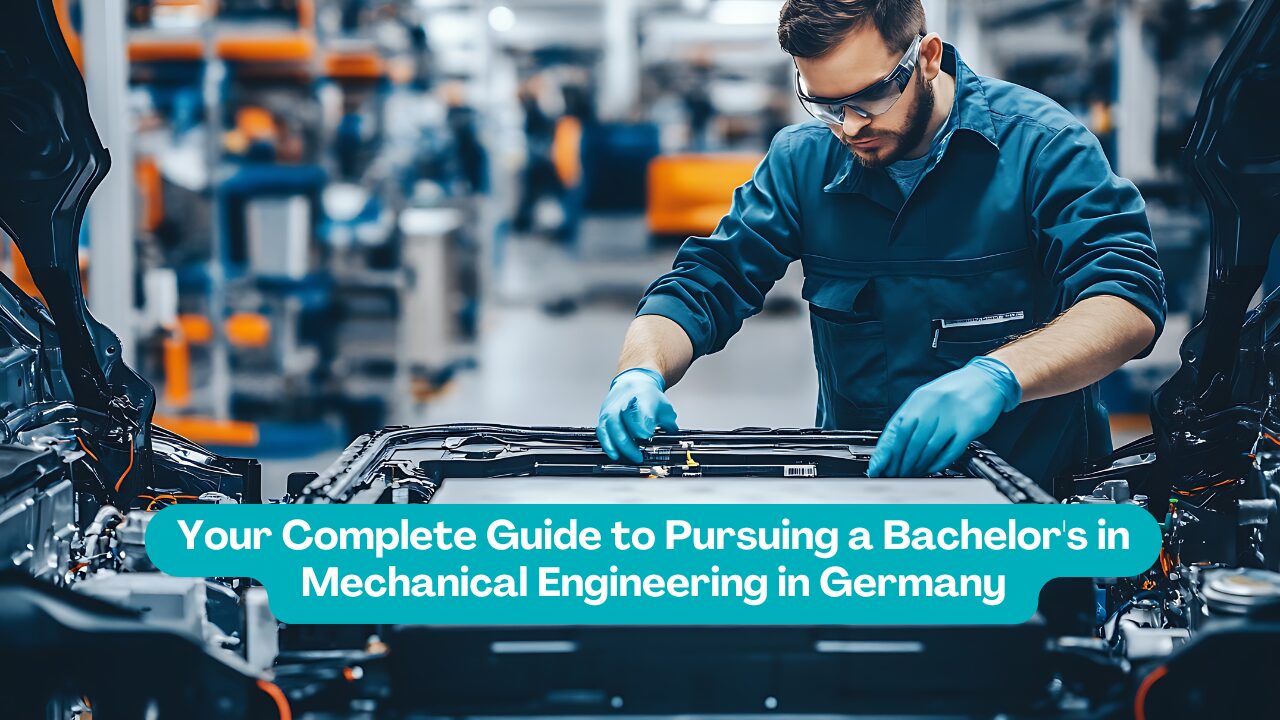
Table of Contents
- Why Study Mechanical Engineering in Germany
- Understanding the German Bachelor’s Degree Structure
- Top German Universities Offering Mechanical Engineering Bachelor’s Programs
- Admission Requirements for International Students
- Language Requirements: German vs English-Taught Programs
- Tuition Fees and Semester Contributions in Germany
- Cost of Living and Budgeting for Students
- Core Curriculum and Specializations Available
- Studienkolleg: Preparatory Course for International Students
- Internship Requirements and Industry Connections
- Career Prospects and Job Market in Germany
Germany hosts over 425,000 international students, with engineering programs attracting the largest share due to their exceptional quality and affordability. If you’re considering a Bachelors in Mechanical Engineering in Germany, you’re looking at one of the most strategic educational investments available today. This isn’t just about earning a degree—it’s about positioning yourself at the intersection of innovation, industry, and opportunity. This guide will walk you through every critical step, from understanding admission requirements to mapping out your career trajectory, helping you make informed decisions that align with your ambitions.
“Germany is a top destination for engineering studies, combining academic excellence with practical training and strong industry ties.” – DAAD
Table of Contents
- Why Study Mechanical Engineering in Germany
- Understanding the German Bachelor’s Degree Structure
- Top German Universities Offering Mechanical Engineering Bachelor’s Programs
- Admission Requirements for International Students
- Language Requirements: German vs English-Taught Programs
- Tuition Fees and Semester Contributions in Germany
- Cost of Living and Budgeting for Students
- Core Curriculum and Specializations Available
- Studienkolleg: Preparatory Course for International Students
- Internship Requirements and Industry Connections
- Career Prospects and Job Market in Germany
- Frequently Asked Questions About Studying Mechanical Engineering in Germany
Why Study Mechanical Engineering in Germany
Germany’s reputation in engineering circles isn’t accidental. The country has built its economic backbone on precision manufacturing, automotive innovation, and cutting-edge research. When you pursue a Bachelors in Mechanical Engineering in Germany, you’re tapping into a legacy that spans from the industrial revolution to today’s renewable energy revolution.
Here’s what sets Germany apart: You’ll earn globally recognized degrees that open doors at employers and universities worldwide. You’ll work in state-of-the-art research facilities alongside professors who collaborate directly with industry leaders. Perhaps most compelling? You’ll pay little to no tuition at public universities, maximizing your return on investment in ways few other countries can match.
The practical focus of German engineering education means you won’t just study theories in isolation. Universities here maintain strong partnerships with companies like Siemens, BMW, and Bosch. This translates to meaningful internships, collaborative research projects, and clear pathways to employment. For those thinking ahead to graduate studies, these same universities offer seamless progression to advanced degrees and research opportunities.
Germany’s robust manufacturing sector—spanning automotive, robotics, aerospace, and renewable energy—creates consistent demand for qualified mechanical engineers. This isn’t speculation; it’s backed by employment data and industry forecasts that show sustained growth in engineering roles.
Understanding the German Bachelor’s Degree Structure
A Bachelors in Mechanical Engineering in Germany typically spans three to three-and-a-half years, structured across six to seven semesters. You’ll graduate with either a Bachelor of Science or Bachelor of Engineering degree, both of which carry significant weight in academic and professional contexts.
The modular curriculum balances theory with application. Core courses establish your foundational knowledge in mathematics, physics, and engineering principles. Electives let you explore specialized areas that align with your interests. Laboratory work and project-based learning ensure you can translate concepts into practical solutions.
One distinctive feature is the mandatory internship component, known as Praxissemester. This isn’t a brief shadowing experience—it’s an extended placement where you work on real projects within established companies. The experience you gain here often proves invaluable when you enter the job market.
The European Credit Transfer System underpins this structure, meaning your credits transfer smoothly if you decide to pursue further studies in Germany or elsewhere in the EU. This flexibility is particularly valuable for students planning graduate education, whether in Germany or internationally.
Top German Universities Offering Mechanical Engineering Bachelor’s Programs
Several German institutions consistently rank among the world’s best for mechanical engineering. The Technical University of Munich stands out for its research output and industry connections. RWTH Aachen University has built a reputation for automotive engineering excellence. Karlsruhe Institute of Technology leads in energy and sustainability research. TU Berlin and the University of Stuttgart round out the top tier with their own specialized strengths.
These aren’t just prestigious names on paper. Each institution offers distinct advantages: specialized research centers, particular industry partnerships, location benefits, and unique program structures. The DAAD database and Study in Germany portal provide comprehensive listings where you can compare programs, locations, and admission criteria.
Choosing the right university involves more than rankings. Consider factors like program language, city size, cost of living, and specific research areas. If you’re planning to continue to graduate studies, look at the strength of master’s programs in your areas of interest.
Ready to identify the best-fit universities for your profile and goals? Start your personalized admission strategy with a free counseling session.
Admission Requirements for International Students
Securing admission requires meeting several specific criteria. Your academic qualifications need to demonstrate twelve years of schooling through recognized systems like A-Levels, International Baccalaureate, or national curricula such as Indian CBSE or HSC.
The concept of Hochschulzugangsberechtigung—university entrance qualification—is central to German admissions. Not all international certificates automatically qualify you for direct entry. The uni-assist portal helps you determine whether your credentials meet requirements or if you’ll need additional preparation.
Language proficiency requirements vary by program. German-taught programs typically require TestDaF or DSH certification. English-taught options accept IELTS or TOEFL scores. Beyond test scores, you’ll need to compile transcripts, a curriculum vitae, a motivation letter, and academic references.
Most universities process applications through online portals or the centralized uni-assist system. Application deadlines usually fall several months before the semester starts—typically mid-July for winter semester and mid-January for summer semester. Starting your application process early gives you time to gather documents, take language tests, and address any gaps in your qualifications.
For strategic guidance through this complex process, including document preparation and university selection, explore personalized support options that can significantly strengthen your application.
Language Requirements: German vs English-Taught Programs
The majority of bachelor’s programs in mechanical engineering are delivered in German. This makes sense given the language’s dominance in German industry and daily life. German-taught programs require TestDaF at level 4 or higher, or DSH-2 certification. The advantage? You’ll have access to far more universities and specialization options.
English-taught bachelor’s programs exist but remain less common at the undergraduate level compared to master’s programs. These typically require IELTS scores between 6.0 and 6.5, or TOEFL scores around 80 to 90. While this option appeals to students not yet proficient in German, it comes with trade-offs in program availability.
Here’s a practical consideration many students overlook: even if you study in English, learning German significantly improves your prospects. Internship opportunities expand when you can communicate with colleagues and supervisors in their native language. Part-time work options increase. Networking becomes more natural. Job prospects after graduation improve dramatically.
If you’re serious about building a career in Germany or pursuing graduate studies there, investing time in German language acquisition pays substantial dividends. Many universities offer language courses, and cities across Germany provide structured language programs for international students.
Tuition Fees and Semester Contributions in Germany
Germany’s tuition model represents one of the most compelling reasons to study there. Most public universities charge no tuition fees for undergraduate programs, regardless of whether you’re from an EU member state or elsewhere. This policy extends to international students pursuing a Bachelors in Mechanical Engineering in Germany.
You will pay semester contributions, which typically range from €150 to €400. These fees cover administrative costs, student services, and often include public transportation passes for the local area—a valuable benefit considering German public transport quality and coverage.
Private universities operate differently, with annual tuition ranging from €5,000 to €15,000. While this represents a significant cost increase, it’s still considerably lower than comparable programs in the United States, United Kingdom, or Australia.
The affordability factor transforms the return on investment calculation. With minimal direct educational costs, your primary expenses focus on living costs and personal needs. This financial structure makes quality education accessible to talented students regardless of their economic background, embodying Germany’s commitment to education as a public good.
Cost of Living and Budgeting for Students
While tuition costs remain low, you’ll need to budget carefully for living expenses. Accommodation represents your largest expense, typically ranging from €250 to €450 monthly for shared apartments or student dormitories. Location matters significantly—cities like Munich and Frankfurt cost more than smaller university towns.
Food expenses average €150 to €250 monthly, depending on your eating habits and whether you cook regularly. Health insurance is mandatory for all students, costing around €110 monthly. Additional costs for transportation, books, and leisure activities add another €100 to €150.
Total monthly expenses typically fall between €850 and €1,100. This estimate assumes prudent spending habits and doesn’t include major one-time costs like deposits or initial setup expenses.
International students can work up to 120 full days or 240 half days annually. Part-time work helps cover living costs while providing valuable professional experience. Many students find positions as research assistants, tutors, or in service industries. Starting your financial planning early, possibly before arriving in Germany, ensures you can focus on your studies without constant financial stress.
Core Curriculum and Specializations Available
The curriculum for a Bachelors in Mechanical Engineering in Germany builds systematically from foundational concepts to advanced applications. Core modules cover mathematics, physics, materials science, mechanics, thermodynamics, computer-aided design, and control systems. These subjects establish the analytical and technical skills you’ll apply throughout your career.
As you progress, elective courses let you specialize according to your interests and career goals. Popular specialization areas include automotive engineering, robotics, aerospace, renewable energy technologies, and production technology. Each specialization connects to specific industry sectors where Germany maintains global leadership.
Practical laboratories and project work form integral components of the curriculum. You’ll work in teams on industry-linked assignments, learning to translate theoretical knowledge into working solutions. This hands-on approach prepares you for the collaborative, problem-solving nature of engineering work.
The flexible structure allows you to tailor your studies while maintaining a strong foundation. Whether you’re drawn to sustainable energy systems or advanced manufacturing processes, you can shape your education to match your ambitions. This same foundation supports progression to specialized graduate studies, should you choose that path.
Studienkolleg: Preparatory Course for International Students
If your school-leaving certificate isn’t recognized as equivalent to the German Abitur, you’ll need to complete Studienkolleg before beginning your bachelor’s program. This preparatory year isn’t a setback—it’s a structured pathway designed to ensure your success in German higher education.
Studienkolleg lasts one year, divided into two semesters. The curriculum focuses on intensive German language instruction alongside mathematics, physics, and technical subjects relevant to engineering. You’ll study in a structured environment designed specifically for international students transitioning to the German educational system.
The program concludes with the Feststellungsprüfung, an assessment examination that determines your eligibility for university admission. Passing this exam demonstrates you’ve achieved the necessary academic and language competencies for success in German bachelor’s programs.
Many students find that Studienkolleg significantly improves both their academic readiness and cultural adaptation. The German language skills you develop prove invaluable not just for coursework, but for daily life, internships, and eventual employment. Your classmates often become your first social network in Germany, providing support and friendship as you navigate your new environment.
Internship Requirements and Industry Connections
German engineering programs mandate internships as integral components of your education, not optional add-ons. These Praxissemester or industrial placements typically last eight to twelve weeks and can sometimes be split across semesters to accommodate different company cycles.
The quality of these internships reflects Germany’s strong university-industry relationships. You might find yourself working at BMW on vehicle dynamics analysis, at Siemens on automation systems, at Bosch on sensor technology, or at Volkswagen on electric powertrain development. These aren’t shadowing experiences—you’ll contribute to real projects under professional mentorship.
The benefits extend far beyond your resume. You’ll apply classroom learning to practical problems, develop professional skills, build industry contacts, and gain insights into potential career paths. Many students receive job offers from their internship companies, either immediately after graduation or following further studies.
Universities maintain dedicated career services that help match students with internship opportunities. These offices understand industry needs and can guide you toward placements aligned with your interests and career goals. The connections you make during internships often prove as valuable as the technical experience itself.
Career Prospects and Job Market in Germany
Graduates with a Bachelors in Mechanical Engineering in Germany enter a robust job market with sustained demand for engineering talent. Germany’s skills shortage in STEM fields creates favorable conditions for qualified graduates, particularly those with language skills and cultural understanding developed through studying in-country.
Starting salaries for mechanical engineering graduates typically range from €42,000 to €50,000 annually, with significant growth potential as you gain experience. These figures represent purchasing power that goes further in Germany compared to similarly salaried positions in higher-cost countries.
After graduation, you’re eligible for an eighteen-month job-seeker visa, providing substantial time to secure employment. This policy reflects Germany’s recognition that attracting and retaining international talent benefits the economy. The visa converts to a work permit once you secure employment, potentially leading to permanent residence.
Career paths span automotive, aerospace, energy, advanced manufacturing, and engineering consulting. Germany’s position as Europe’s industrial powerhouse means opportunities exist not just with global corporations but also with innovative small and medium-sized enterprises that drive much of the country’s economic success.
For those considering graduate studies, a bachelor’s degree from a German university provides excellent positioning for competitive master’s programs, whether in Germany or internationally.
Frequently Asked Questions
Can I study mechanical engineering in Germany in English?
Yes, though options are more limited at the bachelor’s level compared to master’s programs. Several universities offer English-taught programs, but the majority of bachelor’s degrees are delivered in German. Even if you study in English, learning German significantly improves your internship opportunities, part-time work options, and job prospects after graduation.
What are the entry requirements for Indian students?
Indian students need twelve years of schooling through CBSE, ISC, HSC, or equivalent boards. Depending on your specific qualifications, you may need to complete Studienkolleg before starting your bachelor’s program. Language proficiency requirements apply based on whether you’re applying to German or English-taught programs.
Are German degrees recognized worldwide?
Absolutely. German engineering degrees carry strong international recognition among employers and academic institutions. A bachelor’s degree from a German university facilitates career opportunities globally and provides strong credentials for graduate programs in Germany or other countries.
How much does it cost to study and live in Germany?
Tuition at public universities is free or extremely low, with semester contributions of €150 to €400. Living costs average €850 to €1,100 monthly, covering accommodation, food, health insurance, and personal expenses. This represents exceptional value compared to other popular study destinations.
Do I need to know German to study in Germany?
For most bachelor’s programs in mechanical engineering, yes. While some English-taught options exist, German proficiency opens more opportunities for universities, specializations, internships, and employment. Even if you start in an English-taught program, developing German skills proves highly beneficial.
What is the job market like for mechanical engineers in Germany?
Very strong. Germany’s engineering sector maintains consistent demand for qualified graduates, with competitive starting salaries and clear career progression paths. The country’s skills shortage in technical fields, combined with supportive immigration policies, creates favorable conditions for international graduates.
Can I work while studying?
Yes. International students can work up to 120 full days or 240 half days annually. This allows you to earn money for living expenses while gaining professional experience. Many students find relevant part-time work that complements their studies.
How do I apply for graduate studies in Germany after my bachelor’s?
You can apply directly through university websites or via uni-assist. Strong academic performance, language proficiency, and relevant experience strengthen your application. For personalized guidance through the graduate admission process, specialized support services can help you navigate requirements and maximize your chances of acceptance.
Conclusion
Pursuing a Bachelors in Mechanical Engineering in Germany represents far more than an academic choice—it’s a strategic investment in your professional future. You’ll receive world-class education from institutions that have shaped engineering excellence for generations. You’ll gain practical experience through mandatory internships with industry leaders. You’ll do all this while paying minimal tuition, maximizing your return on investment in ways few other countries can match. Germany’s commitment to education as a public good, combined with its economic strength in engineering sectors, creates an environment where talented students can thrive regardless of their financial background. The pathways that open after graduation—whether immediate employment, graduate studies, or entrepreneurial ventures—reflect the comprehensive preparation German universities provide. Success in this journey requires careful planning, clear understanding of requirements, and strategic decision-making at each step.
Starting early, gathering accurate information, and seeking expert guidance when needed can make the difference between a smooth application process and unnecessary complications. Your journey toward engineering excellence in Germany begins with informed action today. Unlock your admission strategy with a free Galvanize counseling session now.