
Bachelor’s in Psychology in Germany: Complete Guide for International Students

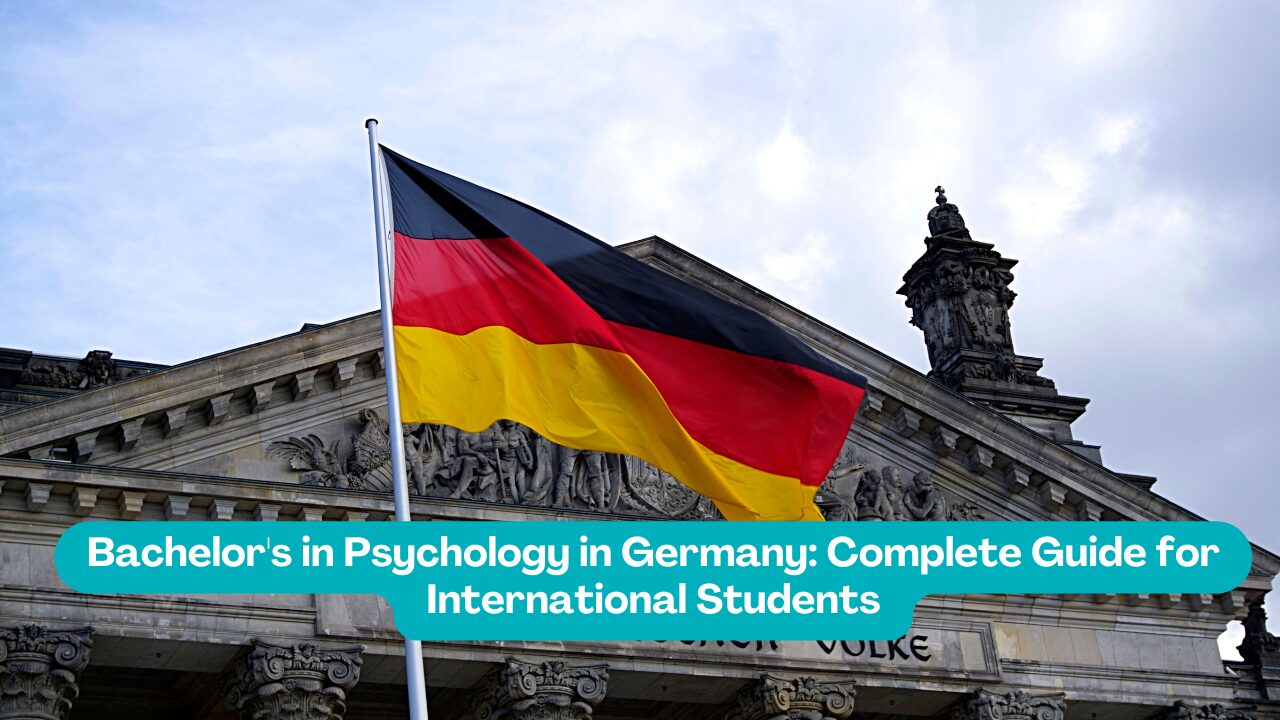
Table of Contents
- Why Pursue a Bachelor’s in Psychology in Germany
- Top Universities Offering Psychology Bachelor Programs
- English vs German-Taught Psychology Programs
- Admission Requirements and Eligibility Criteria
- Study Aptitude Tests: BaPsy-DGPs and STAV-Psych
- Tuition Fees and Cost of Living
- Course Structure and Curriculum Overview
- Clinical Psychology vs General Psychology Pathways
- Internship and Research Opportunities
- Career Prospects After Graduation
- Post-Study Work Opportunities and Visa Options
Germany has become the top choice for over 400,000 international students, with psychology programs seeing a 35% surge in applications over the past five years. If you’re exploring a Bachelor’s in Psychology in Germany, you’re looking at one of the most affordable, high-quality education systems in the world. As Ram Srinivasan, CEO at Galvanize and admissions expert with more than a decade of experience guiding students globally, I’ve watched Germany transform into a powerhouse destination for students seeking world-class degrees without the crushing debt. This guide walks you through everything—university options, admission pathways, costs, career outcomes, and post-graduation opportunities—so you can make a smart, informed choice about your academic future.
“Germany offers one of the best value-for-money higher education systems globally, especially for international students seeking English-taught programs.” – DAAD
Table of Contents
Why Pursue a Bachelor’s in Psychology in Germany
Top Universities Offering Psychology Bachelor Programs
English vs German-Taught Psychology Programs
Admission Requirements and Eligibility Criteria
Study Aptitude Tests: BaPsy-DGPs and STAV-Psych
Tuition Fees and Cost of Living
Course Structure and Curriculum Overview
Clinical Psychology vs General Psychology Pathways
Internship and Research Opportunities
Career Prospects After Graduation
Post-Study Work Opportunities and Visa Options
Frequently Asked Questions About Studying Psychology in Germany
Why Pursue a Bachelor’s in Psychology in Germany
Germany’s appeal goes far beyond free tuition. The country has built a reputation for rigorous academic standards, cutting-edge research facilities, and a deeply integrated approach to student employability. When you pursue a Bachelor’s in Psychology in Germany, you gain access to a learning environment that values both theoretical depth and real-world application.
Here’s what sets Germany apart. Most public universities charge little to no tuition, meaning you invest in living expenses rather than accumulating debt. Your degree carries global recognition, opening doors across Europe, North America, and beyond. English-taught programs are expanding rapidly, making it easier for non-German speakers to enter the system. After graduation, you’ll benefit from an 18-month job-seeker visa and pathways to permanent residency. You’ll also be immersed in Germany’s thriving healthcare and research sectors, which actively recruit psychology graduates.
For students from India, Southeast Asia, Africa, and the Middle East, this combination delivers exceptional return on investment. You get world-class education, multicultural exposure, and career mobility—all without the financial burden that comes with studying in the U.S. or U.K.
Top Universities Offering Psychology Bachelor Programs
Germany’s university landscape offers both public and private institutions with strong psychology faculties. Here are some standout programs for a Bachelor’s in Psychology in Germany:
The University of Mannheim ranks highly for social sciences and research output. Humboldt University of Berlin brings prestige and a robust psychology faculty to the table. LMU Munich offers both B.Sc. and B.A. tracks, giving you flexibility in your academic focus. The University of Freiburg has introduced English-taught options, making it accessible to international students. Jacobs University Bremen operates as an international campus with a dedicated B.Sc. in Psychology program.
Each institution has its own strengths, admission criteria, and language requirements. Explore the full range of options on DAAD or Study in Germany to find the best fit for your goals. Remember, programs vary in structure, teaching language, and specialisation areas, so thorough research is essential.
Ready to fast-track your application? Book a free strategy session with Galvanize’s admissions experts and get personalised guidance on selecting the right university, crafting compelling application materials, and maximising your chances of acceptance.
English vs German-Taught Psychology Programs
Most psychology bachelor’s programs in Germany are taught in German, but the number of English-taught tracks is growing steadily. Your choice depends on your language skills, career plans, and comfort level.
German-taught programs give you a wider selection of universities and specialisations. However, they require B2 to C1 German proficiency, verified through tests like TestDaF, DSH, or Goethe Zertifikat. English-taught programs are more limited but expanding. They’re ideal if you don’t yet have strong German skills but still want to study in Germany.
Here’s the reality: even if you enrol in an English-taught track, learning German is non-negotiable for success. Internships, part-time jobs, networking events, and daily life all function primarily in German. Fluency dramatically improves your employability and quality of life. For detailed language requirements and application steps, visit uni-assist.
Admission Requirements and Eligibility Criteria
Admission to a Bachelor’s in Psychology in Germany is competitive, and requirements vary by institution. Here’s what you’ll typically need:
A recognised high school diploma equivalent to Germany’s Abitur, usually 12th grade or higher. Academic transcripts showing strong performance, especially in sciences and mathematics. Proof of language proficiency—German or English, depending on the program. A well-crafted motivation letter, CV, and sometimes academic references. Aptitude tests like BaPsy-DGPs or STAV-Psych, which are becoming increasingly common.
If your qualifications aren’t directly recognised under Germany’s education system, you may need to complete a Studienkolleg, a preparatory year designed to bridge the gap. This isn’t a setback—it’s an opportunity to strengthen your German, adapt to the academic culture, and improve your admission chances.
For personalised guidance on navigating these requirements, check out Galvanize’s masters admission counselling.
Study Aptitude Tests: BaPsy-DGPs and STAV-Psych
Many German universities now require psychology-specific aptitude tests as part of the admission process. These assessments help institutions identify candidates with the analytical, logical, and scientific thinking skills needed for success in psychology.
BaPsy-DGPs is a national psychology entrance test used by multiple German universities. STAV-Psych is a standardised test assessing your suitability for psychology studies. Both tests evaluate your problem-solving abilities, statistical reasoning, and understanding of basic psychological concepts.
Preparation is crucial. Unlike standardised exams you might be familiar with, these tests require targeted study and practice. Many universities weigh test results alongside academic grades, so performing well can significantly boost your application. Resources, sample questions, and preparation guides are available through university websites and third-party providers.
Tuition Fees and Cost of Living
One of the most attractive aspects of pursuing a Bachelor’s in Psychology in Germany is affordability. Here’s the breakdown:
Public universities typically charge only a semester fee, ranging from €150 to €350. This covers administrative costs, student union services, and often a public transport pass. There’s no tuition for most programs. Private universities charge between €5,000 and €15,000 per year, depending on the institution and program.
Living costs average €850 to €1,100 per month. This includes accommodation, food, health insurance, transportation, and personal expenses. Larger cities like Munich and Frankfurt are more expensive, while smaller university towns offer lower costs.
Budget realistically and factor in one-time expenses like visa fees, health insurance deposits, and initial setup costs. Scholarships are available for international students through DAAD and other organisations. Always compare total costs against expected career outcomes to ensure a strong return on investment.
Course Structure and Curriculum Overview
A Bachelor’s in Psychology in Germany typically spans three years, divided into six semesters. Programs blend theoretical knowledge, research methodology, and practical training to prepare you for diverse career paths.
Core modules include General Psychology, covering perception, memory, and cognition. Biological and Cognitive Psychology explores the brain’s role in behaviour. Research Methods and Statistics equips you with essential tools for data analysis. Developmental and Social Psychology examines human growth and social influences. Clinical Psychology, introduced in later semesters, focuses on mental health and therapeutic approaches.
Electives, seminars, and practical projects add depth and allow specialisation. Most universities integrate mandatory internships, known as “Praktikum,” to give you hands-on experience in real-world settings. This combination of theory and practice is a hallmark of German psychology education and sets you up for immediate employability after graduation.
Clinical Psychology vs General Psychology Pathways
After completing foundational studies, students often choose between two primary pathways:
General Psychology offers broad theoretical grounding. It’s ideal if you’re interested in research, organisational psychology, or non-clinical roles in education, marketing, or human resources. Clinical Psychology focuses on diagnostics, therapy techniques, and mental health interventions. This pathway is essential if you want to pursue licensure as a psychologist or psychotherapist in Germany.
Here’s the key: to become a licensed psychologist or psychotherapist in Germany, you must complete a consecutive Master’s degree after your bachelor’s. Plan your trajectory early. Understand the licensing requirements, explore master’s programs, and align your undergraduate focus with your long-term goals. This strategic approach maximises both your career options and return on investment.
Internship and Research Opportunities
Practical experience is deeply embedded in German psychology programs. Most Bachelor’s in Psychology in Germany require mandatory internships lasting three to six months.
You’ll find opportunities in hospitals, research institutes, NGOs, private practices, and corporate settings. These internships aren’t just resume fillers—they’re your entry point into Germany’s professional network. High-performing students also secure research assistant roles, working alongside faculty on cutting-edge projects.
Internships serve a dual purpose. They sharpen your practical skills and deepen your understanding of theoretical concepts. They also function as extended job interviews. Many students receive full-time offers from their internship hosts, reinforcing the strong return on investment that comes with studying in Germany.
Career Prospects After Graduation
A Bachelor’s in Psychology in Germany unlocks diverse career opportunities, both within Germany and across the EU.
You can work as a research assistant or lab coordinator in academic or medical settings. Human resources, marketing, and organisational consulting firms actively recruit psychology graduates for their analytical and interpersonal skills. Social work, NGOs, and educational counselling offer meaningful roles focused on community impact. Entry-level positions in healthcare and wellness are also accessible.
For clinical or psychotherapy careers, a Master’s degree is mandatory. Many graduates leverage their bachelor’s as a springboard for EU-wide opportunities, thanks to the Bologna Process, which ensures degree recognition across European countries. This mobility makes a German psychology degree a strategic choice for global career builders.
Post-Study Work Opportunities and Visa Options
Germany offers one of the most generous post-study work frameworks in Europe. After completing your Bachelor’s in Psychology in Germany, you can apply for an 18-month job-seeker visa.
This visa gives you time to find employment aligned with your qualifications. Once you secure a job, you can transition to an EU Blue Card, which offers a pathway to permanent residency. Germany’s skill-shortage lists prioritise healthcare and research professionals, which includes psychology graduates.
Fluency in German significantly boosts your job prospects, even if you studied in an English-taught program. Employers value language skills for client-facing roles, teamwork, and cultural integration. For strategic guidance on maximising these pathways and positioning yourself competitively in the German job market, explore Galvanize’s masters admission counselling.
Frequently Asked Questions
Can I study psychology in Germany in English?
Yes. While most programs are taught in German, a growing number of English-taught options are available. Check each university’s language policy and admission requirements.
What are the main entry requirements?
You’ll need a recognised 12th-grade diploma, strong academic transcripts (especially in science and mathematics), language proficiency, and sometimes an aptitude test like BaPsy-DGPs or STAV-Psych.
Is psychology in Germany free for international students?
Most public universities charge only a small semester fee. Private universities may charge tuition ranging from €5,000 to €15,000 per year, so verify costs for each program.
Do I need to know German for psychology studies?
For German-taught programs, B2 to C1 German proficiency is mandatory. For English-taught programs, basic German is still strongly recommended for internships, networking, and daily life.
What are the job prospects after a psychology bachelor’s in Germany?
You can work in research, HR, marketing, NGOs, or pursue further study. For clinical practice, a Master’s degree is required.
How long is the Bachelor’s in Psychology in Germany?
Typically, three years, spanning six semesters, including coursework, research projects, and mandatory internships.
Are internships compulsory?
Yes. Most psychology programs in Germany require internships, which enhance both your practical skills and employability.
Can I stay in Germany after graduation?
Yes. You can apply for an 18-month job-seeker visa, and later transition to an EU Blue Card or permanent residency once you secure employment.
Conclusion
Pursuing a Bachelor’s in Psychology in Germany is more than an academic decision—it’s a strategic investment in your future. With negligible tuition costs, globally respected universities, robust post-graduation work opportunities, and access to Europe’s thriving research and healthcare sectors, Germany offers an unmatched combination of affordability and quality. But success doesn’t happen by accident. It requires clear planning, language preparation, strong application materials, and a deep understanding of your long-term career goals.
Whether you’re drawn to clinical psychology, research, organisational consulting, or social impact work, Germany provides the foundation and flexibility to build the career you envision. The 18-month post-study work visa and pathways to permanent residency make this country an ideal launchpad for global professionals. For expert, personalised admissions guidance tailored to your profile and goals, explore Galvanize’s masters admission counselling and take the next step toward your future.
Book a free strategy session with Galvanize’s admissions experts today and maximise your chances of success!