Everything About Campus Life in the USA

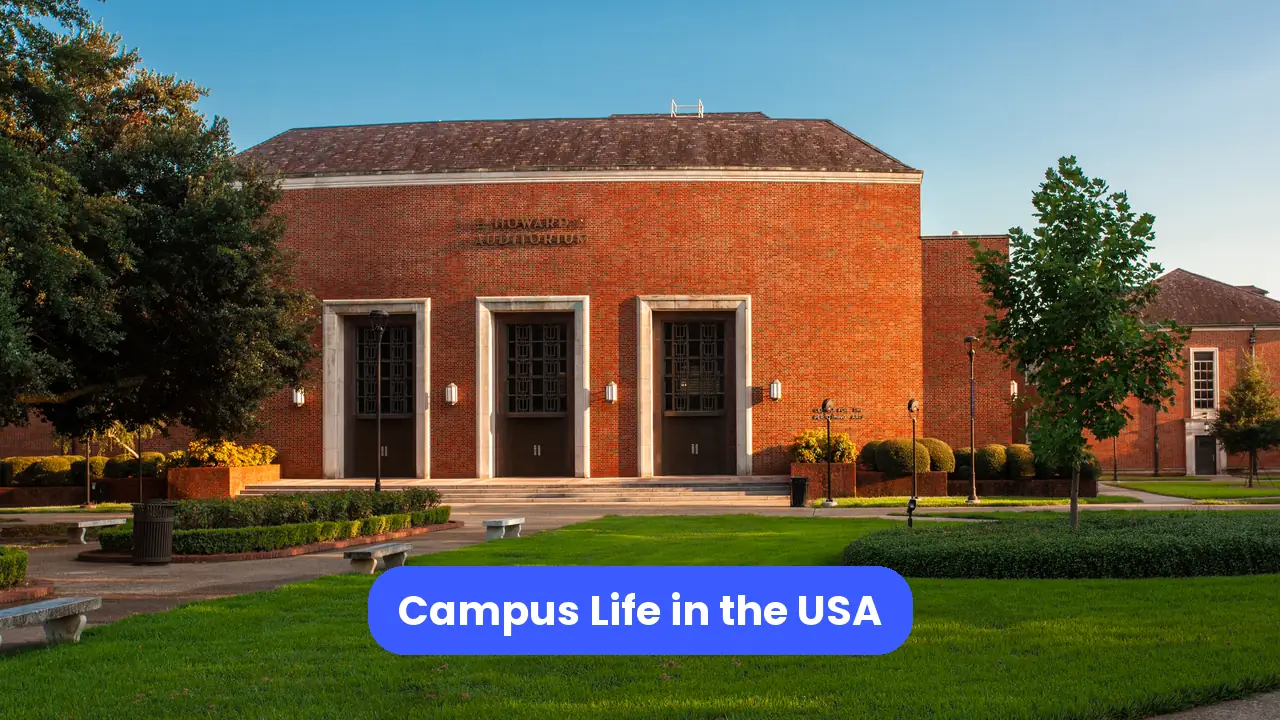
Table of Contents
- Best Institutions In The World
- Vibrant Student Lifestyle
- International Experience On The CV
- Strong Support Network For International Students
- Campus Life In The U.S.
- Accomodation
- Eating
- Time In Class
- Sports
- Transportation
- Sororities And Fraternities
The U.S. is one of the most popular destinations for international students around the world. More than 1.1 million international students choose the U.S. to pursue their higher studies.
What is it about the U.S. that attracts so many international students each year?
To begin with, it is home to some of the world’s top universities. Additionally, studying in the U.S. can enhance employment and career prospects. Moreover, the country offers a variety of exciting cities to explore, contributing to its reputation as home to 14 of the best student cities in the world.
Here are some more reasons why you should choose the U.S. for your higher education.
Best Institutions In The World
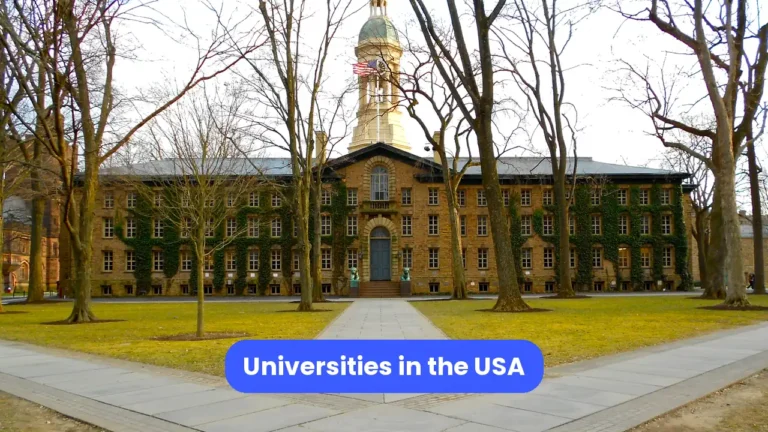
The U.S. is home to many prestigious universities. Notable mentions include Harvard University, Stanford University, Princeton University, and the Massachusetts Institute of Technology.
The country offers a wide variety of choices in important factors such as location, courses, tuition, and facilities, which the students must consider when choosing a university.
Vibrant Student Lifestyle
Students get to experience exciting lifestyles by joining sports teams, clubs, fraternities, and sororities. While the campus life in college offers a lot of opportunities to socialize, it is advised that students explore the locality of the university to further enrich their experience.
International Experience On The CV
U.S. universities offer high-quality education and numerous opportunities for developing transferrable skills and gaining work experience, especially in large cities. Their diverse environments prepare students for international workplaces, making graduates attractive to employers.
Strong Support Network For International Students
U.S. universities offer many resources to help international students feel at home. Along with freshman orientation and student mentors, they can visit the international student services office for assistance with visas, part-time jobs, and financial aid.
While attending a U.S. university can be expensive, there are often financial options available, including loans, scholarships, and grants. These reasons shed light on how studying in the U.S. will not only expand your perspective of the world and growth, but it will also help you grow professionally.
Campus Life In The U.S.
Now that we know why the U.S. is the top destination for higher education for most international students, let us understand the campus life of students once they enroll in their respective universities.
It is not always easy to start afresh in a new country with people from various backgrounds. As an international student, living in the U.S. might come as a cultural shock. But with time, the culture gap can be bridged by meeting new people and interacting with them at your own pace.
A few points that may be challenging for students at first are listed below –
The cultural difference is stark. It can be shocking and even challenging at first not to have the same kind of food, clothes, rituals, and people as one is used to.
The U.S. education system offers a more interactive and hands-on approach, especially compared to the Indian system, which may seem overwhelming.
Accommodation and expenses can be hard to deal with at the beginning.
Differences in values can be a bit difficult to understand.
Having said that, international students receive a warm welcome in the U.S. Each university has an international student office where students can seek guidance on adapting to life in U.S. universities. The International Student Services office organizes several events specifically for international students. Additionally, Indian student associations are part of the support provided by the student office.
The campus life of students in the U.S. comprises varied components that include the degree course structure, a multi-billion-dollar College sports industry, and a proud, tight-knit community on each and every campus where individuals can excel in the classroom and on the sports field.
Let us take a look at the various aspects of campus life in U.S. universities.
Accomodation
In the U.S., most universities require freshmen to live on campus for convenience, as essential services like food, laundry, and classes are within walking distance.
Living arrangements can vary, but dorms usually house one to three roommates, and student-athletes are often placed with fellow teammates. As you move to your second year, you might move off-campus with friends or teammates or choose to remain on campus and upgrade your living situation.
Living at college in the U.S. is very different from what most students experience. It’s far more of a ‘life experience‘ in addition to being a place of study. For most people, this is a huge advantage and adds a great deal of sentimental value and a feeling of connection that they have with their university for years to come!
Eating
On campus, you will find at least one main cafeteria or canteen, and often several dining options to choose from. At the start of your first semester, you will receive a ‘meal-plan’ card, which makes it easy to pay for your meals, drinks, and snacks throughout the day. Additionally, if you are traveling with your sports team for events or matches, all your meals and accommodation will be taken care of.
You can expect to find one or two cafeterias serving a variety of dishes for breakfast, lunch, and dinner. Many campuses also feature popular chain restaurants like Starbucks, Chick-fil-A, Jamba Juice, and Subway, giving you plenty of options.
Time In Class
Class attendance is incredibly important in the U.S. education system. You will have a class schedule mapped out by an academic adviser who will guide you along whenever required. If you are an athlete, your coaches will emphasise the importance of going to classes and maintaining good grades. Most students will have between 2 – 4 hours of classes per day, with some more time spent on homework/assignments or lab time in the evenings.
Sports
U.S. College sport is a gigantic industry. Games are broadcast on national television and widely followed. The athletes and teams are a focal point on campus. In the bigger U.S. sports such as American Football and Basketball, stadium crowds can exceed 100,000 people, wherein the audience will comprise college students or former students who are fanatical about their school’s teams. If you are a student-athlete, you represent your college. In addition, the Colleges themselves take pride in their teams doing well, meaning that the academic administration will cooperate with the athletics department to help maximise your potential in both aspects.
Transportation
Students will need to navigate both the campus and the city for classes and activities. Therefore, it is essential to get familiar with public transportation. More than one mode of transportation is available for students on and off campus.
Buses
Using your student ID can grant you reduced fares on the extensive bus service. There are apps available to track bus schedules, and some campuses offer shuttle buses.
Subways/Trains
If your university is in a major city, subway systems like BART or Metro will be convenient. Amtrak can help you explore further across the country, so check for student discounts on tickets.
Taxis/Ridesharing
Taxis tend to be pricey, so it’s best to use them only in emergencies. Ridesharing services like Uber are popular among students for getting around.
Bicycles
Biking is a healthy and practical way to move around campus. If you’re comfortable cycling, consider investing in a bicycle and don’t forget your helmet!
Ultimately, your choice of transportation will depend on where you live and how frequently you travel.
Sororities And Fraternities
A sorority or fraternity, a major part of life on campus in the U.S., is a community of women or men that share similar interests and aspirations, often referred to as “Greek” organizations due to their names derived from Greek letters (e.g., Alpha Chi Omega, Kappa Alpha Psi). These groups aim to enhance student life through volunteering, charity projects, and community events. While primarily for undergraduates, some universities allow graduate students to join.
Joining such organizations offers several benefits, such as building a strong network, participating in various events, and developing valuable leadership and interpersonal skills that enhance your resume. Alumni connections can also aid in job searches.
However, there are considerations before rushing. Membership fees can be high, including chapter dues, initiation fees, and costs for social events. Moreover, they can demand a significant time commitment, often requiring members to maintain a minimum GPA. If you’re pursuing a demanding academic program, it’s essential to balance your time wisely.
These are some of the broad aspects of campus life in the U.S. Listed below are some pointers that can come in handy to prepare yourself while you make the move.
Be open to adapting a new education and grading system.
Learn some basic cooking. It will help in cutting down your expenses, and it will be handy if you feel homesick.
Respect time in all aspects, especially with professors and coaches.
Research well on medical insurance and invest wisely. Your health should be a priority for you.
If you plan to work in the U.S., it will be wise to get ahead and apply for a Social Security number.
Open a local bank account to help you with all your payments.
Professional help to deal with homesickness, adjustment issues, depression, identity crises, and cultural shock is abundantly available and accessible to students. Make use of them if required.
Life on the campus in U.S. universities is busy, exciting, fast, and bustling. Take your time, one step at a time, and find your place. Be easy on yourself through this transition, and once you have settled in, be ready for one of the greatest experiences of your life.
We hope that this blog has helped to prepare you for your campus life in the U.S.. Feel free to reach out to us for any queries that you may have for your journey to study abroad.