
Choosing a University in the UK: Why Program Fit Matters More Than Rankings

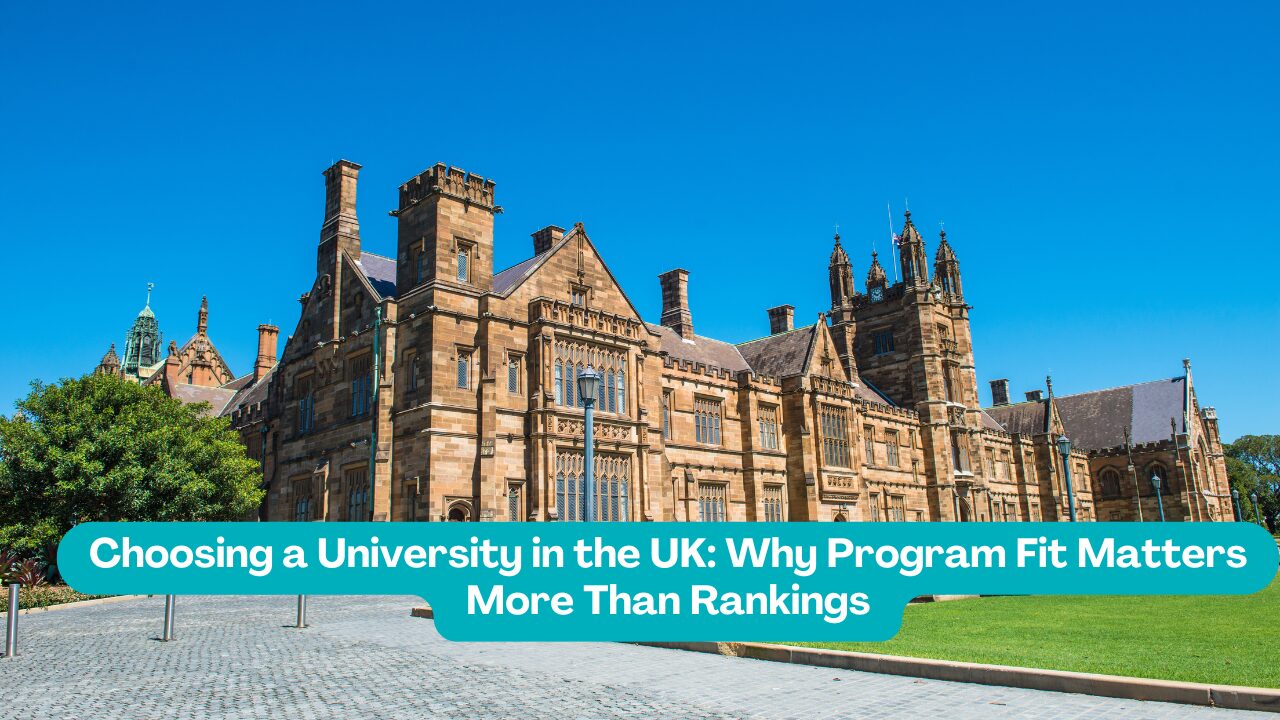
A clear decision about choosing a university in the UK starts with one simple fact: course-level outcomes, not overall league tables, most consistently predict graduate success. Choosing a UK university is about matching the program’s curriculum, teaching style, industry links, and support systems to your goals — not chasing headline prestige.
For Indian students and families weighing tuition, living costs, visa rules, and career outcomes, this means reading module lists, checking placement pipelines, and confirming faculty research relevance — practical steps that reveal real return on investment more reliably than global ranks. This guide explains why program fit should drive your choice, how to evaluate programs at the module and faculty level, and which verified sources to consult to make a defensible, outcome-focused decision.
Program fit: the question that actually drives outcomes
Program fit is the practical alignment between what a course teaches and what you need to achieve your career or research goals. When choosing a university, program fit means looking past a university’s logo to ask: which modules will teach the skills employers want, which assessments build relevant experience, and which placement options exist for international students. Key elements include course structure, project and internship options, staff research interests, and alumni outcomes — all details you’ll usually find in the course handbook or module guide.
What rankings actually measure — and what they miss
University rankings aggregate several institutional metrics and present a single headline position, but those metrics vary by publisher. Major lists measure research output and citations, reputation surveys, staff-student ratios, and international outlook, and some include graduate outcome measures in their methodology. These combined metrics reflect institutional profile, not program-level teaching quality — which is why program fit is a separate, essential consideration.
Rankings can hide the best course for your subject
Rankings can mask subject-level variation: a university ranked in the 30s overall might host a top-10 program in your exact subject. Choosing a university solely on global rank risks overlooking whether the course content, faculty, and placement record actually match your goals. Official data shows employability can differ more by course than by overall university tier, so subject- and course-level evidence is crucial when assessing likely outcomes.
Evaluating curriculum depth and module structure
Start with the module list and course handbook. Look for the number of specialist modules, the balance of theory and practical work, whether a dissertation or industry project is required, and how many electives are available. If you aim to work in AI, a broad “Computer Science” MSc will behave differently in the job market than a specialised “AI and Data Science” MSc with hands-on placements. Download module guides from university pages or request them by email, then map modules to the skills and tools employers list in job postings.
Faculty expertise and research alignment
Faculty who teach core modules shape both the content and the learning experience — their research interests signal what you’ll be exposed to. Check who teaches your core modules, whether they’re active researchers in relevant fields, and whether there are opportunities to join labs or research groups. University staff directories and national research portals let you verify expertise and funded projects before you commit.
Industry connections and placement pipelines
Industry links determine internship availability, project placements, and employer engagement during career fairs. When evaluating programs, ask whether a placement year is offered, which companies actively recruit from the course, and whether there are structured industry projects embedded in assessments. Some institutions explicitly advertise 1-year paid placements for certain Master’s programs, and alumni LinkedIn profiles are a practical way to confirm employer patterns for graduates.
Graduate employability data: the most honest measure of ROI
Graduate employability rates describe how many students move into work or further study within 15 months of graduation and are reported in official sources like the Graduate Outcomes survey. Always review course-level Graduate Outcomes data — it can show that vocational programs at some post-92 institutions outperform higher-ranked universities in specific fields. These statistics give a clearer picture of ROI than overall ranking positions alone.
Location, living costs, and campus environment
Where you study affects living costs, safety, and part-time job opportunities. London and traditional university towns carry prestige but also higher living expenses; cities such as Sheffield, Nottingham, and Glasgow often offer strong programs at lower cost and with vibrant student communities. For international students, proximity to diaspora networks, housing affordability, and campus support services are practical factors that influence daily life and the ability to focus on placements or part-time work.
Subject rankings vs overall rankings
Subject-level rankings focus on departmental teaching quality, research outputs, and employability within a single discipline, rather than the entire institution. It’s common for a university with a modest overall rank to place highly in a specialised subject — which is why you should prioritise subject ranking and program outcomes over the institutional headline figure.
For Indian students: program fit vs brand name
Indian students should prioritise the elements that affect post-study work and return on investment: Graduate Route eligibility timelines, course content and placement records, dependent visa rules, and the total 12-month cost (fees + living). Practicalities such as whether a course permits dependents and whether it includes vocational components will often matter far more for long-term outcomes than university reputation alone. Get a tailored shortlist that matches your career goals and visa timeline — request personalized program matching now to see which UK Master’s will give you the best ROI.
What to ask at open days and virtual tours
During open days or virtual sessions, focus your questions on current student experience and program mechanics. Ask to speak with international students or alumni, review core modules and assessment styles, confirm internship and placement support, and check international student services and dependent support. Always request the program handbook and course-level employability statistics before finalising your shortlist.
Frequently Asked Questions
- What is the Graduate Route visa for UK graduates?
The Graduate Route visa permits UK Bachelor’s and Master’s graduates to stay in the UK to work or look for work for 2 years if applied on or before 31 December 2026 (3 years for PhD). - Does university ranking affect my UK post-study work visa eligibility?
No. Any UK university that holds a valid student sponsor licence is eligible for the Graduate Route regardless of its ranking. - How much does a UK Master’s cost in 2026?
Tuition for 1-year Master’s programs varies by university and course — check the university’s official website; living costs typically fall around £12,000–£18,000 per year, with London at the higher end. - Are Russell Group universities always the best choice for Indian students?
Not always. Some post-92 and specialist institutions offer targeted programs and vocational pathways that yield stronger employability in specific sectors such as data science, health, and engineering. - What is the difference between overall and subject-level rankings?
Overall rankings aggregate performance across a whole institution; subject-level rankings assess a specific department or program, so both should be checked when choosing a university in the UK. - Can I bring dependents for a 1-year UK Master’s?
Yes, most full-time Master’s programmes of at least 9 months allow dependents to apply for visas, though you should confirm specific university and program rules. - How do I assess UK program ROI?
Compare graduate employability, starting salary ranges, placement records, and total cost; use official data from Graduate Outcomes and university reports to estimate likely ROI. - Do UK universities offer paid internships as part of Master’s programs?
Some do — especially those that advertise a placement year or industry project option in business, engineering, and computing. - How important is location when choosing a UK university?
Very — location affects living costs, local job markets, and lifestyle; investigate city safety, transport, and part-time work options. - What support do UK universities provide international students?
Most provide orientation, visa guidance, academic writing help, and dedicated career services; verify international student satisfaction and support statistics in course materials. - Is IELTS or PTE required for all UK programs?
Most programs require proof of English proficiency; minimum scores vary by course and university — check official entry criteria on university pages and UCAS. - How do I compare UK Master’s with US or Europe for ROI?
UK Master’s are typically 1 year long, which can reduce tuition and living costs compared with 2-year programs elsewhere; compare total costs, visa rules, and employment prospects. - What is a post-92 university?
Post-92 universities are institutions that gained university status after 1992 and often focus on vocational courses and industry partnerships. - Should I choose a university based on alumni network size?
Alumni networks help, but their value depends on activity and relevance in your target industry and geography — check alumni outcomes in your field. - How do I check if a UK university is a licensed student sponsor?
Consult the official UK sponsor register on GOV.UK to confirm a university’s licence and Graduate Route eligibility. - What is a foundation year in the UK?
A foundation year is a preparatory year offered to applicants who do not meet direct entry requirements; it adds one year to your degree timeline. - Can I switch courses after starting at a UK university?
Course transfers are possible but subject to academic approval and visa implications; confirm policies with the university’s academic registry. - Do UK universities guarantee job placement after graduation?
No — universities provide careers support and employer access, but employment outcomes depend on your field and skills. - How do I shortlist UK universities for my program?
Begin with program fit: curriculum, faculty, employability, cost, and location. Request course handbooks and Graduate Outcomes data to build a defendable shortlist. - What are the dependent visa rules for UK Master’s students?
If your Master’s is full-time and at least 9 months, your spouse and children can usually apply as dependents; always confirm currentGOV.UKguidance.
Conclusion
When choosing a UK university, focus first on program fit — the curriculum, faculty, placement opportunities, and verified graduate outcomes — rather than a headline ranking. That focus will tell you what skills you’ll learn, who will teach you, and which employers actually recruit your cohort, giving you a clearer estimate of return on investment. For Indian students, this practical assessment also clarifies visa implications, dependent rules, and the real 12-month cost, which together determine whether a UK degree advances your career or simply adds an expensive credential. Use course handbooks, module lists, faculty directories, and Graduate Outcomes statistics as your primary evidence; pair them with open day conversations and alumni checks so you can choose a program that fits your goals and timeline, not the press release.
Request a tailored program match today to convert insight into a shortlist that maximises outcomes for your budget and visa plan.