How to Pursue an MBA in Germany Without IELTS: Complete Guide for 2026

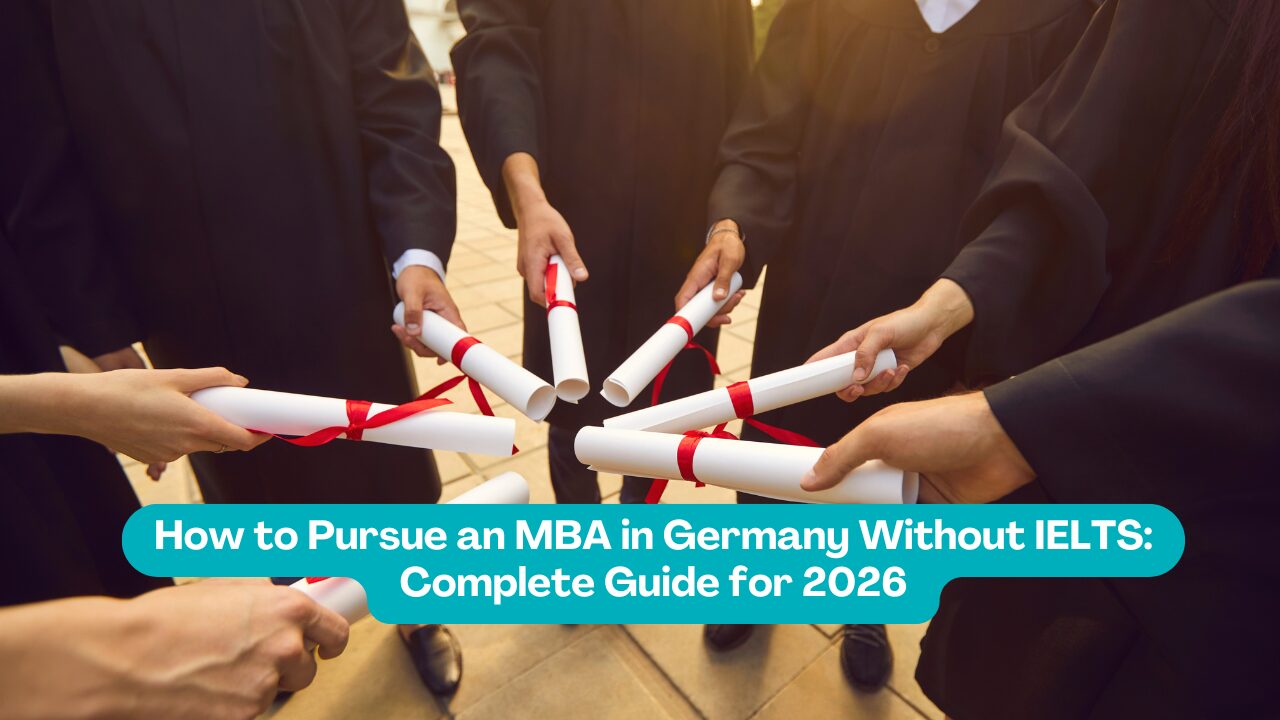
Table of Contents
- Understanding MBA Programs in Germany
- Why Choose Germany for Your MBA Education
- English Proficiency Requirements for German Universities
- Medium of Instruction (MOI) Certificate: Your IELTS Alternative
- Alternative English Language Tests Accepted in Germany
- Top German Universities Offering MBA Without IELTS
- Academic Prerequisites and Eligibility Criteria
- Application Process for MBA Programs in Germany
- Required Documents and Application Timeline
- German Student Visa Requirements Without IELTS
- Tuition Fees and Living Costs for MBA in Germany
Germany has emerged as one of the most sought-after destinations for international MBA students, with over 40,000 international students enrolled in business programs across the country [1]. What makes this particularly appealing? Many German universities now offer pathways to pursue an MBA in Germany without IELTS, opening doors for talented candidates worldwide.
The combination of world-class education, minimal or zero tuition fees at public institutions, and flexible English proficiency requirements has transformed Germany into a magnet for ambitious professionals seeking global business careers.
As someone who has guided countless students through this journey, I’ve seen firsthand how the right strategy can turn your MBA dreams into reality—even without traditional English test scores. This comprehensive guide will walk you through everything you need to know about securing admission to top German business schools without the IELTS hurdle.
Table of Contents
- Understanding MBA Programs in Germany
- Why Choose Germany for Your MBA Education
- English Proficiency Requirements for German Universities
- Medium of Instruction (MOI) Certificate: Your IELTS Alternative
- Alternative English Language Tests Accepted in Germany
- Top German Universities Offering MBA Without IELTS
- Academic Prerequisites and Eligibility Criteria
- Application Process for MBA Programs in Germany
- Required Documents and Application Timeline
- German Student Visa Requirements Without IELTS
- Tuition Fees and Living Costs for MBA in Germany
- Frequently Asked Questions About MBA Admission in Germany
Understanding MBA Programs in Germany
German business schools have built their reputation on rigorous academics, hands-on learning, and deep industry connections. When you enroll in an MBA program here, you’re not just earning a degree—you’re gaining access to Europe’s economic powerhouse.
These programs come in multiple formats to suit different career stages. Full-time MBAs immerse you completely in the learning experience. Part-time options let working professionals balance their careers with education. Executive MBAs cater to senior leaders looking to sharpen their strategic thinking.
What sets German MBA programs apart is their practical orientation. You’ll work on real business challenges, collaborate with international classmates, and benefit from strong ties between universities and major corporations. This blend of academic rigor and real-world application makes pursuing an MBA in Germany a smart investment for anyone serious about building a global business career.
Why Choose Germany for Your MBA Education
The decision to study in Germany comes with compelling advantages that extend far beyond the classroom. Public universities charge minimal or zero tuition fees—a rare find for quality MBA programs anywhere in the world. This affordability doesn’t compromise quality; German business schools consistently rank among Europe’s best.
The return on investment speaks for itself. Graduates typically secure positions with starting salaries ranging from €50,000 to well over €100,000 annually. Germany’s robust economy, home to industry giants across automotive, technology, finance, and manufacturing sectors, offers abundant career opportunities.
International graduates also benefit from an 18-month post-study work visa, giving you ample time to launch your career in Germany. This can eventually lead to permanent residency, making Germany not just an education destination but a potential long-term home. With its central location in Europe, you’ll also find yourself perfectly positioned for a truly international business career.
English Proficiency Requirements for German Universities
Most MBA programs in Germany are delivered entirely in English, particularly at the Master’s level. Universities need to ensure that international students can thrive in an English-speaking academic environment, which traditionally meant submitting IELTS or TOEFL scores.
However, the landscape has evolved significantly. A growing number of German institutions now recognize that English test scores aren’t the only way to demonstrate language proficiency. If your previous education was conducted in English, many universities will waive the IELTS requirement entirely.
The specific requirements vary considerably between institutions. Some accept alternative tests, others rely on Medium of Instruction certificates, and a few conduct their own language assessments. This flexibility has made it increasingly feasible to pursue an MBA in Germany without IELTS, provided you understand each university’s unique criteria and prepare accordingly.
Medium of Instruction (MOI) Certificate: Your IELTS Alternative
The Medium of Instruction certificate has become a game-changer for students seeking admission without IELTS. This official document, issued by your previous university, confirms that your Bachelor’s degree was taught entirely in English.
Think of the MOI as your academic proof of English proficiency. It must be printed on official university letterhead, properly signed by authorized personnel, and stamped with the institution’s seal. Many German business schools now accept this certificate as valid evidence that you can handle graduate-level coursework in English.
This pathway has gained particular popularity among students from India, many African countries, and Southeast Asian nations where English-medium instruction is common but IELTS testing may be less accessible. If your undergraduate education was in English, requesting an MOI certificate from your alma mater could be your straightest path to studying MBA programs in Germany.
Alternative English Language Tests Accepted in Germany
IELTS isn’t your only option when demonstrating English proficiency to German universities. Several other standardized tests carry equal weight in the admissions process.
TOEFL remains widely accepted across German business schools. The Pearson Test of English (PTE Academic) has also gained recognition, offering a computer-based alternative that many students find more convenient. Cambridge English Exams, particularly the Certificate in Advanced English (CAE) and Certificate of Proficiency in English (CPE), hold strong credibility with European institutions.
More recently, some universities have begun accepting the Duolingo English Test. This affordable, accessible option can be completed entirely online, making it attractive for students in remote locations. A handful of business schools even conduct their own English language assessments as part of the admissions interview, eliminating the need for separate standardized testing altogether.
Always verify which tests your target universities accept. Requirements can change annually, so checking the official admissions pages or contacting the university directly ensures you’re working with current information.
Top German Universities Offering MBA Without IELTS
Several prestigious German business schools have embraced flexible English proficiency requirements, making world-class MBA education more accessible than ever.
The Technical University of Munich (TUM) School of Management stands out for its innovation-focused curriculum and strong industry partnerships. The University of Mannheim Business School consistently ranks among Europe’s top programs and accepts various English proficiency proofs beyond IELTS.
Frankfurt School of Finance & Management specializes in finance and management, offering excellent connections to Germany’s financial capital. GISMA Business School provides internationally recognized programs with flexible admission criteria. The European School of Management and Technology (ESMT) Berlin attracts students from over 50 countries and values diverse proof of English competency.
WHU – Otto Beisheim School of Management rounds out this list with its strong emphasis on entrepreneurship and international business. Each of these institutions may accept MOI certificates, alternative English tests, or conduct their own language assessments. Your specific eligibility depends on your educational background and how well you meet their alternative requirements.
Academic Prerequisites and Eligibility Criteria
Gaining admission to an MBA in Germany requires more than just English proficiency. Universities evaluate your complete academic and professional profile.
You’ll need a recognized Bachelor’s degree, typically requiring three to four years of full-time study. Most MBA programs expect candidates to bring at least two to three years of relevant professional work experience. This requirement ensures classroom discussions benefit from diverse real-world perspectives.
English proficiency remains essential—whether demonstrated through IELTS, TOEFL, MOI certificates, or alternatives. Some top-ranked programs also require GMAT or GRE scores, though this varies by institution.
Your Statement of Purpose carries significant weight. This document should articulate your career goals, explain why you’re choosing Germany, and demonstrate how the specific MBA program aligns with your aspirations. Strong Letters of Recommendation from supervisors or professors who can speak to your professional capabilities and academic potential complete your application portfolio.
A few programs offer preparatory or foundation courses if you’re missing specific prerequisites, creating pathways even for candidates with non-traditional backgrounds.
Application Process for MBA Programs in Germany
Successfully applying for an MBA in Germany without IELTS requires a strategic, organized approach. Start by researching universities thoroughly, focusing on those with explicit policies accepting MOI certificates or alternative English tests.
Create a shortlist of programs that match your profile, career goals, and financial situation. Gather your documents methodically—academic transcripts, your MOI certificate, a polished CV, a compelling Statement of Purpose, and Letters of Recommendation.
Most applications are submitted through university-specific portals or uni-assist, Germany’s centralized application service for international students. Pay careful attention to each institution’s requirements, as they can vary significantly.
Many programs include interviews as part of the selection process. These may be conducted in person, by phone, or via video call. Prepare to discuss your career trajectory, why you’re interested in Germany, and how you’ll contribute to the program’s diversity.
Once you receive admission offers, compare them carefully. Consider not just rankings, but also location, specializations offered, industry connections, and career services. This decision will shape the next chapter of your professional life, so take time to choose wisely.
Required Documents and Application Timeline
Building a complete application package requires careful preparation. You’ll need official academic transcripts and degree certificates from all post-secondary institutions you’ve attended. Your Medium of Instruction certificate or alternative English test scores form the cornerstone of your language proficiency proof.
Prepare an updated CV that highlights your professional achievements and demonstrates leadership potential. Your Statement of Purpose should be authentic and specific—avoid generic language and clearly connect your past experiences with your future goals. Secure two strong Letters of Recommendation from people who know your work well and can provide specific examples of your capabilities.
Don’t forget practical documents: a clear copy of your passport and proof of payment for application fees.
Timing matters significantly in this process. Application deadlines for fall intake typically run from November through May, though specific dates vary by university. Allow four to eight weeks for application processing after submission. Once admitted, start your visa process immediately—this can take six to twelve weeks or longer depending on your home country.
Starting early gives you flexibility to address unexpected challenges and ensures you don’t miss critical deadlines that could delay your plans by an entire year.
German Student Visa Requirements Without IELTS
One common concern among students is whether they can secure a German student visa without IELTS scores. The answer is yes—provided your admission letter clearly states how you met the English language requirement.
German consulates focus on your unconditional admission letter from a recognized university. If that letter confirms you satisfied English proficiency requirements through an MOI certificate or alternative test, visa officials will accept it.
You’ll also need proof of financial resources, typically demonstrated through a blocked bank account containing approximately €11,208 for the first year. This ensures you can support yourself without working illegally.
Health insurance coverage is mandatory for all students in Germany. Proof of accommodation—whether university housing, a rental agreement, or a temporary arrangement—must also be included in your visa application.
Requirements can vary slightly between German consulates in different countries. Check the official website of German Missions in your home country for the most current and region-specific requirements. Give yourself plenty of time for this process, as visa appointments can be difficult to schedule during peak application seasons.
Tuition Fees and Living Costs for MBA in Germany
The financial advantages of pursuing an MBA in Germany are difficult to overstate. Public universities charge minimal tuition—often just semester fees ranging from zero to €5,000 per year. These modest fees cover administrative costs and sometimes include public transportation passes.
Private business schools operate differently, with total program costs ranging from €10,000 to €40,000. While higher than public institutions, these fees remain competitive compared to MBA programs in the United States, United Kingdom, or Australia.
Living expenses in Germany are reasonable for a major European economy. Budget between €850 and €1,200 monthly for rent, food, health insurance, and personal expenses. Costs vary by city—Munich and Frankfurt are pricier than Leipzig or Dresden, but all German cities offer good quality of life.
International students can work part-time, up to 20 hours weekly during the semester and full-time during breaks. This helps offset living costs and provides valuable work experience. Numerous scholarships are also available through DAAD, individual universities, and private foundations.
Post-graduation salaries make the investment worthwhile. MBA graduates in Germany typically earn between €50,000 and €100,000 or more annually, depending on industry, role, and experience. The combination of low education costs and strong earning potential delivers exceptional return on investment.
Frequently Asked Questions
Can I really study MBA in Germany without IELTS?
Absolutely. Many universities accept alternatives like MOI certificates, TOEFL, PTE, or other English language tests. The key is verifying specific requirements with your target business schools before applying.
What is a Medium of Instruction (MOI) certificate?
An MOI certificate is an official document from your previous university confirming that your degree program was taught entirely in English. It serves as widely accepted proof of English proficiency for MBA admissions in Germany.
Do all German universities waive IELTS for MBA applicants?
Not all, but an increasing number of public and private institutions do—particularly if you can provide an MOI certificate or other credible proof of English proficiency. Policies differ by institution, so always check directly.
Which English tests are accepted apart from IELTS?
German universities commonly accept TOEFL, PTE Academic, and Cambridge English Exams. Some institutions also recognize the Duolingo English Test, while others conduct their own English assessments during admissions.
What work experience is required for MBA in Germany?
Most competitive MBA programs expect two to three years of relevant professional experience. Executive MBAs typically require more, while a select few programs accept exceptional candidates straight from undergraduate studies.
Can I get a student visa for Germany without IELTS?
Yes. As long as your admission letter explicitly confirms you met English language requirements through an accepted alternative like an MOI certificate, you’re eligible for a German student visa.
How much does an MBA in Germany cost?
Public universities charge little to no tuition, often just semester fees. Private business schools typically charge between €10,000 and €40,000 for the complete program. Living expenses average €10,000 to €12,000 annually.
What are the post-study work and PR options after MBA in Germany?
Graduates receive an 18-month post-study work visa to find employment. After working in Germany for several years, you become eligible to apply for permanent residency, creating a pathway to long-term settlement.
Conclusion
Pursuing an MBA in Germany without IELTS represents more than just an educational opportunity—it’s a strategic career move that opens doors to global business leadership. Germany’s combination of world-class business education, affordable or free tuition at public universities, and flexible English proficiency requirements makes it uniquely accessible for international students. By understanding how MOI certificates work, exploring alternative English tests, and applying strategically to universities with flexible admission policies, you can overcome the traditional IELTS barrier.
The path forward requires careful research, meticulous preparation of your application documents, and strategic timing throughout the admission and visa process. Germany’s 18-month post-study work visa and pathways to permanent residency mean you’re not just earning a degree—you’re potentially building a foundation for long-term success in Europe’s largest economy. Whether you’re a working professional seeking career acceleration or a recent graduate aiming for international exposure, the opportunity to study MBA in Germany is within reach. Take the first step toward your German MBA journey with expert guidance tailored to your unique background and aspirations.
Also useful for Germany applicants: