PhD in Accounting in Germany: Complete Guide to Programs, Funding & Career Prospects

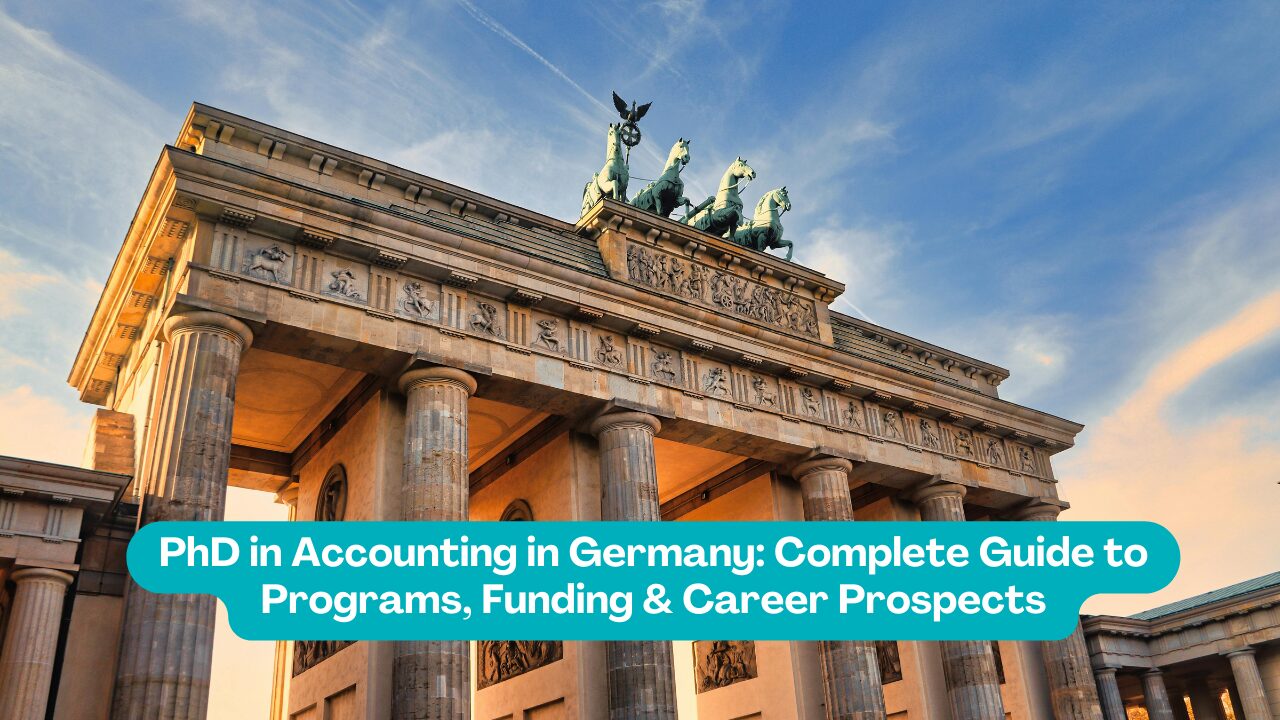
Table of Contents
- Understanding the PhD in Accounting in Germany Structure
- Top Universities Offering PhD in Accounting in Germany
- Admission Requirements and Eligibility Criteria
- Application Process and Documentation
- Funding Options and Financial Support
- Duration and Curriculum Overview
- Research Specializations in Accounting PhDs
- Employment as Wissenschaftlicher Mitarbeiter
- Living Costs and Student Life in Germany
- Career Opportunities After Completion
- Language Requirements and German Proficiency
Over 28,000 international PhD students choose Germany each year for their doctoral studies, making it one of the world’s most popular destinations for research-driven education. For ambitious students and professionals seeking a global research career, a PhD in Accounting in Germany offers something truly exceptional: world-class universities, tuition-free education, and a research ecosystem that values innovation and independence. Germany’s unique combination of academic excellence and financial accessibility has positioned it as a premier destination for doctoral candidates, particularly those passionate about advancing accounting research and its role in international business.
I’m Ram Srinivasan, CEO of Galvanize and an admissions expert with over a decade of experience helping students access elite programs abroad. This comprehensive guide breaks down everything you need to know about pursuing your doctoral degree in Germany, from selecting the right program to securing funding and building a successful career afterward.
Table of Contents
- Understanding the PhD in Accounting in Germany Structure
- Top Universities Offering PhD in Accounting in Germany
- Admission Requirements and Eligibility Criteria
- Application Process and Documentation
- Funding Options and Financial Support
- Duration and Curriculum Overview
- Research Specializations in Accounting PhDs
- Employment as Wissenschaftlicher Mitarbeiter
- Living Costs and Student Life in Germany
- Career Opportunities After Completion
- Language Requirements and German Proficiency
- Frequently Asked Questions
Understanding the PhD in Accounting in Germany Structure
The German doctoral system takes a distinctly research-focused approach that prepares candidates for impactful careers in academia, industry, or policy-making roles. Unlike some international programs that emphasize coursework, German PhD programs center on producing original, high-quality research that contributes meaningfully to the field.
You’ll encounter two primary doctoral models when exploring your options. The individual doctorate remains the most common path, where you work independently under the guidance of a supervisor—known as your Doktorvater or Doktormutter. This traditional model gives you considerable autonomy to shape your research direction and timeline. Alternatively, structured doctoral programs mirror the American or British PhD experience more closely, offering organized coursework, regular seminars, and a cohort of fellow doctoral candidates.
Both pathways emphasize deep, original research that often leads to publication in respected international journals. The German academic culture values self-motivation and intellectual independence, so clarity of purpose and strong time management skills become essential for success.
Top Universities Offering PhD in Accounting in Germany
Germany’s reputation for academic excellence extends across numerous institutions offering distinguished doctoral programs. Several universities stand out for their research quality and international recognition in business and accounting studies.
The University of Mannheim consistently ranks among Europe’s top institutions for business and economics, with robust doctoral tracks that attract talented researchers worldwide. WHU – Otto Beisheim School of Management has built a stellar reputation for management and accounting research, offering doctoral candidates access to cutting-edge research facilities and industry connections. Goethe University Frankfurt, home to the renowned House of Finance, maintains active accounting research groups that regularly collaborate with financial institutions and regulatory bodies.
Other excellent options include LMU Munich, Humboldt University Berlin, and the University of Cologne, all of which host reputable doctoral schools within their business and economics faculties. These programs typically integrate doctoral candidates into broader research networks, providing opportunities for collaboration and intellectual exchange.
For a comprehensive listing of available programs, the DAAD’s PhD database offers detailed information on German doctoral opportunities.
Admission Requirements and Eligibility Criteria
Securing admission to a German doctoral program requires careful preparation and strong academic credentials. Universities typically expect candidates to hold a strong Master’s degree in accounting, finance, business, or a closely related field. Some institutions may consider exceptional candidates with a first-class Bachelor’s degree, though this remains less common.
Your application portfolio needs to demonstrate both academic excellence and research potential. Academic transcripts showing consistent high performance matter significantly, as does any prior research experience you can document. A well-crafted research proposal becomes your calling card, outlining your intended research topic with clarity and demonstrating your familiarity with existing literature in the field.
Letters of recommendation from academic or professional referees who can speak to your research capabilities add credibility to your application. Language proficiency proof—whether in English or German—rounds out the core requirements, though specific thresholds vary by institution.
Always verify requirements directly with your target universities, as faculties maintain different standards and expectations. Starting conversations with potential supervisors early in your preparation process helps you understand what each program values most.
Application Process and Documentation
Successfully navigating the application process requires both strategic thinking and meticulous attention to detail. The journey typically begins with identifying a supervisor whose research interests align closely with your own proposed work. Professors receive numerous inquiries, so crafting a thoughtful, focused email that demonstrates genuine engagement with their research increases your chances of a positive response.
Once you’ve established contact with potential supervisors, assemble your application materials carefully. Your CV should highlight relevant academic achievements, research experience, and any publications or conference presentations. The research proposal deserves particular attention—it should articulate a clear research question, demonstrate awareness of existing scholarship, and propose a feasible methodology.
Gather degree certificates, detailed transcripts, and language proficiency scores well in advance. Some universities process applications through uni-assist, which conducts preliminary document verification, while others accept direct submissions through institutional portals.
Many programs invite promising candidates for academic interviews or research discussions. These conversations allow both you and the faculty to assess whether the fit works for everyone involved.
Need personalized guidance through this complex process? Galvanize offers expert admission counseling specifically designed for doctoral candidates targeting Germany’s top programs. Our proven strategies help you present your strongest application and secure your place in a competitive program.
Funding Options and Financial Support
The financial accessibility of German doctoral programs stands as one of their most compelling advantages. Public universities typically charge no tuition fees, immediately removing a major financial barrier that limits access in many other countries.
Most doctoral candidates secure funded positions as research or teaching assistants, known as Wissenschaftlicher Mitarbeiter. These positions typically provide monthly compensation ranging from €1,200 to €2,200, covering living expenses while allowing you to focus on your research. The employment arrangement means you’re earning while learning, rather than accumulating debt.
External scholarships offer additional funding pathways. The German Academic Exchange Service (DAAD) administers numerous scholarship programs specifically for international doctoral students. The German Research Foundation (DFG) funds many research projects that include doctoral positions. Private foundations like the Konrad-Adenauer-Stiftung provide generous stipends to qualified candidates who align with their missions.
While some students choose self-funding, the prevalence of salaried positions means most international doctoral candidates can pursue their degrees without financial stress. This funding model maximizes your return on investment, allowing you to concentrate on producing excellent research rather than managing overwhelming debt.
Duration and Curriculum Overview
German doctoral programs typically span three to five years, though the exact timeline depends on your research model, topic complexity, and personal progress. The flexibility built into the system accommodates the unpredictable nature of research while maintaining high standards for completion.
Many programs begin with initial coursework that sharpens your methodological skills. Advanced seminars in research methods, econometrics, or specialized topics provide the analytical tools you’ll need for your dissertation work. This structured phase typically concludes within the first year.
The bulk of your doctoral journey involves independent research. You’ll develop your dissertation through cycles of reading, analysis, writing, and revision. Regular meetings with your supervisor provide guidance and feedback, but the research direction remains largely yours to shape.
German universities strongly encourage conference participation and academic publishing. Presenting papers at international conferences builds your professional network and exposes your work to peer review. Publishing in academic journals demonstrates research quality and enhances your competitiveness for post-doctoral positions.
Progress evaluation happens through regular milestones like proposal defense and mid-term reviews. These checkpoints ensure you’re advancing appropriately and provide opportunities to adjust your approach if needed.
Research Specializations in Accounting PhDs
German universities support diverse research areas within accounting, allowing you to pursue questions that genuinely interest you while contributing to scholarly knowledge. Financial accounting and reporting remain core specializations, exploring how companies communicate financial information to stakeholders and how regulatory frameworks shape these disclosures.
Management accounting and control examines how organizations use accounting information for internal decision-making and performance management. Auditing and assurance research investigates how external verification processes enhance financial statement credibility. Taxation research explores both technical tax accounting issues and broader questions about how tax systems influence business behavior.
Emerging areas attract growing interest among doctoral candidates. Sustainability and ESG reporting research examines how companies measure and disclose environmental and social performance. Digital transformation in accounting explores how technologies like artificial intelligence, blockchain, and data analytics reshape accounting practice and theory.
German universities encourage research with European or international perspectives, making your work globally relevant rather than narrowly focused on domestic issues. This international orientation enhances your career prospects and scholarly impact.
Employment as Wissenschaftlicher Mitarbeiter
Working as a Wissenschaftlicher Mitarbeiter—research or teaching assistant—forms the backbone of the German doctoral experience for most candidates. These positions offer multiple benefits beyond monthly salary compensation. Part-time or full-time arrangements provide financial stability while you complete your research.
Hands-on experience gained through these roles proves invaluable for your professional development. Teaching undergraduate or graduate courses builds pedagogical skills essential for academic careers. Collaborating on faculty research projects exposes you to different methodological approaches and research questions. Some positions involve industry partnerships, providing practical insights into how accounting research applies in business settings.
The networking opportunities these positions create cannot be overstated. Regular interaction with faculty members, fellow doctoral candidates, industry professionals, and policy leaders builds relationships that often lead to future collaborations and career opportunities.
This employment model distinguishes German doctoral education from systems where students primarily act as students rather than junior colleagues. The professional experience you gain significantly boosts your employability in both academic and private sector positions.
Living Costs and Student Life in Germany
Germany offers doctoral candidates a high quality of life at moderate costs compared to other Western European or North American destinations. Monthly living expenses typically range from €900 to €1,200, covering rent, food, transportation, and mandatory health insurance.
Housing options include university dormitories and shared apartments, both of which provide affordable alternatives to private rentals. University housing offices and online platforms help international students find suitable accommodations. Many doctoral candidates live in shared flats, which also facilitates social connections and language practice.
Major German cities hosting prominent universities offer vibrant student communities. Frankfurt, Munich, and Berlin function as global financial hubs with thriving professional networks, creating ideal environments for career development. International student societies, academic conferences, and cultural events enrich your experience beyond research work.
The German university system provides extensive support services for international students, including orientation programs, German language courses, and career counseling. These resources help you integrate into German academic culture and make the most of your doctoral years.
Career Opportunities After Completion
Completing your doctoral degree opens diverse career pathways both within and beyond academia. Academic careers represent the traditional trajectory, with opportunities for postdoctoral research positions, assistant professorships, and eventual progression toward tenured faculty roles. German doctoral training prepares you well for academic positions worldwide, not just in Germany.
Industry positions increasingly value doctoral-level expertise in accounting. Consulting firms seek candidates who can bridge academic research and practical application. Major auditing firms hire PhD graduates for specialized technical roles and thought leadership positions. Multinational corporations employ doctoral graduates in finance, strategy, and risk management functions that benefit from advanced analytical capabilities.
Public sector and policy roles offer another avenue for impact. Central banks, European Union institutions, regulatory agencies, and research-oriented think tanks employ accounting PhDs to inform policy development and evaluate regulatory effectiveness.
Germany’s favorable migration pathways support international doctoral graduates who wish to remain in the country. Post-study work visas and the EU Blue Card program facilitate the transition from student to professional status. German doctoral degrees carry strong international recognition, enhancing your competitiveness in global job markets.
The diverse career outcomes reflect both the rigorous training German programs provide and the versatility of advanced accounting expertise across sectors and geographies.
Language Requirements and German Proficiency
Language requirements vary considerably across German universities and doctoral programs. Many top institutions offer doctoral programs entirely in English, particularly in business and accounting fields that maintain international orientations. These programs typically require English proficiency demonstrated through IELTS or TOEFL scores.
Some positions, especially those involving undergraduate teaching responsibilities, may expect at least basic German proficiency. Teaching assistant roles sometimes require German skills depending on the courses you support and the student population you serve.
Learning German significantly enhances your daily experience in Germany, even when your academic work occurs entirely in English. Basic conversational ability helps with routine tasks like opening bank accounts, navigating healthcare systems, and building friendships beyond the international student community.
German language skills also expand your career options if you plan to work in Germany after completing your doctorate. While many international companies operate in English, German fluency opens doors to positions in domestic firms and public sector organizations.
For detailed information about language requirements and admissions procedures, consult Study in Germany, which provides comprehensive guidance for international students.
Frequently Asked Questions
Is a PhD in Accounting in Germany recognized internationally?
German doctoral degrees carry strong international recognition due to rigorous research standards and Germany’s leadership in business education. Employers and academic institutions worldwide respect German PhDs, making them valuable credentials for global careers.
Can I work during my PhD in Germany?
Most doctoral students work as research or teaching assistants through Wissenschaftlicher Mitarbeiter positions. These roles provide both income and valuable professional experience, covering living costs while building skills that enhance your future employability.
Do I need to know German for a PhD in Accounting in Germany?
Many programs operate entirely in English, particularly at internationally oriented universities. Basic German skills benefit daily life and can enhance job prospects in Germany after graduation, but English proficiency often suffices for completing your doctoral work.
How do I find a supervisor for my research?
Identify professors whose research aligns with your interests by reviewing university websites, reading their academic publications, and consulting DAAD listings. Contact potential supervisors via email with a focused research proposal that demonstrates engagement with their work.
What are the typical admission deadlines?
Individual doctorate applications often accept applications year-round, with admission decisions made on a rolling basis. Structured doctoral programs may maintain annual intake cycles with specific deadlines. Always verify timelines directly with your target programs.
What is the acceptance rate for PhD in Accounting in Germany?
Admission remains competitive, especially at top-ranked universities. Strong academic records, clear research proposals, and relevant experience significantly improve your chances. Quality matters more than quantity in German doctoral admissions—programs seek candidates likely to produce excellent research.
Are there scholarships available for international PhD students?
Multiple funding sources support international doctoral candidates. DAAD and DFG offer substantial scholarship programs. University-funded research and teaching assistant positions remain the most common funding pathway, with most doctoral candidates receiving stipends or salaries covering living expenses.
Can I settle in Germany after my PhD?
Germany maintains generous post-study work visa policies and offers the EU Blue Card program, facilitating career establishment for qualified professionals. Many PhD graduates successfully transition to long-term residence in Germany or use their German credentials to pursue careers across Europe.
Conclusion
Pursuing a PhD in Accounting in Germany represents far more than earning an advanced degree. It opens doors to global research networks, provides pathways to career security, and offers a transformative international experience that shapes both your professional trajectory and personal growth. Germany’s distinctive combination of academic excellence, generous funding structures, and genuinely international outlook creates an environment where ambitious students can fully develop their research potential and establish themselves as experts in accounting scholarship and practice.
The tuition-free education model, combined with widespread availability of funded research and teaching positions, removes financial barriers that often limit doctoral education access in other countries. This accessibility, paired with Germany’s commitment to research quality and intellectual independence, positions German doctoral programs among the world’s most valuable educational investments.
Whether you envision yourself building an academic career, leading research in industry settings, or shaping policy in international institutions, a German PhD equips you with the credentials, skills, and networks necessary for success. The rigorous training, international exposure, and professional development you gain during your doctoral years create foundations for lifelong achievement in accounting and beyond.
Ready to take the next step? Galvanize provides expert admission counseling specifically designed for doctoral candidates targeting Germany’s premier programs. Our data-driven, strategic approach helps you navigate every stage of the application process with confidence, from identifying the right programs through securing admission and funding. Start your journey toward a PhD in Accounting in Germany with proven guidance that maximizes your success.
Also useful for Germany applicants: