PhD in Food Technology in Germany: Complete Guide to Admission, Universities, and Career Prospects

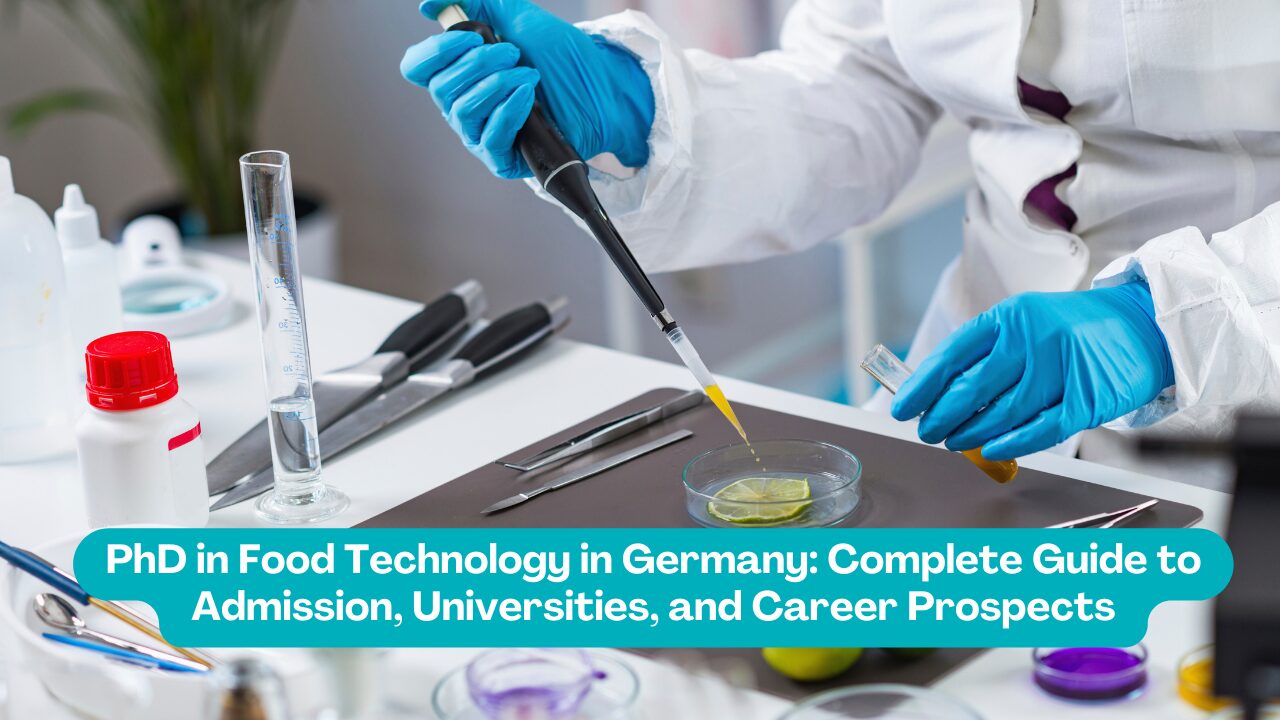
Table of Contents
- Why Pursue a PhD in Food Technology in Germany
- Admission Requirements and Eligibility Criteria
- Top German Universities Offering PhD Programs in Food Technology
- Research Areas and Specialisations Available
- Application Process and Required Documents
- Funding Options and Scholarship Opportunities
- Duration and Structure of PhD Programs
- Language Requirements for International Students
- Career Opportunities After Completing Your PhD
- Living Costs and Student Life in Germany
Germany attracts over 40,000 international doctoral candidates annually, making it one of the world’s most sought-after destinations for advanced research. For students passionate about food science, nutrition, or sustainable food production, pursuing a PhD in Food Technology in Germany offers a unique combination of world-class research facilities, minimal tuition costs, and exceptional career opportunities.
As someone who has guided countless students through the complexities of German university admissions, I’ve witnessed how this path transforms ambitious researchers into global leaders in food innovation. Germany’s structured doctoral programs, cutting-edge laboratories, and strong industry connections create an ecosystem where food technology breakthroughs happen daily. Whether you dream of developing sustainable food systems, advancing nutritional science, or leading research teams in multinational corporations, a doctoral degree from Germany provides the foundation you need.
Table of Contents
- Why Pursue a PhD in Food Technology in Germany
- Admission Requirements and Eligibility Criteria
- Top German Universities Offering PhD Programs in Food Technology
- Research Areas and Specialisations Available
- Application Process and Required Documents
- Funding Options and Scholarship Opportunities
- Duration and Structure of PhD Programs
- Language Requirements for International Students
- Career Opportunities After Completing Your PhD
- Salary Expectations and Industry Demand
- Living Costs and Student Life in Germany
- Frequently Asked Questions
Why Pursue a PhD in Food Technology in Germany
Germany stands at the forefront of food science innovation, biotechnology research, and sustainable agriculture development. The country’s commitment to research excellence has created an environment where doctoral candidates thrive.
Public universities across Germany charge minimal or no tuition fees for doctoral students, making advanced education accessible to talented researchers regardless of financial background. This affordability doesn’t compromise quality. German research institutions consistently rank among the world’s best, offering access to state-of-the-art laboratories, sophisticated equipment, and collaborative research environments that span multiple disciplines.
The global reputation of German degrees opens doors across continents. Whether you aim to work in academia, corporate research and development, or regulatory bodies, employers worldwide recognise the rigorous training and research standards upheld by German universities. Beyond academic prestige, Germany’s immigration policies actively support international graduates. Post-study work visas and pathways to permanent residency make it possible to build long-term careers in Europe’s strongest economy.
For research-focused individuals seeking both intellectual challenge and practical value, Germany delivers an unmatched combination of quality education and career advancement opportunities.
Admission Requirements and Eligibility Criteria
Gaining admission to doctoral programs requires meeting specific academic and professional standards. Competition remains strong, but the process follows transparent, merit-based criteria.
You’ll need a Master’s degree or equivalent qualification in Food Technology, Food Science, Biotechnology, or closely related fields. Academic performance matters significantly—most programs expect grades above 75% or a German scale equivalent of 2.5 or better. Your research proposal becomes your calling card. This document must demonstrate original thinking, clear methodology, and alignment with faculty research interests.
Language proficiency requirements depend on your program’s teaching language. English-taught programs typically require IELTS scores of 6.5 or higher, or TOEFL scores above 90. German-taught programs need TestDaF or DSH certification. Two to three academic references strengthen your application by vouching for your research potential and work ethic.
Many universities require you to secure a supervisor’s preliminary agreement before a formal application. This means reaching out to professors, sharing your research interests, and demonstrating how your proposed work complements their ongoing projects. Your curriculum vitae should clearly outline your academic journey, research experience, publications, if any, and relevant technical skills.
Ready to navigate the application process with expert guidance? Discover how strategic counselling transforms your profile into a compelling admission package.
Top German Universities Offering PhD Programs in Food Technology
Several prestigious institutions lead Germany’s food technology research landscape, each bringing unique strengths to doctoral education.
The Technical University of Munich (TUM) has earned international recognition for food chemistry and process engineering research. The university’s strong industry partnerships provide doctoral candidates with real-world problem-solving opportunities. The University of Hohenheim specialises in food science, nutrition, and biotechnology, offering comprehensive research facilities and interdisciplinary collaboration options.
University of Göttingen maintains a powerful focus on agricultural and food sciences, combining traditional expertise with modern research methodologies. Karlsruhe Institute of Technology (KIT) excels in food process engineering, particularly in automation and sustainable production systems. Technische Universität Berlin creates interdisciplinary research environments where food technology intersects with chemistry, environmental science, and engineering.
Many programs operate within graduate schools or research clusters that provide structured support, networking opportunities, and access to shared resources. These institutional frameworks enhance the doctoral experience by connecting you with peers, offering skills training, and facilitating international collaborations.
Research Areas and Specialisations Available
Doctoral research in food technology spans diverse areas that address current global challenges and future innovations.
Food process engineering focuses on automation, optimisation, and scaling production systems for efficiency and sustainability. Researchers in this field develop technologies that reduce waste, improve product quality, and lower environmental impact. Food safety and microbiology tackle critical issues in pathogen detection, contamination prevention, and shelf-life extension through novel preservation methods.
Functional foods and nutrition represent a growing field where science meets consumer health demands. Doctoral candidates design products that deliver specific health benefits while maintaining palatability and commercial viability. Sustainable food production has become increasingly urgent, with research exploring plant-based proteins, alternative ingredients, and circular economy approaches to reduce agriculture’s environmental footprint.
Food packaging and preservation research develops smart packaging solutions, biodegradable materials, and innovative preservation techniques that extend product life while minimising ecological impact. Germany’s interdisciplinary approach allows you to work across departments, collaborating with biotechnologists, chemists, and environmental scientists. This cross-pollination of ideas creates breakthrough innovations that single-discipline research rarely achieves.
Application Process and Required Documents
Successfully applying requires strategic planning and careful attention to institutional requirements.
Begin by identifying research groups whose work aligns with your interests. Review faculty profiles thoroughly, read recent publications, and understand ongoing projects. Contact potential supervisors directly, sharing your curriculum vitae and a concise research proposal that demonstrates both your knowledge and your proposed contribution to their research area.
Once you’ve established preliminary contact and received positive responses, proceed to a formal application through the university portal or Uni-Assist, Germany’s centralised application platform for international students. Gather degree certificates and transcripts, ensuring all documents are officially translated if not originally in English or German.
Your research proposal requires particular care. It should outline your research question, methodology, expected outcomes, and relevance to current scientific discussions. Proof of language proficiency, letters of recommendation, and a compelling statement of purpose complete your application package. Some programs conduct interviews—either online or in person—to assess your research understanding and cultural fit.
Funding Options and Scholarship Opportunities
Financial support makes doctoral education accessible and allows you to focus on research without economic stress.
Many doctoral candidates secure positions as research assistants (wissenschaftliche Mitarbeiter) within university departments. These positions provide monthly salaries while you conduct your dissertation research. The German Academic Exchange Service (DAAD) offers numerous scholarship programs specifically for international doctoral students, covering living expenses and research costs.
The German Research Foundation (DFG) funds research projects that often include positions for doctoral researchers. University-specific scholarships provide additional funding opportunities, though competition varies by institution. Industry collaboration presents another avenue—food companies co-fund research projects that address practical challenges, giving you both financial support and direct industry exposure.
Starting your scholarship search early proves essential. Applications often have long lead times, and preparation requires gathering documents, securing references, and crafting compelling proposals. The investment in thorough scholarship applications pays dividends through reduced financial pressure and enhanced research opportunities.
Duration and Structure of PhD Programs
Doctoral programs typically span three to four years, though actual duration depends on research complexity and funding arrangements.
Two main structural approaches exist. Individual doctorates follow the traditional path, where you work closely with a single supervisor on a self-defined research topic. This model offers flexibility in research direction and timeline but requires strong self-motivation and independent problem-solving skills.
Structured PhD programs, organised by graduate schools, feature coursework, regular seminars, and cohort-based research activities. These programs incorporate soft skills training, interdisciplinary modules, and structured networking opportunities. While slightly less flexible in timeline, they provide comprehensive professional development alongside research training.
Both structures maintain high academic standards and culminate in dissertation submission and defence. The choice between them often depends on your learning style, research topic, and career goals. Some candidates thrive with the autonomy of individual doctorates, while others benefit from the structured support and community of graduate school programs.
Language Requirements for International Students
Language proficiency enables both academic success and social integration during your doctoral journey.
Most programs at major research universities operate in English, particularly in scientific fields where international collaboration is standard. English-taught programs typically require IELTS scores of 6.5 or above, or TOEFL scores exceeding 90 points. German-taught programs necessitate TestDaF or DSH certification, demonstrating adequate German language skills for academic work.
Even when your research proceeds entirely in English, learning basic German significantly enhances daily life. Navigating administrative processes, building relationships with colleagues, and participating in local cultural activities all become easier with German language skills. Many universities offer free or subsidised German courses for international students, recognising language ability as key to successful integration.
Some programs explicitly expect doctoral candidates to develop basic German proficiency during their studies, viewing it as part of professional development and cultural engagement. This requirement varies by institution and should be clarified during the application process. Applicants preparing their documents can get PhD admissions support in Germany.
Career Opportunities After Completing Your PhD
A doctoral degree in food technology opens diverse professional pathways across sectors and continents.
Academic careers remain popular, with opportunities as postdoctoral researchers, lecturers, or research group leaders in Germany and internationally. The German academic system values research independence, offering clear pathways from postdoc to professorship. Industry research and development roles attract many graduates, particularly in food processing, biotechnology, and nutritional product development. These positions combine scientific expertise with practical application, often involving innovation teams that bring new products to market.
Quality assurance and regulatory affairs represent specialised career paths where doctoral training proves invaluable. Companies need experts who understand both scientific principles and regulatory frameworks to ensure product safety and compliance. Consulting and startup ventures appeal to entrepreneurial graduates. Germany’s growing food tech sector creates opportunities for innovation in sustainable packaging, alternative proteins, and food waste reduction.
International organizations including the Food and Agriculture Organisation (FAO), World Health Organisation (WHO), and EU regulatory bodies, recruit food technology experts for policy development, research coordination, and program implementation. Germany’s position within the European Union and its strong international connections provide exceptional networking opportunities that facilitate these career transitions.
Salary Expectations and Industry Demand
Financial returns on doctoral education reflect both thespecialisedd knowledge you gain and the growing demand for food technology expertise.
Entry-level positions in industry research and development typically offer salaries between €45,000 and €60,000 annually. Postdoctoral and academic roles provide €50,000 to €70,000, with variations based on institution, location, and experience. Senior positions and management roles exceed €70,000, with top performers in the industry reaching six-figure compensation.
Beyond base salary, consider the complete compensation package including health insurance, retirement contributions, and professional development opportunities. The food technology sector continues to expand due to consumer demand for healthier products, sustainability concerns, and regulatory changes driving innovation. Your German doctoral degree provides competitive advantages in this growing market, signalling rigorous training and research capability to employers worldwide.
Living Costs and Student Life in Germany
Germany offers surprisingly affordable living conditions compared to other Western European countries and North America.
Monthly accommodation costs range from €300 to €500, depending on city size and housing type. Shared apartments (Wohngemeinschaften or WGs) provide economical options while facilitating social connections. Food and groceries typically cost €150 to €250 monthly. Cooking at home significantly reduces expenses compared to frequent restaurant dining.
Health insurance, mandatory for all residents, costs approximately €100 to €120 monthly for students. This comprehensive coverage provides peace of mind and access to quality healthcare. Transportation and miscellaneous expenses add another €100 to €150, though many cities offer student discounts on public transportation.
Total monthly expenses typically fall between €700 and €1,000, with variation across cities. Munich and Frankfurt cost more than Leipzig or Dresden, but salary differences often balance regional cost variations. Student life brings rich experiences beyond academics—international communities, cultural events, travel opportunities throughout Europe, and active sports and hobby clubs. Most universities provide dedicated support services for international students, helping with housing, visa questions, and cultural adjustment.
Also useful for Germany applicants:
Frequently Asked Questions
Is it possible to pursue a PhD in Food Technology in Germany without knowing German?
Yes, many programs operate entirely in English, particularly at research-intensive universities. However, learning basic German enhances daily life, eases administrative processes, and improves job market access after graduation.
What is the typical duration of a PhD in Food Technology in Germany?
Most doctoral programs require three to four years, though duration varies based on research complexity, funding structure, and individual progress.
Are there tuition fees for PhD students in Germany?
Public universities typically charge no tuition fees for doctoral students. You’ll pay a small semester contribution of approximately €250 to €350, which often includes public transportation access.
What scholarships are available for international PhD students?
DAAD scholarships, DFG research grants, and university-specific funding provide financial support. Many doctoral candidates also secure paid positions as research assistants within university departments.
Can I work while pursuing a PhD in Food Technology in Germany?
Yes, both as a research assistant (often part of your doctoral funding) and through part-time employment. International students have legal work rights during their studies, subject to specific hour limitations.
Do German PhDs help with permanent residency or EU Blue Card eligibility?
Absolutely. Completing a doctoral degree makes you eligible for an 18-month post-study work visa, providing time to find employment. Subsequent permanent residency or EU Blue Card applications benefit from your advanced qualification.
How do I find a supervisor for my PhD in Food Technology in Germany?
Research university websites thoroughly, read faculty publications, and identify professors whose research interests align with yours. Contact potential supervisors directly with a concise email introducing yourself, your research interests, and your preliminary proposal.
What are the job prospects after a PhD in Food Technology in Germany?
Excellent across multiple sectors. Graduates find positions in academia, industry, research and development, food manufacturing, regulatory bodies, consulting firms, and startups throughout Germany, the European Union, and internationally.
Conclusion
Pursuing a PhD in Food Technology in Germany represents more than an academic achievement—it’s an investment in your future as a global researcher and innovation leader. Germany’s combination of world-renowned research institutions, minimal tuition costs, comprehensive funding options, and robust career opportunities creates an unparalleled environment for doctoral education. The country’s commitment to scientific excellence, coupled with its welcoming stance toward international talent, makes it an ideal destination for ambitious food technology researchers. Whether your interests lie in sustainable food systems, nutritional innovation, food safety, or process engineering, German universities provide the resources, mentorship, and intellectual community needed to transform your research vision into reality.
The pathway from application to graduation demands dedication, but the professional and personal rewards—including competitive salaries, diverse career options, and the possibility of building a life in Europe—make every effort worthwhile. Your journey toward becoming a food technology expert begins with a single strategic step. With proper guidance, thorough preparation, and a clear understanding of the opportunities ahead, your doctoral degree from Germany can become the foundation for a remarkable career addressing some of humanity’s most pressing challenges in food security, sustainability, and nutrition.