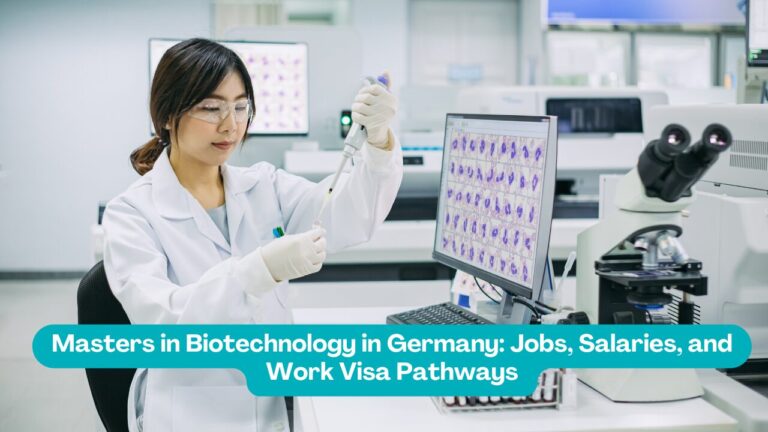
PhD in Bioinformatics in Germany: Complete Guide to Programs, Funding, and Career Opportunities


Table of Contents
- Understanding PhD Programs in Bioinformatics in Germany
- Academic Requirements and Eligibility Criteria
- Top Universities and Research Institutes for Bioinformatics Doctoral Studies
- Application Process and Required Documentation
- Funding Options and PhD Salary Structure in Germany
- Research Areas and Specializations in Bioinformatics
- International Max Planck Research Schools and Structured Programs
- Language Requirements and Integration for International Students
- Career Prospects After Completing Your Doctorate
- Work-Life Balance and Living Conditions for PhD Candidates
- Networking Opportunities and Academic Community
Germany hosts over 450 active PhD positions in bioinformatics annually, with nearly 85% offering full funding—making it one of the most accessible destinations for doctoral research in computational biology. If you’re considering a PhD in Bioinformatics in Germany and wondering how to navigate admissions, funding, and long-term career prospects, you’re in the right place. As Ram Srinivasan, CEO at Galvanize and a veteran admissions expert, I’ve helped hundreds of ambitious students unlock their potential in Germany’s world-class universities. This comprehensive guide will demystify the process, highlight the return on investment, and empower you to make data-driven decisions about your next academic step.
Germany isn’t just a leader in research and innovation—it offers unparalleled opportunities for international PhD candidates in STEM fields. The combination of cutting-edge laboratories, collaborative research networks, and financial support creates an environment where doctoral candidates can focus entirely on their work without the burden of tuition fees or financial uncertainty.
Table of Contents
- Understanding PhD Programs in Bioinformatics in Germany
- Academic Requirements and Eligibility Criteria
- Top Universities and Research Institutes for Bioinformatics Doctoral Studies
- Application Process and Required Documentation
- Funding Options and PhD Salary Structure in Germany
- Research Areas and Specializations in Bioinformatics
- International Max Planck Research Schools and Structured Programs
- Language Requirements and Integration for International Students
- Career Prospects After Completing Your Doctorate
- Work-Life Balance and Living Conditions for PhD Candidates
- Networking Opportunities and Academic Community
- Frequently Asked Questions
Understanding PhD Programs in Bioinformatics in Germany
A PhD in Bioinformatics in Germany typically spans three to four years and takes a research-intensive approach that blends computational biology, data science, and life sciences. German universities offer both traditional routes—where you work individually with a supervisor—and structured programs that often collaborate with leading research institutes.
The focus remains firmly on cutting-edge research, interdisciplinary teamwork, and publishing in top-tier journals. What sets Germany apart is its substantial investment in bioinformatics infrastructure. This has created robust facilities, attracted international faculty, and fostered a vibrant academic community where innovation thrives.
Whether you choose the traditional doctorate path or a structured program, you’ll find yourself immersed in an environment that values both independent thinking and collaborative problem-solving. This dual emphasis prepares you for diverse career trajectories while advancing the frontiers of computational biology.
Academic Requirements and Eligibility Criteria
To pursue a PhD in Bioinformatics in Germany, you’ll generally need a relevant Master’s degree in bioinformatics, computer science, biology, mathematics, or a related field. A strong academic record—typically a 2:1 or equivalent—forms the foundation of competitive applications.
Beyond grades, demonstrated research experience matters significantly. This can come from your thesis work, published papers, or internships in computational biology labs. Most programs require proficiency in English, evidenced through IELTS or TOEFL scores, though some programs conducted in German will require language certification in that language as well.
Your application will also need a compelling motivation letter and a well-crafted research proposal that aligns with potential supervisors’ work. Some universities may ask for GRE or GATE scores, though this isn’t universal. The key is reviewing specific requirements on university websites or through platforms like uni-assist. Early planning and a strategic approach significantly increase your chances of acceptance. Applicants building a doctoral application can get PhD admissions support in Germany.
Top Universities and Research Institutes for Bioinformatics Doctoral Studies
Germany boasts several globally ranked institutions that excel in bioinformatics research. The Technical University of Munich stands out for its integration of computer science and life sciences. Heidelberg University offers exceptional opportunities in medical bioinformatics and computational genomics.
The University of Tübingen has built a strong reputation in machine learning applications for biological data, while RWTH Aachen University combines engineering expertise with biological systems analysis. Beyond traditional universities, the Max Planck Institutes—particularly those focused on Informatics, Molecular Genetics, and Biochemistry—provide world-class research environments.
The German Cancer Research Center in Heidelberg represents another premier option, especially for those interested in translational bioinformatics. These institutions share common strengths: state-of-the-art laboratories, interdisciplinary supervision, and extensive international collaborations. For a curated list of programs, the DAAD database serves as an excellent starting point.
Application Process and Required Documentation
The application process begins with identifying either a suitable supervisor or a structured program that matches your research interests. This step requires careful research into faculty publications and ongoing projects to ensure alignment.
Next, you’ll prepare a compelling research proposal that demonstrates both your understanding of the field and your capacity for independent research. Your application package will include transcripts, a comprehensive CV, a motivation letter, and reference letters from professors or research supervisors who can speak to your capabilities.
Proof of English or German proficiency forms another critical component. Additional documents might include any publications you’ve contributed to, work samples demonstrating coding or analytical skills, and a funding plan if you’re applying without guaranteed support.
Most applications proceed online, though deadlines vary significantly between universities and programs. Some require interviews or research presentations as part of the selection process. For step-by-step guidance, Study-in-Germany offers valuable resources, or you can consult with a trusted admissions partner.
Funding Options and PhD Salary Structure in Germany
Unlike many countries where doctoral students rely on scholarships or teaching assistantships, PhD candidates in Germany are typically employed as junior researchers. This fundamental difference transforms the doctoral experience from one of financial struggle to one of professional development.
Most doctoral candidates receive paid contracts under the TV-L 13 scale, with monthly gross salaries ranging from €2,000 to €3,000. This isn’t pocket money—it’s a proper salary that covers living expenses comfortably. Beyond standard employment contracts, additional funding options include DAAD scholarships, grants from the German Research Foundation, project-based positions at research institutes, and industry-funded projects.
Living costs average between €900 and €1,100 monthly, varying by city. Berlin and Munich cost more, while smaller university towns offer more affordable living. With minimal or no tuition fees, the return on investment for a PhD in Bioinformatics in Germany is exceptional for international researchers. The competition for funded positions remains intense, so early application combined with strong research alignment becomes essential.
Research Areas and Specializations in Bioinformatics
German bioinformatics research spans diverse domains that reflect current scientific priorities and future healthcare needs. Computational genomics and transcriptomics form core areas, where researchers decode genetic information and understand gene expression patterns.
Proteomics and systems biology take a holistic view, examining how proteins interact and how biological systems function as integrated networks. Machine learning applications in biomedical data have exploded in recent years, offering new ways to extract insights from complex datasets and predict disease outcomes.
Structural bioinformatics and drug discovery represent another exciting frontier, where computational methods accelerate the identification of therapeutic compounds. Personalized medicine and health informatics focus on tailoring treatments to individual patients based on their genetic profiles and clinical data.
German laboratories frequently collaborate with hospitals, pharmaceutical companies, and global research networks. This integration provides real-world impact and valuable career exposure, bridging the gap between academic research and practical applications.
International Max Planck Research Schools and Structured Programs
Structured PhD programs, particularly International Max Planck Research Schools, offer distinctive advantages over traditional doctoral routes. These programs provide interdisciplinary training that exposes you to multiple perspectives and methodologies. Lab rotations allow you to experience different research cultures before committing to a specific project.
Soft-skill seminars and networking events prepare you for careers beyond the bench, covering everything from scientific communication to project management. Supervision by leading scientists ensures you’re learning from the best in the field while building networks that last throughout your career.
Programs like the IMPRS for Computational Biology & Scientific Computing and the Helmholtz International Graduate School represent flagship opportunities. These programs are highly competitive and fully funded, attracting top talent worldwide. The structured nature doesn’t mean rigid—rather, it provides a framework within which you can pursue ambitious research while developing professionally.
Language Requirements and Integration for International Students
Most PhD programs in bioinformatics are conducted in English, especially at research universities and institutes. This removes a significant barrier for international candidates and reflects the global nature of scientific research.
However, everyday life and social integration benefit substantially from basic German skills. An A2 to B1 level helps with daily tasks, builds friendships beyond the international community, and enriches your cultural experience. Many universities offer free German language courses and cultural integration support, recognizing that linguistic competence enhances both personal satisfaction and professional effectiveness.
English proficiency remains the primary academic requirement, but embracing German opens doors. It improves employability in German companies, facilitates collaboration with local partners, and demonstrates your commitment to integration—qualities that resonate well with future employers.
Career Prospects After Completing Your Doctorate
A doctorate in bioinformatics from Germany opens remarkably diverse career paths. Academic positions represent one trajectory, progressing from postdoctoral researcher to group leader and potentially to professorship. The structured career framework in German academia provides clarity, though competition remains intense.
Industry roles span biotechnology, pharmaceuticals, healthcare IT, and data science. Major companies actively recruit bioinformatics PhDs for positions that combine technical expertise with strategic thinking. Research institutes like Max Planck, Fraunhofer, and Helmholtz offer alternatives to traditional academia, focusing on applied research with real-world impact.
The startup ecosystem has grown substantially, creating opportunities for entrepreneurial scientists. Consulting firms also value the analytical rigor and problem-solving skills that doctoral training develops.
Germany’s strong bioeconomy, access to the EU-wide job market, and the Blue Card pathway to permanent residency offer excellent long-term prospects. Median post-PhD salaries in bioinformatics range from €50,000 to €70,000 annually, with significant growth potential as you advance. The combination of intellectual fulfillment and financial stability makes this an attractive career foundation.
Work-Life Balance and Living Conditions for PhD Candidates
Germany’s reputation for quality of life isn’t just marketing—it’s backed by policies that protect workers and support well-being. Doctoral candidates benefit from flexible work hours that accommodate both focused research and personal commitments. Generous holiday allowances, typically 30 days or more annually, prevent burnout and support sustained productivity.
Access to affordable healthcare removes a major source of stress common in other countries. The public health system provides comprehensive coverage without the anxiety of medical bankruptcy. German cities, from bustling Munich to historic Heidelberg, offer safety, excellent public transportation, and multicultural communities where international researchers feel welcome.
Universities provide substantial support for housing, visa processes, and integration. Many have dedicated international offices that help with everything from opening bank accounts to understanding German bureaucracy. Vibrant student communities organize social events, sports activities, and cultural exchanges that enrich the doctoral experience beyond the laboratory.
Networking Opportunities and Academic Community
The bioinformatics community in Germany is both welcoming and well-connected. International conferences like ECCB, ISMB, and the German Conference on Bioinformatics provide platforms to present research, learn about cutting-edge developments, and meet potential collaborators.
Research consortia and EU-funded projects create opportunities to work with partners across disciplines and borders. These collaborations often lead to publications, job opportunities, and lasting professional relationships. Alumni networks and career fairs connect you with former doctoral candidates who’ve transitioned into various sectors, offering insights and sometimes direct job leads.
Collaborative projects with industry partners expose you to different working cultures and potential career paths. Active participation in this community accelerates learning, opens doors to unexpected opportunities, and enhances career outcomes. Platforms like DAAD and university-specific networks help you maximize engagement and build a professional identity that extends beyond your immediate research group.
Frequently Asked Questions
Is the German language mandatory for a PhD in Bioinformatics in Germany?
No, most programs are conducted in English. However, basic German significantly helps with daily life, social integration, and long-term career prospects in Germany.
How competitive is PhD admission in Bioinformatics in Germany?
Admission is highly competitive. Strong academics, clear research alignment with potential supervisors, and early application are crucial for success.
Are PhD students paid in Germany?
Yes, most PhD candidates receive a salary or stipend through employment contracts, making doctoral studies financially sustainable without additional loans or external support.
Can I work part-time during my PhD?
It’s generally unnecessary since PhD funding covers living expenses. Some teaching or additional research work is possible with supervisor approval, though it shouldn’t distract from your doctoral research.
What is the typical duration for a PhD in Bioinformatics in Germany?
Usually three to four years, depending on research progress, complexity of the project, and program structure.
What are the visa and post-study work options?
Graduates receive an 18-month job-seeker visa after completion. The EU Blue Card provides pathways to permanent residency for those who secure employment.
How do I find a supervisor for my PhD?
Identify potential professors through university websites, read their recent publications to understand their research direction, and send tailored research proposals that demonstrate alignment with their work.
Where can I get expert help with applications?
Galvanize’s master’s admission experts offer strategic support for applications, helping you navigate the complex German academic landscape with confidence.
Conclusion
Pursuing a PhD in Bioinformatics in Germany represents more than an academic degree—it’s a strategic investment in your future that offers world-class research opportunities, generous funding structures, and global career mobility. The combination of rigorous scientific training, professional employment status, and access to cutting-edge facilities positions you for success in academia, industry, or entrepreneurship.
With careful planning, a strong research profile, and the right guidance, you can join the ranks of innovators shaping the future of life sciences and data-driven medicine. Germany’s commitment to research excellence, coupled with its quality of life and international openness, creates an environment where ambitious doctoral candidates thrive both professionally and personally.
The journey begins with understanding the landscape, identifying the right programs and supervisors, and presenting your qualifications compellingly. Whether you’re drawn to computational genomics, machine learning in healthcare, or structural biology, German institutions offer the resources and expertise to pursue your research vision.
Also useful for Germany applicants:
Get expert admission guidance for your doctoral application—book your free strategy session with Galvanize now and take the first step toward your research career in Germany.