PhD in Human Resource Management in Germany: Universities, Funding, and Careers

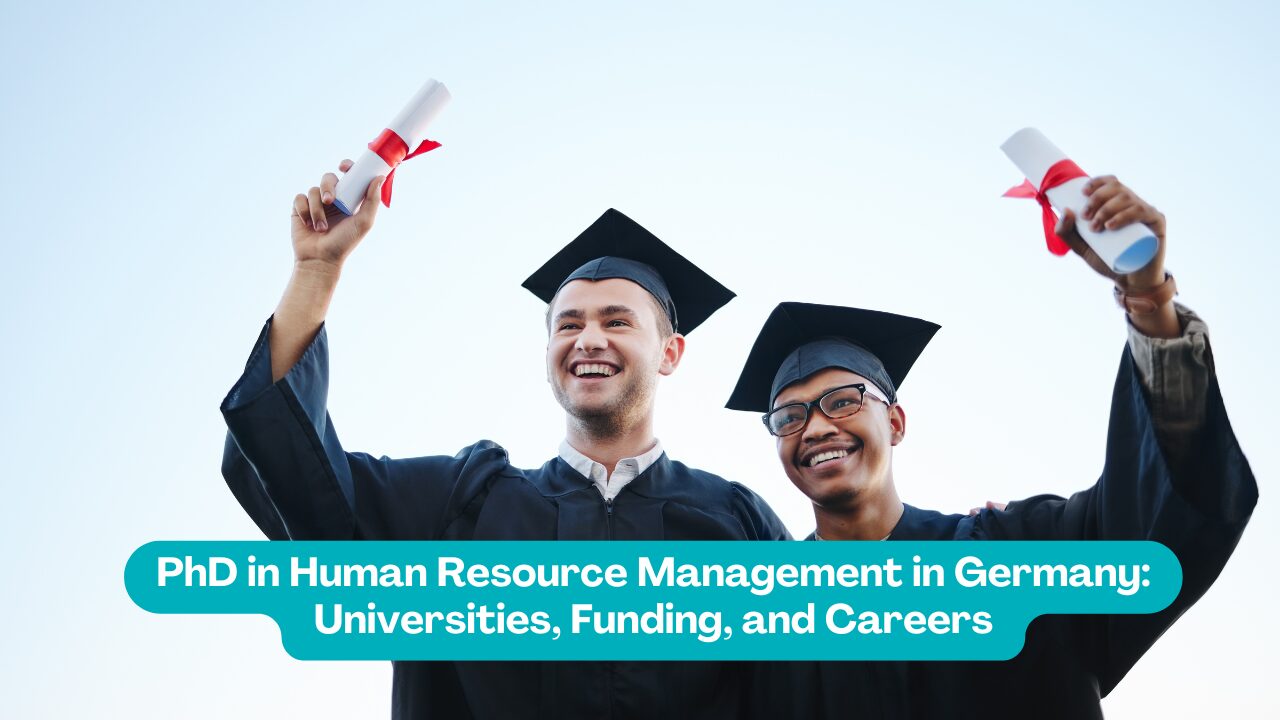
Table of Contents
- Why Pursue a PhD in HRM in Germany
- Top Universities Offering a PhD in Human Resource Management
- Admission Requirements and Eligibility Criteria
- Research Areas and Specializations in HRM
- Application Process and Timeline
- Scholarships and Funding Opportunities for PhD Students
- Duration and Structure of PhD Programs in HRM
- Career Opportunities After a PhD in HRM in Germany
- Post-Study Work Visa and Academic Pathways
- Tips for Strengthening Your PhD Application
- FAQs
- Conclusion
Pursuing a PhD is more than just advancing your academic credentials; it’s a transformative journey filled with hope, challenges, and the desire to make a meaningful impact. If you’re considering a PhD in Human Resource Management, you might be wondering where you can find the perfect blend of quality education, practical experience, and affordable options. Perhaps you’re driven by the ambition to become a leader in shaping the future of work or the curiosity to explore innovative HR strategies that can change organizations for the better. Choosing the right place to pursue this dream can be overwhelming, especially when balancing career goals with financial and personal considerations.
This blog is designed to guide you through the exciting possibilities of earning your PhD in Germany, a country known for its tuition-free education, strong industry connections, and vibrant research culture. Here, you’ll discover how German universities can support your academic journey, funding opportunities that ease financial worries, and career paths that extend far beyond graduation. Whether you’re a master’s graduate, an experienced professional, or someone seeking a fresh academic challenge, this guide offers clear, practical insights to help you take confident steps toward your doctoral goals.
Why Pursue a PhD in HRM in Germany
Germany offers one of the strongest ecosystems for academic and professional growth. Students benefit from well-funded universities, deep connections between academia and industry, and a cost-effective education model.
Key reasons to pursue a PhD in Human Resource Management here include:
- No tuition fees at public universities
- Funded research opportunities from DAAD, DFG, and EU programs
- Collaboration with top employers like Siemens, BMW, and SAP
- Access to English-taught PhD programs
- Post-study job search visa valid for up to 18 months
For students from India, Southeast Asia, or Africa, Germany provides an excellent return on investment—combining affordability, quality, and employment potential across the EU.
Top Universities Offering a PhD in Human Resource Management
Several leading German universities are known for their business and HR research excellence. Some of the best options to consider are:
- University of Mannheim – Renowned for business and social sciences programs
- LMU Munich – Offers interdisciplinary HR research opportunities
- University of Cologne – Focus on labor relations and HR analytics
- Frankfurt School of Finance & Management – Structured programs emphasizing business relevance
- HHL Leipzig Graduate School of Management – Global networks and research-oriented structure
Most universities allow both individual and structured PhD formats. Applicants can explore eligibility and university-specific requirements through Uni-Assist or the DAAD platform.
Admission Requirements and Eligibility Criteria
Applicants for a PhD in Human Resource Management in Germany must demonstrate academic excellence and research alignment. The typical eligibility criteria include:
- A master’s degree in HRM, Business, Psychology, or related disciplines
- A strong academic record (minimum 75–80%)
- Proof of English proficiency (IELTS/TOEFL) or German (TestDaF/DSH)
- A clearly defined research proposal matched with a supervisor’s expertise
- Strong recommendation letters and an academic writing sample
Some structured doctoral programs may also ask for GRE or GMAT scores. Applicants seeking tailored application guidance can explore the PhD admissions support in Germany.
Research Areas and Specializations in HRM
Germany’s research culture emphasizes depth, collaboration, and innovation. PhD candidates in HRM can specialize in diverse domains, such as:
- Strategic Human Resource Management
- Organizational Behavior and Leadership
- Industrial and Labor Relations
- HR Analytics and Digital Transformation
- Cross-Cultural and International HRM
Many projects involve close partnerships with corporations and public research institutes, allowing students to conduct applied research that directly influences HR strategies.
Application Process and Timeline
Applying for a PhD in Germany requires careful planning and communication with potential supervisors.
Step-by-step guide:
- Identify research areas and potential supervisors.
- Develop a detailed research proposal.
- Contact professors with a personalized cover letter.
- Submit formal applications via Uni-Assistor the university’s online portal.
- Once accepted, apply for a student visa and start pre-departure formalities.
Most individual PhD positions accept rolling applications, while structured programs often have deadlines between January and April for the Fall intake.
Scholarships and Funding Opportunities for PhD Students
Germany is well-known for its generous funding landscape for doctoral researchers. Major options include:
- DAAD Scholarships– Monthly stipend (~€1,200), plus travel and insurance benefits
- DFG (German Research Foundation)– Funding for project-based research
- University Assistantships – Teaching or research roles within departments
- Erasmus+ Grants – Mobility and exchange opportunities across the EU
Many doctoral students also receive employment contracts within research groups, providing both income and professional experience.
Duration and Structure of PhD Programs in HRM
PhD programs in Germany follow two primary models:
- Individual Doctorate: 3–5 years, fully research-based under a single supervisor
- Structured Doctorate: 3–4 years, combining coursework, research, and seminars
Regardless of the model, all candidates must produce publishable research evaluated through a public defense, known as the Disputation. Most HRM programs are fully available in English, making them accessible for international scholars.
Career Opportunities After a PhD in HRM in Germany
Graduating with a PhD in Human Resource Management from Germany opens global career possibilities. Common pathways include:
- Academic positions such as Assistant Professor or Postdoctoral Fellow
- Corporate roles in HR strategy, leadership development, and organizational change
- Consulting and advisory roles with top firms
- Research positions in policy think tanks, NGOs, and global HR institutions
Germany’s HR industry has seen consistent growth in analytics-driven and digital HR solutions. With eligibility for the EU Blue Card, PhD graduates enjoy career mobility across Europe.
Post-Study Work Visa and Academic Pathways
Germany provides international graduates with an 18-month post-study work visa to find relevant employment. Successful graduates can further extend their stay upon securing a job or academic position.
Key visa benefits include:
- Access to the EU labor market
- Potential for permanent residency after 33 months
- Family reunification rights and access to education benefits
PhD graduates are also qualified to apply for faculty, research, and project leadership roles within public universities and research institutes.
Tips for Strengthening Your PhD Application
A compelling application goes beyond academic transcripts. To make your profile stand out:
- Begin preparing 12–18 months before applying
- Customize each research proposal for your chosen supervisor
- Gather recommendation letters from research-active mentors
- Include academic writing samples or published papers
- Seek expert guidance through Galvanize.
Remember, successful doctoral admission in Germany is as much about research alignment as academic merit.
Your SOP is one piece of the application.
Get a Galvanize admissions expert to review your profile, shortlist universities, and strengthen your whole application. Speak to an admissions expert →
FAQs
- Can I do a PhD in HRM in Germany without knowing German?
Yes. Many doctoral programs in business and HRM are conducted entirely in English, though basic German helps in everyday interactions. - Are there tuition fees for PhD programs?
Most public universities charge no tuition, aside from a semester contribution fee (around €250–€350). - What’s the typical duration of a PhD in HRM?
Three to five years, depending on the program structure and research progress. - Do I need a master’s degree to apply?
Yes, though exceptional bachelor’s graduates may be considered in rare cases. - How competitive is admission?
Highly competitive. A well-aligned research proposal, publications, and a strong academic history significantly improve your chances. - Can I work part-time during my PhD?
Yes. Students can work up to 120 full or 240 half days per year and often hold paid assistantships.
Conclusion
Earning a PhD in Human Resource Management in Germany is a strategically rewarding decision. With more than 400,000 international students enrolled nationwide, the country continues to prove itself as a global academic powerhouse. Its commitment to research-driven education, low costs, and close alignment with industry ensures that PhD graduates are well-prepared to shape the future of work.
With the right preparation, proposal, and mentorship, your doctoral journey in HRM can transform not only your career trajectory but also your contribution to the evolving world of human capital management.
Also useful for Germany applicants: