Study in Germany for International Students – Programs, Visas, and Scholarships

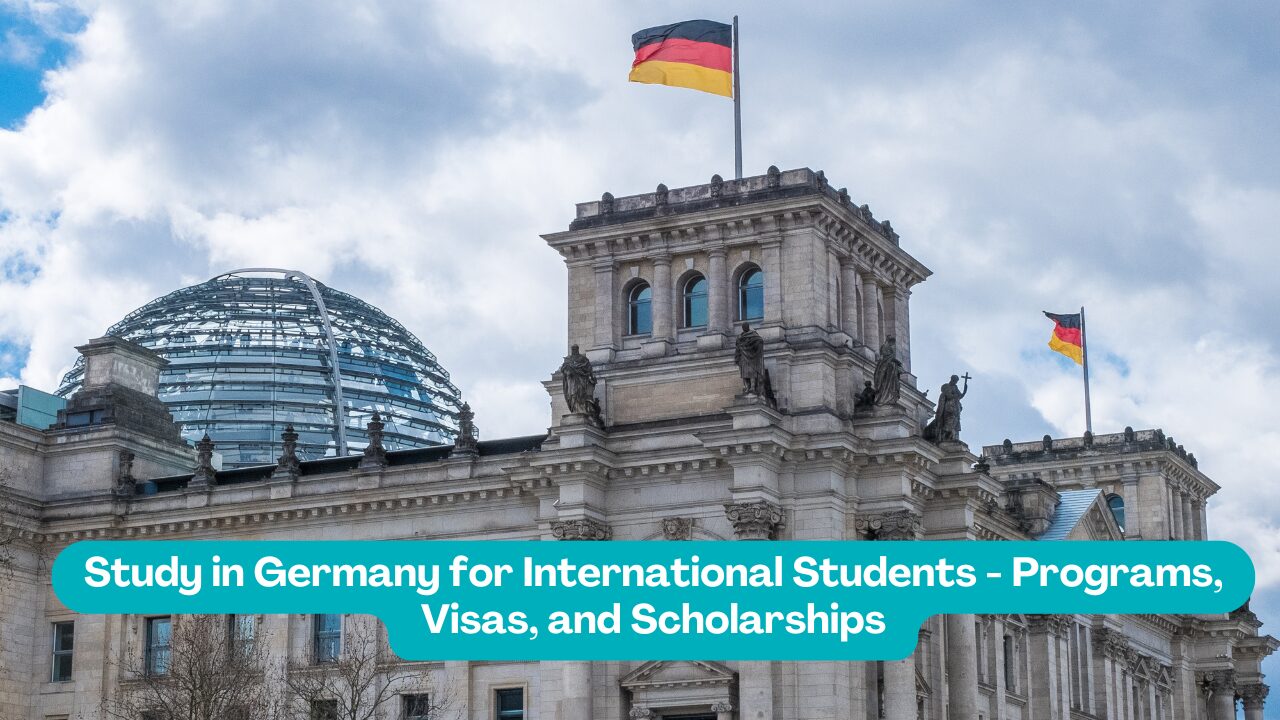
Table of Contents
- Why Germany Attracts International Students
- Overview of the German Higher Education System
- Popular Courses Among International Students
- Admission Requirements for International Applicants
- Application Process & Deadlines
- Language Requirements: German vs. English-Taught Programs
- Tuition Fees and Cost of Living in Germany
- Scholarships and Financial Aid Options
- Student Visa Requirements and Process
- Life in Germany: Culture, Work, and Student Support
- Post-Study Work Opportunities in Germany
- Frequently Asked Questions
- Conclusion
Germany stands out as one of the world’s most attractive destinations for international education. According to the German Academic Exchange Service (DAAD), the country hosts over 440,000 international students, making it the most popular non-English-speaking destination for studying abroad. Its reputation for world-class education, affordable or tuition-free public universities, and a thriving job market make the opportunity to study in Germany for international students both practical and rewarding.
From renowned technical universities to globally ranked business schools, Germany offers a perfect blend of academic excellence, research quality, and post-study work opportunities. Many international students are drawn to its transparent admission process, diverse culture, and globally recognized degrees. Whether you’re looking to pursue engineering, management, data science, or creative arts, Germany provides a launchpad for success. This guide walks you through everything you need to know — from program options and visa processes to scholarships and life as a student in Germany. At Galvanize, we have seen an increase in the number of students who opt for Germany as their dream destination for higher education.
Why Germany Attracts International Students
Germany consistently ranks among the top five global destinations for higher education. Several factors make it appealing:
- No or Low Tuition Fees: Most public universities charge little to no tuition, even for international students.
- Globally Recognized Degrees: German qualifications are respected worldwide, especially in engineering, science, and business.
- Post-Study Work Opportunities: International graduates can stay for up to 18 months to find employment.
- Strong Job Market: Robust demand in technology, engineering, business, and healthcare sectors.
For students from India, Southeast Asia, and Africa, studying in Germany offers a high return on investment with excellent job prospects and affordable living. At Galvanize, students receive full support and counseling to help them choose the right university and career path based on their profile.
Overview of the German Higher Education System
Germany’s education system is diverse and internationally recognized for its quality. It includes:
- Universities (Universität): Focused on theoretical knowledge and research; ideal for students pursuing academic or research careers.
- Universities of Applied Sciences (Fachhochschule): Emphasize practical, career-oriented programs with strong ties to industry.
- Colleges of Art, Film, and Music: Offer specialized training in creative fields.
With over 400 institutions providing more than 20,000 degree programs, many taught in English, international students can find courses that align with their goals. For detailed program listings, visit Study in Germany.
Popular Courses Among International Students
Germany attracts thousands of learners across a wide range of disciplines. Some of the most sought-after programs include:
- Engineering (Mechanical, Electrical, Automotive)
- Computer Science and Artificial Intelligence
- Business and Management
- Data Science and Analytics
- Renewable Energy and Environmental Studies
- Healthcare and Nursing
These programs often have strong industry ties and offer English-taught tracks, making study in Germany both accessible and career-focused. At Galvanize, our students receive full support to understand their future.
Admission Requirements for International Applicants
While requirements vary by institution, the general admission criteria include:
- Academic Transcripts (10th, 12th, Bachelor’s, or equivalent)
- Statement of Purpose (SOP)
- Letter(s) of Recommendation
- Proof of Language Proficiency (IELTS/TOEFL or TestDaF)
- Copy of Passport and Curriculum Vitae
Students applying for undergraduate degrees may need to complete a Studienkolleg (foundation course) if they do not meet the direct-entry criteria.
We provide end-to-end support on documentation and university applications at Galvanize. To know more, explore our master’s admission.
Application Process & Deadlines
A well-organized approach is essential when applying to German universities. Here’s a simplified roadmap:
- Shortlist Programs: Use trusted platforms such as DAADanduni-assist.
- Prepare Documents: Follow each university’s checklist carefully.
- Submit Applications: Apply through Uni-Assist or institutional portals as required.
- Check Deadlines:
- Winter Intake (October): Apply between May–July.
- Summer Intake (April): Apply between November–January.
Start your applications at least six to nine months in advance to ensure adequate time for visa processing.
Language Requirements: German vs. English-Taught Programs
Students have the flexibility to study in either German or English, depending on their chosen program:
- Bachelor’s Programs: Predominantly in German; require proficiency at the B2 or C1 level.
- Master’s and MBA Programs: Many are English-taught and accept IELTS (6.5 and above) or TOEFL (90+).
- PhD Programs: Flexible language options depending on the supervisor and research topic.
Even when enrolled in an English-taught course, learning basic German helps immensely with daily communication, internships, and job opportunities.
Tuition Fees and Cost of Living in Germany
Germany’s affordability makes it a standout study destination. Below is a breakdown of typical monthly expenses:
| Expense | Monthly Estimate (EUR) |
| Rent | 300–500 |
| Food & Living | 200–300 |
| Health Insurance | 110–120 |
| Transport | 50–80 |
| Miscellaneous | 100 |
| Total | €750–€1,100 |
Public universities are typically tuition-free, although nominal semester fees may apply. In contrast, private universities can charge between €10,000 and €20,000 per year.
Scholarships and Financial Aid Options
Germany offers generous scholarship programs to support international students. The most notable include:
- DAAD Scholarships: Funded by the German government and available across disciplines.
- Erasmus+: Supports student exchange programs within Europe.
- Deutschlandstipendium: A merit-based national scholarship scheme.
- University-Specific Scholarships: Offered by individual institutions.
Some scholarships also include living stipends. Building a strong academic profile and applying early can improve your chances. Get tailored guidance from Galvanize’s master’s admission experts.
Student Visa Requirements and Process
To study in Germany, you must secure a German National Visa. Common requirements include:
- Proof of Admission from a recognized institution
- A Blocked Account (approximately €11,208 per year)
- Health Insurance Coverage
- Academic Records and Application Documents
- Attendance at a Visa Interview at the Consulate
Visa processing may take between four and twelve weeks, so it’s recommended to begin early. At Galvanize, we also help our students prepare for the visa interviews.
Life in Germany: Culture, Work, and Student Support
Germany offers an enriching experience for international students, blending academic rigor with cultural diversity.
- Work While Studying: Students can work up to 120 full or 240 half days per year.
- Student Support Services: Institutions offer buddy programs, international offices, and career counseling.
- Vibrant International Community: Over 400,000 international students live and learn across Germany.
- Safe and Efficient Environment: Germany is known for low crime rates, excellent healthcare, and public transport systems.
Learning German, networking actively, and engaging with local communities make integration smoother and more rewarding.
Post-Study Work Opportunities in Germany
After graduation, students can apply for an 18-month post-study work visa to find employment in their field. Eligible graduates may also pursue the EU Blue Card, which serves as a pathway to permanent residency.
Graduates can apply for permanent residence after 33 months of skilled work experience, or as early as 21 months with B1 level German proficiency. The most promising sectors include IT, engineering, renewable energy, finance, and healthcare, offering global career mobility across the EU.
Frequently Asked Questions
- Can I study in Germany without knowing German?
Yes. Many master’s and MBA programs are available in English. However, undergraduate courses often require German proficiency. - Is studying in Germany tuition-free?
At public universities, most programs are tuition-free apart from semester contributions. You’ll still need to cover living expenses. - What is a blocked account?
It’s a mandatory account that shows financial proof of your ability to cover living costs (around €11,208 annually). - When should I start my application?
Begin at least six to nine months before your intended intake, as deadlines differ by university. - Are German degrees recognized globally?
Yes. Degrees from German institutions are highly valued, particularly in STEM and business disciplines. - Can I work part-time while studying?
Yes. International students can work up to 120 full days or 240 half days each year. - What are the best scholarships for international students?
DAAD, Erasmus+, Deutschlandstipendium, and various university-specific scholarships. - How can Galvanize help with your application?
Through personalized guidance on university selection, SOP writing, scholarships, and visa support. VisitGalvanize for master’s admission.
Conclusion
Germany is not just a study destination; it is a long-term investment in global education, affordable living, and professional success. By planning strategically, i.e., selecting the right program, applying early, and preparing your visa documents carefully, you can make the most of what Germany offers. It’s not just about earning a degree but building a career and a future in a thriving global hub.
Also useful for Germany applicants:
Ready to begin your journey? Get Expert Help with Your Germany Admissions Journey.