Master’s in Agricultural Engineering in Germany: Top Programs and Admissions

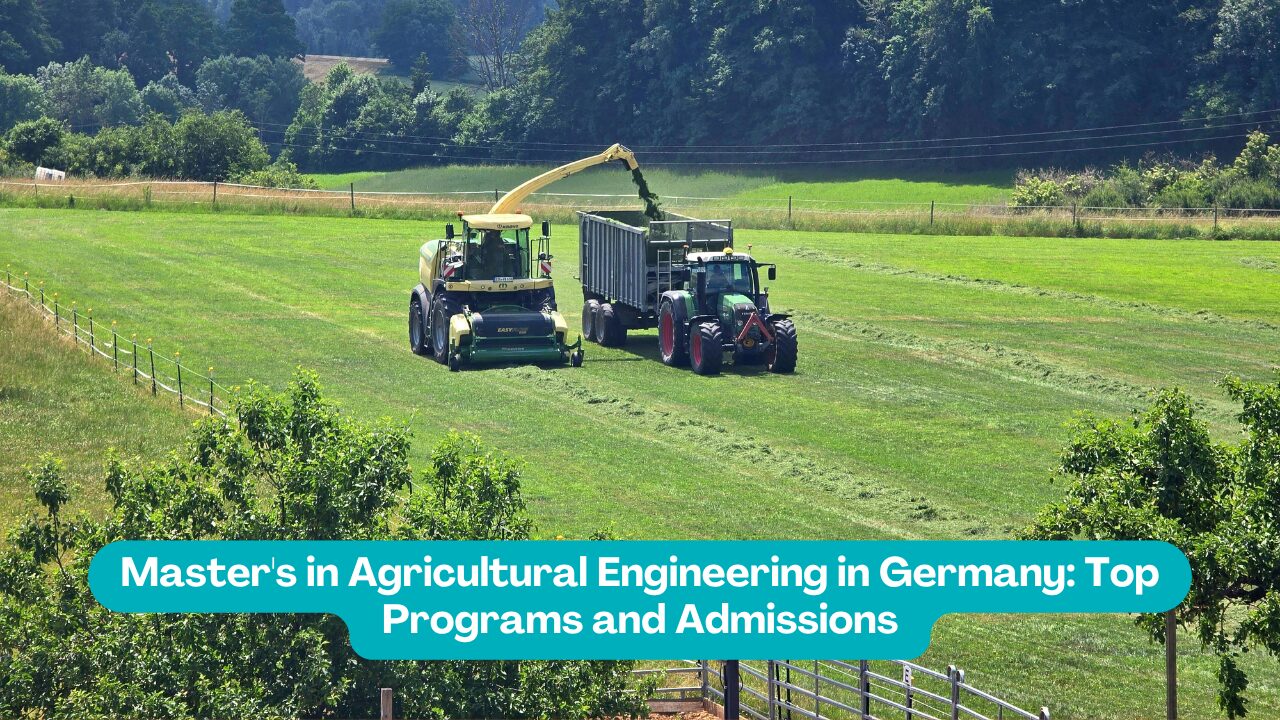
Table of Contents
- Best universities offering Master’s in Agricultural Engineering in Germany
- Admission requirements for international students in the Agricultural Engineering Master’s in Germany
- English-taught programs in Master’s Agricultural Engineering in Germany options
- Application deadlines for Master’s in Agricultural Engineering in Germany for intakes
- Tuition fees and scholarships for Agricultural Engineering Master’s in Germany
- Language proficiency tests needed for a Master’s in Agricultural Engineering in Germany
- Visa process for studying Agricultural Engineering Master’s in Germany
- Living costs and student life during a Master’s in Agricultural Engineering in Germany
- Curriculum details in the top Agricultural Engineering Master’s programs in Germany
- Career opportunities post Master’s in Agricultural Engineering in Germany
- FAQs on Master’s in Agricultural Engineering in Germany
- Conclusion
Germany ranks among the top destinations for STEM studies, with Agricultural Engineering programs leading innovation in food security and sustainability. If you’re considering a Master’s in Agricultural Engineering in Germany, you’re joining thousands of international students who recognize the strategic value of German higher education—world-class universities, minimal tuition costs, and robust career pathways into Europe’s thriving agritech sector. As Ram Srinivasan, CEO of Galvanize and an admissions expert with over 15 years of experience guiding students through global education journeys, I’ve watched countless ambitious students transform their futures through strategic planning and informed decision-making. This comprehensive guide demystifies the entire process, from university selection and admission requirements to career prospects and visa logistics, helping you maximize your investment while building a meaningful global career in agricultural engineering.
“Germany is among the top destinations for STEM studies, with Agricultural Engineering programs leading innovation in food security and sustainability.” – DAAD
Table of Contents
- Best universities offering Master’s in Agricultural Engineering in Germany
- Admission requirements for international students in the Agricultural Engineering Master’s in Germany
- English-taught programs in Master’s Agricultural Engineering in Germany options
- Application deadlines for Master’s in Agricultural Engineering in Germany for intakes
- Tuition fees and scholarships for Agricultural Engineering Master’s in Germany
- Language proficiency tests needed for a Master’s in Agricultural Engineering in Germany
- Visa process for studying Agricultural Engineering Master’s in Germany
- Living costs and student life during a Master’s in Agricultural Engineering in Germany
- Curriculum details in the top Agricultural Engineering Master’s programs in Germany
- Career opportunities post Master’s in Agricultural Engineering in Germany
- FAQs on Master’s in Agricultural Engineering in Germany
Best universities offering Master’s in Agricultural Engineering in Germany
Germany’s academic landscape offers exceptional institutions dedicated to agricultural innovation and engineering excellence. When pursuing a Master’s in Agricultural Engineering in Germany, you gain access to research facilities and industry partnerships that position you at the forefront of global food security solutions.
Leading institutions include:
- Technische Universität München (TUM):Consistently ranked among Europe’s top engineering schools, offering cutting-edge research in agricultural technology
- University of Hohenheim:Internationally renowned for agricultural sciences with deep interdisciplinary research capabilities
- Leibniz University Hannover:Distinguished by its focus on sustainable technology and precision agriculture applications
- University of Göttingen:Known for research-driven programs integrating traditional agricultural knowledge with modern innovation
- Humboldt University of Berlin:Offers innovative, interdisciplinary courses connecting agriculture with environmental and social sciences
Most of these institutions operate as public universities, meaning tuition fees remain minimal or completely absent. This makes them ideal choices for students seeking exceptional return on investment without accumulating overwhelming debt.
For comprehensive university comparisons and program details, explore Study in Germany.
Admission requirements for international students in the Agricultural Engineering Master’s in Germany
Understanding admission criteria represents your essential first step toward a successful application. While requirements vary between institutions, most programs follow consistent frameworks that reward strong academic foundations and genuine research interest.
Standard application components:
- Bachelor’s degree in agricultural engineering, mechanical engineering, electrical engineering, or closely related disciplines
- Complete academic transcripts and official degree certificates
- Professional CV highlighting relevant coursework, projects, and experience
- Compelling Statement of Purpose or Motivation Letter explaining your research interests and career vision
- Letters of Recommendation from academic referees who can speak to your capabilities
- Proof of language proficiency in either English or German, depending on program requirements
Some universities may request GRE scores or GATE results, particularly for Indian applicants. Each institution maintains specific prerequisites, so always verify requirements through official university websites or uni-assist.
For personalized application guidance that maximizes your acceptance probability, explore admission counseling for agricultural engineering programs offering strategic, step-by-step support tailored to your profile.
English-taught programs in Master’s Agricultural Engineering in Germany options
While German remains the primary language at many institutions, a growing number of universities recognize international demand and offer fully English-taught programs in agricultural engineering.
Notable English-medium options:
- TUM:MSc in Agricultural Biosciences, conducted entirely in English with strong industry connections
- University of Hohenheim:MSc in Agricultural Sciences, offering specialized engineering tracks
- Leibniz University Hannover:MSc in Biosystems Engineering, designed specifically for international students
These programs eliminate language barriers for initial enrollment while still providing pathways to German language acquisition. Even when studying in English-taught programs, basic German skills enhance internship opportunities, professional networking, and daily life integration.
Check university websites and the DAAD International Program database for regularly updated program listings. English accessibility makes pursuing a Master’s in Agricultural Engineering in Germany realistic even for students without prior German language experience.
Application deadlines for Master’s in Agricultural Engineering in Germany for intakes
German universities operate on strict semester systems with non-negotiable deadlines. Understanding and respecting these timelines proves critical to application success.
Standard intake periods:
- Winter semester (October start):Application windows typically open in November and close between March and July
- Summer semester (April start):Deadlines generally fall between November and January of the preceding academic year
Specific deadlines vary significantly between universities and individual programs. Competitive programs sometimes close applications weeks before official deadlines when they reach capacity. Early submission dramatically improves acceptance probability and demonstrates genuine commitment.
Use uni-assist to verify exact dates for your target programs. Strategic timeline planning prevents the frustration of missing deadlines and waiting an additional year to reapply.
Tuition fees and scholarships for Agricultural Engineering Master’s in Germany
Financial accessibility distinguishes German higher education from nearly every other developed destination. The cost structure transforms education from a debt burden into an accessible opportunity.
Tuition structure:
Public universities typically charge zero tuition for international students, requiring only semester contributions of €250–€350 covering administrative services and public transportation access. Private institutions may charge €5,000–€10,000 annually, though agricultural engineering programs exist predominantly in the public sector.
Major scholarship opportunities:
- DAAD Scholarships:Germany’s prestigious flagship program offering competitive funding for exceptional international students
- Deutschlandstipendium:Merit-based support providing €300 monthly to high-achieving students
- University-specific awards:Many institutions offer departmental scholarships tied to research projects
- Industry-funded options:Agritech companies increasingly sponsor talented students
Scholarship applications often run parallel to university admissions with separate deadlines. Early preparation and strong application materials significantly improve funding prospects.
For comprehensive cost breakdowns and funding strategies, visit Study in Germany – Costs.
Ready to position yourself competitively for both admission and scholarships? Discover strategic admission support for agricultural engineering programs that strengthens every aspect of your application while maximizing funding opportunities.
Language proficiency tests needed for a Master’s in Agricultural Engineering in Germany
Language requirements depend entirely on your chosen program’s medium of instruction. Meeting these thresholds proves non-negotiable for admission consideration.
For English-taught programs:
- IELTS: 6.0–7.0 overall, depending on university and program competitiveness
- TOEFL: 80–100 iBT
- Cambridge English: C1 Advanced or above
For German-taught programs:
- TestDaF: TDN 4 or higher across all sections
- DSH-2: University-specific German language examination
Select universities accept the Duolingo English Test as an alternative to traditional examinations. Even for English-medium programs, acquiring basic German proficiency at the A1 or A2 level enhances internship opportunities, professional networking, and post-graduation employment prospects.
For detailed language requirements across different institutions, consult DAAD Language Requirements.
Visa process for studying Agricultural Engineering Master’s in Germany
The German student visa process follows a systematic, predictable pathway. Understanding requirements and timelines prevents unnecessary complications during this critical stage.
Essential visa steps:
- Secure an official university admission letter
- Open a blocked account demonstrating approximately €11,208 minimum balance for one year’s expenses
- Obtain mandatory health insurance coverage meeting German requirements
- Prepare comprehensive visa application documents, including Statement of Purpose and financial proof
- Schedule an appointment and attend a visa interview at your local German consulate or embassy
- Await processing, typically requiring 4–12 weeks, depending on location and season
Begin visa procedures immediately after receiving admission confirmation. Embassy processing times fluctuate based on application volume, with peak periods experiencing significant delays.
For personalized visa checklists and timeline management, explore admission counseling for international students offering comprehensive support throughout the entire process.
Living costs and student life during a Master’s in Agricultural Engineering in Germany
Germany delivers an exceptional quality of life at remarkably affordable costs compared to other Western European destinations. Understanding typical expenses helps you budget effectively and avoid financial surprises.
Monthly expense breakdown (2024 estimates):
- Rent in shared apartments: €300–€500
- Food and groceries: €150–€250
- Mandatory health insurance: €110
- Public transportation: €50–€100
- Personal and miscellaneous expenses: €100
Total monthly budget: €800–€1,000
International students can work part-time up to 120 full days or 240 half days annually, providing opportunities to gain professional experience while supplementing income. Many find positions in university research laboratories, agricultural companies, or campus facilities.
Student life extends beyond academics. Cities like Munich, Stuttgart, and Berlin offer vibrant international communities, cultural festivals, and agricultural research groups. Field visits to farms, processing facilities, and technology companies provide hands-on learning that complements classroom theory.
Curriculum details in the top Agricultural Engineering Master’s programs in Germany
Typical programs combine foundational agricultural knowledge with cutting-edge engineering applications, preparing you for the rapidly evolving agritech sector.
Common curriculum structure:
- Core fundamentals:Soil science, crop production systems, agricultural mechanization
- Advanced technical modules:Precision agriculture, agricultural robotics, Internet of Things applications, renewable energy integration
- Specialized electives:Sustainable resource management, food processing technology, environmental engineering
- Research project or thesis:Often industry-linked or conducted in collaboration with European Union research partners
Programs emphasize practical application through laboratory work, field experiments, and industry internships. This hands-on approach makes graduates of agricultural engineering programs in Germany highly employable across both academic research and commercial sectors.
The integration of theoretical knowledge with real-world problem-solving distinguishes German agricultural engineering education from programs in many other countries.
Career opportunities post Master’s in Agricultural Engineering in Germany
Germany’s agritech sector experiences robust growth driven by sustainability imperatives and technological innovation. This creates exceptional demand for qualified graduates with specialized agricultural engineering expertise.
Typical career trajectories:
- Research and development roles at agricultural machinery manufacturers like CLAAS, John Deere Europe, and Fendt
- Positions in food processing, supply chain optimization, and sustainability consulting
- Research scientist roles at universities, Max Planck Institutes, and agricultural research centers
- PhD opportunities throughout Germany and the broader European Union
- Entrepreneurial ventures in agricultural technology startups
Germany’s 18-month post-study work visa allows you to remain after graduation while securing employment. Many international graduates transition into permanent positions with multinational corporations or launch innovative startups addressing global food security challenges.
Long-term settlement pathways include the EU Blue Card and Permanent Residency routes, making a Master’s in Agricultural Engineering in Germany not just an educational experience but a gateway to building your life in Europe.
FAQs on Master’s in Agricultural Engineering in Germany
- Can I apply for a Master’s in Agricultural Engineering in Germany with a non-agricultural engineering background?
Yes, provided your undergraduate degree falls within related fields like mechanical, civil, or environmental engineering and you demonstrate relevant coursework or practical experience. Always verify university-specific prerequisites directly.
- Are there English-taught Master’s in Agricultural Engineering in Germany?
Absolutely. Leading institutions like TUM, Hohenheim, and Leibniz University Hannover offer English-medium programs. Consult the DAAD database for current program listings.
- Is work experience required for admission?
Not universally. Most programs welcome recent graduates, though relevant internships, research projects, or professional experience can significantly strengthen applications.
- What are the job prospects after a Master’s in Agricultural Engineering in Germany?
Excellent. Germany’s expanding agritech industry actively recruits qualified graduates. Career pathways span R&D, consulting, academic research, and entrepreneurship with competitive salaries and advancement opportunities.
- How much does it cost to study and live in Germany?
Tuition remains free at public universities. Living expenses average €800–€1,000 monthly, depending on city choice and lifestyle, making Germany remarkably affordable compared to alternatives.
- Do I need to know German for an English-taught Master’s in Agricultural Engineering in Germany?
Not for academic requirements, but basic German proficiency enhances internship prospects, daily life integration, and post-graduation employment opportunities. Many universities offer free or subsidized language courses.
- Can I stay in Germany after graduation?
Yes. The 18-month post-study work visa allows job searching after graduation. Many graduates use this period to secure permanent positions and apply for an EU Blue Card or Permanent Residency.
- What is the ROI of pursuing a Master’s in Agricultural Engineering in Germany?
Return on investment proves exceptionally strong—minimal tuition, high employability, competitive salaries, and access to European Union career opportunities. Many graduates experience significant salary increases and long-term settlement options.
Conclusion
Pursuing a Master’s in Agricultural Engineering in Germany delivers an unmatched combination of academic excellence, financial accessibility, and global career prospects. From precision agriculture and sustainable food systems to agricultural robotics and environmental engineering, German programs position you at the forefront of innovations addressing humanity’s most pressing challenges around food security and environmental sustainability. By understanding admission processes, language requirements, scholarship opportunities, and career pathways outlined in this guide, you can make informed, strategic decisions that maximize both immediate educational value and long-term professional returns.
Success requires more than meeting minimum requirements—it demands careful planning, early preparation, and a clear understanding of how each application component strengthens your overall profile. Whether you’re a student mapping your future or a parent supporting educational decisions, clarity and expert strategy remain your most valuable allies throughout this transformative journey.
Ready to take your next strategic step toward a Master’s in Agricultural Engineering in Germany?Get expert admission guidance that positions you competitively at top programs while maximizing scholarship opportunities.