Complete Guide to Pursuing a Bachelor’s in Physics in Germany for International Students

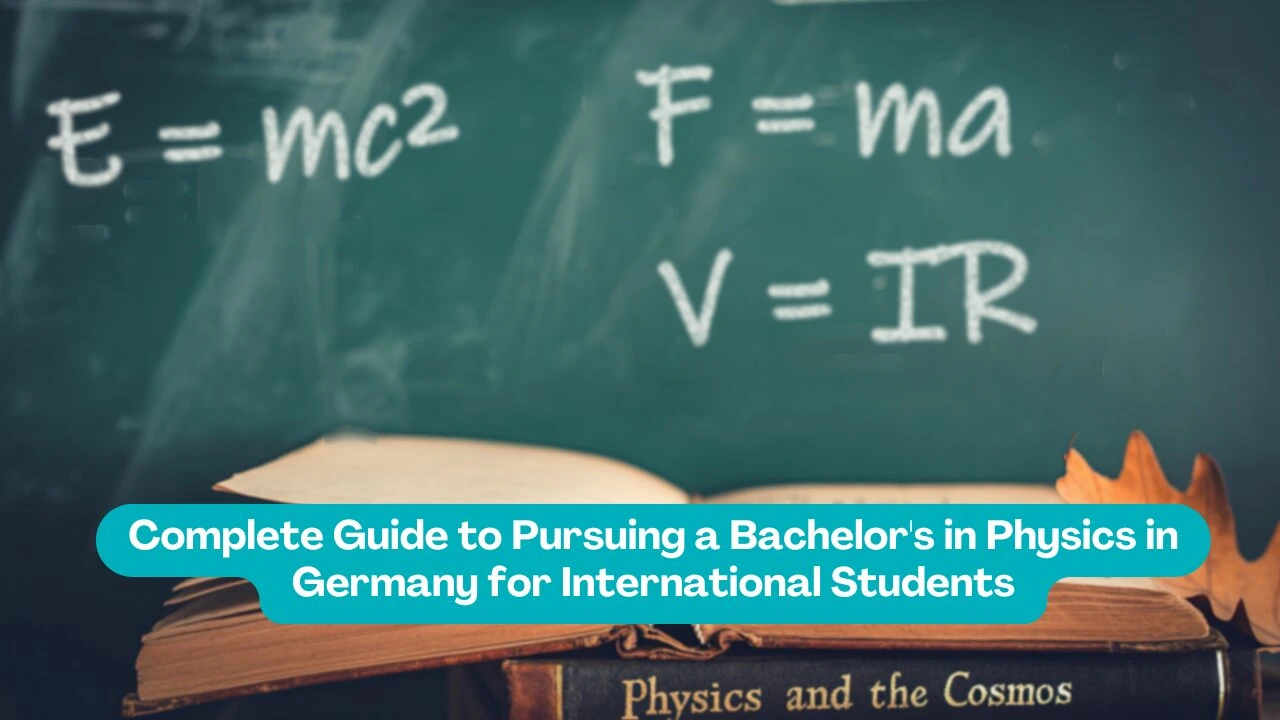
Table of Contents
- Understanding the German Higher Education System
- Eligibility Criteria for International Students
- German Language Requirements for Physics Programs
- Top Public Universities Offering Physics Bachelor’s Degrees
- Tuition Fees and Cost of Living in Germany
- Application Process and Required Documents
- Student Visa Requirements and Procedures
- Scholarship Opportunities and Financial Aid Options
- Physics Curriculum Structure and Specializations
- Career Opportunities After Graduation
Germany attracts over 350,000 international students each year, making it one of the most sought-after destinations for higher education worldwide. Among the most compelling opportunities? Pursuing a Bachelor’s in Physics in Germany. Imagine studying quantum mechanics in the same country that gave the world Einstein, Planck, and Heisenberg—without the crushing debt that comes with similar programs elsewhere. German universities offer world-class physics education, often at no tuition fees, while providing access to impactful research and thriving European careers. If you’ve ever dreamed of understanding the universe while building a financially smart future, Germany might just be your launchpad.
“Germany is one of the world’s most popular destinations for international students, thanks to its top universities, low tuition fees, and excellent career prospects.” – Study in Germany
Table of Contents
- Why Study Physics in Germany
- Understanding the German Higher Education System
- Eligibility Criteria for International Students
- German Language Requirements for Physics Programs
- Top Public Universities Offering Physics Bachelor’s Degrees
- Tuition Fees and Cost of Living in Germany
- Application Process and Required Documents
- Student Visa Requirements and Procedures
- Scholarship Opportunities and Financial Aid Options
- Physics Curriculum Structure and Specializations
- Career Opportunities After Graduation
- Frequently Asked Questions
Why Study Physics in Germany
Germany doesn’t just teach physics—it lives and breathes it. From the laboratories where quantum theory was born to the modern research facilities driving today’s innovations, this country offers something rare: prestige without the price tag.
Here’s why a Bachelor’s in Physics in Germany stands out:
Global reputation that opens doors. German universities consistently rank among the world’s best for physics and research. A degree from institutions like LMU Munich or Heidelberg University carries weight across continents.
Affordable excellence. Most public universities charge little to no tuition, dramatically improving your return on investment compared to programs in the US, UK, or Australia.
English-taught options. While German remains common, many universities now offer physics degrees entirely in English, removing a major barrier for international students.
Career launch pad. Germany’s robust STEM industries, ranging from automotive engineering to renewable energy, create numerous opportunities. Plus, the post-study work visa gives you time to transition from classroom to career within the European Union.
European gateway. A German degree isn’t just recognized in Germany. It’s respected across the EU, giving you mobility and options most graduates only dream about.
The academic culture here encourages curiosity beyond your major. You’ll find connections between physics and mathematics, engineering, or even linguistics in Germany, broadening your intellectual horizons while building specialized expertise.
Ready to transform your academic future? Explore expert admission counseling and get personalized guidance for German universities.
Understanding the German Higher Education System
Germany’s higher education system balances academic rigor with practical relevance, creating graduates who think deeply and work effectively.
The landscape includes two main types of institutions:
Universitäten (universities) focus on theoretical knowledge and research. Most physics programs live here, emphasizing fundamental understanding and scientific inquiry.
Fachhochschulen (Universities of Applied Sciences) lean toward hands-on, industry-aligned education. They rarely offer pure physics but excel in applied fields.
Thanks to the Bologna Process, German degrees follow a standardized structure: three years for a Bachelor’s and two years for a Master’s. This alignment makes credits easily transferable across Europe through the ECTS system.
International students benefit from robust support services, research opportunities, and the flexibility to explore interdisciplinary electives—whether that means computational methods, astronomy, or even linguistics in Germany for those interested in science communication.
For comprehensive information, visit the German Academic Exchange Service (DAAD) and Study in Germany.
Eligibility Criteria for International Students
Getting into a Bachelor’s in Physics program in Germany starts with meeting core requirements. The good news? The criteria are clear and achievable.
You’ll need:
A secondary school certificate equivalent to the German Abitur. For most countries, this means completing 12 years of education plus qualifying entrance exam results like JEE, A-levels, or equivalent certifications.
Proof of language proficiency in either German or English, depending on your chosen program.
Strong academic performance in mathematics and sciences, particularly physics. Your grades in these subjects matter significantly.
Some universities add extra requirements:
Entrance exams or interviews to assess your readiness
Foundation year (Studienkolleg) if your school-leaving certificate isn’t directly recognized by German standards
The easiest way to verify your eligibility? Use uni-assist, the centralized portal that processes international applications and evaluates credentials. This platform removes guesswork and ensures you’re on the right track before investing time in applications.
German Language Requirements for Physics Programs
Language shapes your German experience more than you might expect. While the Bachelor’s in Physics in Germany landscape increasingly includes English-taught programs, German proficiency remains valuable—and sometimes essential.
For German-taught programs: Most universities require B2 or C1 level competency. Accepted certifications include TestDaF, DSH, or Goethe-Zertifikat. These exams test your ability to follow lectures, participate in discussions, and write academic papers in German.
For English-taught programs: Expect to submit IELTS scores of 6.0 or higher, TOEFL scores of 80 or above, or equivalent proof of English proficiency.
Here’s an insider tip that pays dividends: Even if you choose an English-taught program, learning German transforms your experience. It helps during internships, simplifies daily life, enhances job prospects, and shows cultural commitment. Some universities even offer linguistics in Germany courses or language modules that complement your physics studies while building marketable communication skills.
Top Public Universities Offering Physics Bachelor’s Degrees
Germany houses dozens of excellent physics programs, but certain institutions consistently stand out for their research output, faculty expertise, and student support.
LMU Munich (Munich) – Offers German-taught programs with no tuition fees and exceptional research facilities.
Heidelberg University (Heidelberg) – Provides both German and English options, maintaining its centuries-old tradition of scientific excellence.
TU Munich (Munich) – Features English-taught programs, strong industry connections, and cutting-edge laboratories.
RWTH Aachen (Aachen) – German-taught programs emphasizing engineering physics and interdisciplinary approaches.
University of Göttingen (Göttingen) – German-taught with a rich physics heritage and intimate class sizes.
Each institution charges zero tuition at the undergraduate level, requiring only a nominal semester fee between €150 and €350 to cover administrative costs and public transportation.
Choosing the right university involves more than rankings. Consider the city’s cost of living, language of instruction, specialization options, and campus culture. For detailed admission support tailored to your profile, explore professional guidance through admission counseling services for German universities.
Tuition Fees and Cost of Living in Germany
One of the most attractive aspects of pursuing a Bachelor’s in Physics in Germany is the financial equation. It simply works in your favor.
Tuition costs: Most public universities charge nothing for undergraduate programs. You’ll pay a semester contribution of €150 to €350, which often includes public transportation access across the entire city or region.
Monthly living expenses: Budget between €850 and €1,100 depending on your location. Munich and Frankfurt sit at the higher end, while smaller cities like Göttingen or Jena offer more affordable options.
Health insurance: Mandatory for all students, costing approximately €110 per month. This covers comprehensive medical care throughout your studies.
This cost structure delivers remarkable value. Compare it to €20,000+ annually in the UK or $30,000+ in the US, and the advantages become crystal clear.
German regulations also allow international students to work up to 120 full days or 240 half days per year. Many students cover a significant portion of living expenses through part-time work, internships, or research assistant positions—all while gaining valuable professional experience.
Application Process and Required Documents
Securing admission to a Bachelor’s in Physics in Germany requires organization and attention to detail. The process is straightforward once you understand the steps.
Research programs using the DAAD database and individual university websites. Each institution has unique strengths and requirements.
Verify eligibility through uni-assist, which evaluates international credentials and confirms whether your qualifications meet German standards.
Gather essential documents:
Academic transcripts and certificates (officially translated if needed)
Proof of language proficiency (TestDaF, IELTS, TOEFL, or equivalent)
Passport copy
Motivation letter and curriculum vitae (required by some universities)
Proof of financial resources (needed later for visa applications)
Submit your application either directly through university portals or via uni-assist, which processes applications for multiple institutions.
Receive admission letter within several weeks to months, depending on the program and application cycle.
Deadlines typically fall between May and July for winter semester programs (starting October) and between December and January for summer semester programs (starting April). Missing deadlines means waiting another six months, so mark your calendar and prepare early.
Student Visa Requirements and Procedures
Your admission letter opens the door to Germany, but a student visa gets you through it. The process demands preparation but follows a clear path.
Required documents include:
Admission letter from a recognized German university
Proof of financial resources through a blocked account containing €11,208 for the year (as of 2024)
Health insurance valid in Germany
Valid passport with at least six months of remaining validity
Completed visa application form with required fees
Passport photographs meeting German specifications
Submit everything at your nearest German embassy or consulate. Visa processing typically takes six to twelve weeks, though timelines vary by location and season.
The blocked account requirement ensures you can support yourself financially. You deposit the required amount into a special account before arrival, then withdraw monthly allowances once in Germany. This protects both you and the German government.
Start your visa application immediately after receiving admission. Early preparation prevents last-minute stress and ensures you arrive in time for orientation and semester start.
Scholarship Opportunities and Financial Aid Options
While a Bachelor’s in Physics in Germany is already remarkably affordable, scholarships can further reduce costs and provide additional support.
DAAD Scholarships primarily target graduate students but occasionally offer undergraduate support. Check annually for updated programs.
Deutschlandstipendium provides merit-based funding of €300 monthly to talented students regardless of nationality. Many universities participate in this federal program.
University-specific scholarships vary by institution. Check each university’s financial aid office for opportunities ranging from one-time awards to multi-year funding.
Private foundations like Heinrich Böll, Konrad Adenauer, and Friedrich Ebert offer scholarships based on academic merit, leadership potential, and sometimes specific fields of study.
Application strategies matter. Apply early, tailor each application to the specific scholarship requirements, and highlight unique strengths. Some awards favor interdisciplinary interests—demonstrating curiosity in areas like linguistics in Germany alongside physics can strengthen certain applications.
Even partial scholarships significantly improve your financial comfort and reduce work hours needed during studies, allowing greater focus on academic excellence.
Physics Curriculum Structure and Specializations
A typical Bachelor’s in Physics in Germany spans three years, divided into six semesters. The curriculum balances theoretical foundations, practical skills, and intellectual exploration.
Core modules cover classical and modern physics: mechanics, thermodynamics, electromagnetism, quantum mechanics, statistical physics, and mathematical methods. These fundamentals prepare you for any physics career or advanced studies.
Laboratory courses provide hands-on experience with experimental techniques, data analysis, and scientific instrumentation. You’ll learn to translate theory into practice.
Elective options let you explore specializations like astrophysics, computational physics, condensed matter, or particle physics. Some universities even offer linguistics courses in Germany for students interested in science communication or technical translation.
Bachelor thesis in your final semester involves original research under faculty supervision. This project demonstrates your ability to conduct independent scientific work and often leads to publication opportunities.
The modular structure uses ECTS credits, making it easy to transfer credits or spend semesters abroad through exchange programs. Many students use this flexibility to gain international research experience or explore specializations unavailable at their home institution.
Career Opportunities After Graduation
A Bachelor’s in Physics in Germany doesn’t just teach you about the universe—it prepares you to shape it. Graduates find opportunities across remarkably diverse fields.
Graduate studies represent the most common next step. German physics degrees provide excellent preparation for Master’s and PhD programs in Germany, Europe, or globally. Professional guidance through services like admission counseling for advanced degrees can help navigate this transition strategically.
Industry positions span research and development, engineering, information technology, data science, and quantitative finance. Physics graduates bring problem-solving skills and analytical thinking that employers across sectors value highly.
Teaching and academia appeal to those passionate about education and fundamental research. German qualifications are respected worldwide, opening doors in universities globally.
Interdisciplinary careers combine physics with other interests. Some graduates move into science communication, technical writing, or even linguistics in Germany, translating complex scientific concepts for broader audiences.
Germany’s eighteen-month post-study work visa gives you ample time to secure employment within the EU. This period transforms theoretical knowledge into practical experience while building professional networks that last throughout your career.
The combination of a prestigious degree, European work authorization, and diverse career pathways delivers exceptional return on investment—both financially and intellectually.
Frequently Asked Questions
Frequently Asked Questions
Can I study Bachelors in Physics in Germany in English?
Yes, several universities offer English-taught physics programs, though more options exist in German. Check individual university websites for specific program details and language requirements.
Do I need to speak German for daily life in Germany?
Many Germans speak English, especially in university cities, but learning German significantly enhances your experience. It helps with internships, job opportunities, social integration, and practical daily tasks. Some universities offer linguistics in Germany modules to support language development.
What is the cost of living for students in Germany?
On average, expect €850 to €1,100 monthly covering accommodation, food, insurance, and transportation. This makes Germany one of Europe’s most affordable study-abroad destinations, particularly given the education quality.
Are scholarships available for international undergraduates?
Yes, though competition is substantial. Explore DAAD, Deutschlandstipendium, and university-specific programs. Apply early with complete, carefully prepared applications to maximize your chances.
What is a blocked account?
A blocked account is a special German bank account proving you have sufficient funds (€11,208 annually as of 2024) to cover living expenses. It’s required for student visa applications and releases monthly allowances once you arrive.
Can I work while studying?
Absolutely. International students can work up to 120 full days or 240 half days per year. Many find internships related to physics, linguistics in Germany, or other fields that complement their studies while providing income.
What are my options after graduation?
You can pursue a Master’s degree, start working in Germany or elsewhere in the EU, or return home with a prestigious credential. The eighteen-month post-study work visa facilitates the transition from student to professional within Germany.
How do I apply for a Bachelor’s in Physics in Germany?
Research universities, verify eligibility through uni-assist [4], prepare required documents, and submit applications via uni-assist or directly to universities. Expert support is available through professional admission counseling services.
Conclusion
Pursuing a Bachelor’s in Physics in Germany represents more than an academic decision—it’s a strategic investment in your intellectual growth and professional future. The combination of world-class education, minimal financial burden, and robust career pathways creates opportunities that extend far beyond graduation day. Germany’s unique position as both a scientific powerhouse and an accessible destination makes it exceptional for international students seeking excellence without crushing debt.
From understanding the nuances of the admissions process to navigating visa requirements and maximizing scholarship opportunities, careful planning transforms this dream into an achievable reality. Whether your future involves cutting-edge research, industry innovation, or interdisciplinary fields like linguistics in Germany, a German physics degree provides the foundation for success across continents and career paths. The journey requires preparation, persistence, and informed decision-making—but the rewards justify every step.
If you’re ready to take control of your academic future and unlock opportunities across Europe and beyond, get personalized guidance that maximizes your chances of admission. Get expert admission counseling for German universities now.