Studying Where Innovation Happens: Germany’s Unique University-Industry Ecosystem

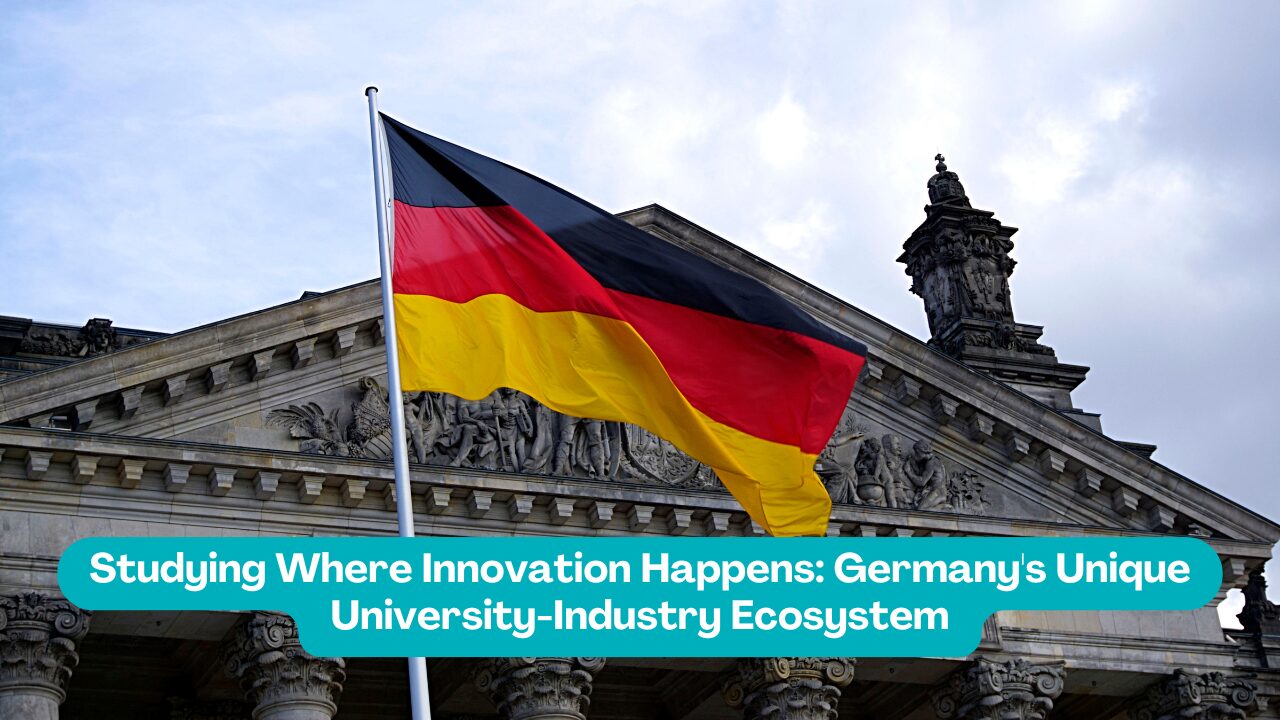
Table of Contents
- How does Germany’s university-industry ecosystem foster innovation
- What role do Fraunhofer institutes play in university collaborations
- Key examples of university spin-offs from German research partnerships
- Government initiatives supporting university-industry innovation links
- How RWTH Aachen builds deep tech innovation with industry
- Impact of Max Planck Society on university-industry knowledge transfer
- Regional clusters driving Germany’s university innovation ecosystem
- Student involvement in university-industry research projects in Germany
- Technology transfer offices in German universities explained
- Future trends in Germany’s university-industry collaboration model
- University-Industry Ecosystem FAQs
- Conclusion
Germany’s universities attract over 400,000 international students every year — and the numbers keep rising. That’s not a coincidence. Germany’s Unique university-industry ecosystem is built differently from most countries. It doesn’t just teach theory; it plugs students directly into the engine rooms of real-world innovation. From the legendary Fraunhofer institutes to the sprawling RWTH Aachen Campus, German higher education has become a global benchmark for research-led, career-ready learning. At Galvanize, we have guided thousands of students and families through this journey. The verdict is consistent: for world-class degrees, serious research, and direct access to industry opportunities, Germany delivers exceptional ROI.
Whether you’re a student weighing your options, a parent evaluating long-term value, or a professional looking to upskill, understanding how Germany’s academic landscape connects you to industry is the smartest first step you can take.
How does Germany’s university-industry ecosystem foster innovation
Germany’s Unique university-industry ecosystem is engineered for impact — and it shows. Unlike traditional education models where classrooms and companies operate in separate silos, German universities work directly with industry partners, research institutes, and startups. The result is a virtuous cycle where knowledge becomes innovation, and innovation creates careers.
Here’s what that looks like in practice:
- Applied research: Over 70% of German university research projects involve direct industry participation.
- Internships and thesis projects: Students regularly solve real company challenges, not hypothetical case studies.
- Dual study programs: Many technical universities combine classroom learning with paid industry placements, giving students both credentials and experience.
For international students, this model means your education is never disconnected from the job market. You graduate with skills that employers already recognize — because those same employers helped shape your curriculum.
What role do Fraunhofer institutes play in university collaborations
If Germany’s Unique innovation engine has a beating heart, it’s the Fraunhofer Society. With 74 institutes and more than 30,000 employees, Fraunhofer sits squarely between academia and industry, translating research into real-world solutions.
What makes Fraunhofer stand out is its funding model. At least two-thirds of its contract research budget is earned competitively through private-sector contracts and public project funding, with industrial revenue alone reaching 966 million euros in 2025. That financial accountability ensures Fraunhofer stays market-focused, not just academically productive.
For students, Fraunhofer opens doors that most universities cannot:
- Joint research with universities across AI, robotics, and renewable energy
- Access to cutting-edge labs and applied science projects
- Funded research opportunities that often lead to patents or startup launches
International students who collaborate with Fraunhofer leave with hands-on R&D experience and a direct pathway into tech careers across Germany and the EU.
Key examples of university spin-offs from German research partnerships
The proof of Germany’s Unique academic ecosystem is in its outcomes. Hundreds of globally recognized companies trace their origins to German university-industry partnerships.
- BioNTech (Mainz University): The company behind the world’s first approved mRNA COVID-19 vaccine grew from a university-industry research collaboration.
- Silexica (RWTH Aachen): An AI software company founded by PhD students, later acquired by Xilinx.
- Celonis (TU Munich): Now a billion-dollar unicorn in process mining, the company started as a student project.
These aren’t outliers. They’re the product of an ecosystem that actively supports entrepreneurship through incubation, funding access, and industry mentors embedded within the university structure. For students with a founder’s mindset, Germany is one of the best places in the world to turn research into a global venture.
Government initiatives supporting university-industry innovation links
Germany’s Unique university-industry ties don’t happen by accident — they’re backed by deliberate, well-funded policy. The German government has created a strong incentive architecture that keeps universities, companies, and startups in constant collaboration.
Key programs include:
- EXIST program: Direct grants for student and faculty-led startups
- High-Tech Strategy: A national roadmap prioritizing AI, climate technology, and digitalization
- Cluster initiatives: Government-backed regional innovation hubs that connect universities with local industry
These policies make Germany a compelling destination for students who want more than just a degree — they want an education with measurable, long-term returns. For details, visit DAAD and Study in Germany.
Are you ready to find the right industry-linked program in Germany? Explore your options with expert guidance on German university admissions and maximize your chances of success.
How RWTH Aachen builds deep tech innovation with industry
RWTH Aachen is one of the clearest expressions of Germany’s Unique university-industry integration model. The campus has grown into Europe’s largest technology campus, with more than 360 companies currently active on-site and investment costs exceeding $2.6 billion.
The university’s industry network is diverse and deep:
- Partnerships with global giants like Siemens, Bosch, BMW, SAP, and hundreds more
- 19 specialized innovation clusters, each with 20 or more commercial partners embedded on campus
- Dual master’s programs co-designed and co-delivered with industry partners
For students, RWTH Aachen is more than a university — it’s a direct entry point into the engineering, automotive, and technology sectors. Many students receive job offers before they even graduate, a direct result of working on real projects with real companies throughout their studies.
Impact of Max Planck Society on university-industry knowledge transfer
While the Fraunhofer Society focuses on applied research, the Max Planck Society anchors the foundational science end of Germany’s Unique research ecosystem. Its work complements industry-facing institutes by generating the discoveries that eventually power commercial breakthroughs.
The numbers are significant:
- Over 4,000 patents licensed to industry, bridging the gap between basic science and commercial application
- Joint PhD programs with universities, giving students direct access to Nobel-level research environments
- Max Planck Innovation, a dedicated technology transfer office that shepherds discoveries from lab to market
For ambitious students, Max Planck offers a rare combination: world-class academic research with a clear pathway into industry or entrepreneurship.
Regional clusters driving Germany’s university innovation ecosystem
Germany’s Unique innovation ecosystem isn’t concentrated in one city — it’s distributed across powerful regional clusters, each with its own industrial identity:
- Munich: A hub for tech, engineering, and biotech, anchored by TU Munich, LMU, and multiple Fraunhofer institutes
- Berlin: Germany’s startup capital, with strengths in AI, creative industries, and digital innovation
- Stuttgart: The heartland of automotive and advanced manufacturing, home to the University of Stuttgart and companies like Mercedes-Benz
These clusters give students access to regional networks, internships, and startup communities that extend well beyond the campus gates. Wherever you study in Germany, there’s an industrial ecosystem built around your field.
Student involvement in university-industry research projects in Germany
Students aren’t passive observers in Germany’s Unique research ecosystem — they’re active contributors. Across engineering, sciences, and business programs, student involvement in industry-linked work is structured and expected.
Common pathways include:
- Mandatory internships are built directly into program curricula
- Thesis projects co-supervised by corporate partners, which frequently convert into full-time job offers
- Innovation competitions like EXIST and Falling Walls Lab, where students pitch research-backed ideas to real investors
This level of hands-on exposure is one of the primary reasons Germany’s post-study work visa has become so popular among international graduates. You don’t just finish a degree — you leave with professional credibility.
Technology transfer offices in German universities explained
Technology transfer offices (TTOs) are the unsung infrastructure of Germany’s Unique knowledge-to-market pipeline. Every major university — TU Munich, RWTH Aachen, Heidelberg, and others — runs a dedicated TTO designed to move ideas from research labs into the economy.
What TTOs do:
- Help students and faculty file patents and protect intellectual property
- Connect researchers with venture capital firms and industry partners
- Provide structured guidance to take a spin-off from concept to launch
If you’re interested in research commercialization or starting a company, the TTO at your university is the first door to knock on. These offices exist specifically to support you — and they come with resources most founders would pay for elsewhere.
Future trends in Germany’s university-industry collaboration model
Germany’s Unique model doesn’t stand still. Several major trends are reshaping how universities and industry collaborate heading into 2025 and beyond:
- AI and digitalization: New research centers are emerging around machine learning, data science, and Industry 4.0 applications
- Internationalization: English-taught master’s and PhD programs are expanding, and global research networks are becoming the norm
- Sustainability: Green technology, climate science, and circular economy research are fast-growing areas of university-industry collaboration
For ambitious international students, these trends translate into more interdisciplinary programs, more cross-border career opportunities, and stronger returns on a German degree. To find the right industry-linked master’s program for your goals, explore expert guidance on German university admissions.
University-Industry Ecosystem FAQs
How does Germany’s Unique university-industry model benefit international students?
You gain direct access to funded research, internships, and real-world projects that make your degree more employable and globally relevant. The integration of academic theory and industry practice is one of the defining advantages of the German education system.
What are the top universities for industry collaboration in Germany?
RWTH Aachen, TU Munich, University of Stuttgart, and KIT are widely recognized for their strong industry ties. That said, most German public universities maintain robust industry partnerships across disciplines.
Can I do paid internships during my studies in Germany?
Yes. Most programs — particularly in STEM fields — include paid internships or corporate thesis projects as a structured part of the degree. This is a key advantage of Germany’s Unique education system.
How do I find industry-linked programs or dual degrees?
Check individual university websites, the DAAD portal, and platforms like uni-assist. Look for programs labeled “dual study,” “industry partnership,” or “cooperative education.”
What support do universities offer for student entrepreneurs?
Incubators, technology transfer offices, and government grants — including the EXIST program — are all available to help students launch startups from their research.
Is knowledge of German required for industry projects?
Many companies and research groups, especially in tech and engineering, operate in English. That said, learning basic German significantly broadens your options and strengthens your employability.
What is the ROI of studying in Germany’s Unique ecosystem?
With low or zero tuition at public universities, high graduate employability, and direct industry exposure built into most programs, the return on investment is exceptional compared to US or UK alternatives. Many international graduates secure roles in Germany or across the EU.
How can expert admission counseling help me navigate German university applications?
End-to-end guidance on course selection, documentation, scholarships, and industry-linked programs can meaningfully increase your chances of admission and long-term career success. Explore expert guidance on German university admissions.
Conclusion
Germany’s Unique university-industry ecosystem isn’t a marketing tagline — it’s a structural advantage that plays out in the careers of every student who enters it. This is a country where your thesis might be co-authored with an engineer at Siemens, where your internship could lead to a full-time role before graduation, and where the research you contribute to might become a commercial patent within years. The combination of low tuition, high academic standards, direct industry integration, and strong government support makes Germany one of the most rational higher education choices in the world today. For international students looking beyond credentials and toward genuine career impact, few destinations come close. The ecosystem is ready. The question is whether you’re positioned to enter it strategically. With the right preparation, guidance, and program selection, your German degree can become the foundation for a career that crosses borders and disciplines.
Ready to unlock your future in Germany’s innovation ecosystem? Get expert, ROI-driven guidance on your German university application with expert German university admissions counseling.