
Complete Guide to Pursuing a PhD in Environmental Science in Germany in 2026

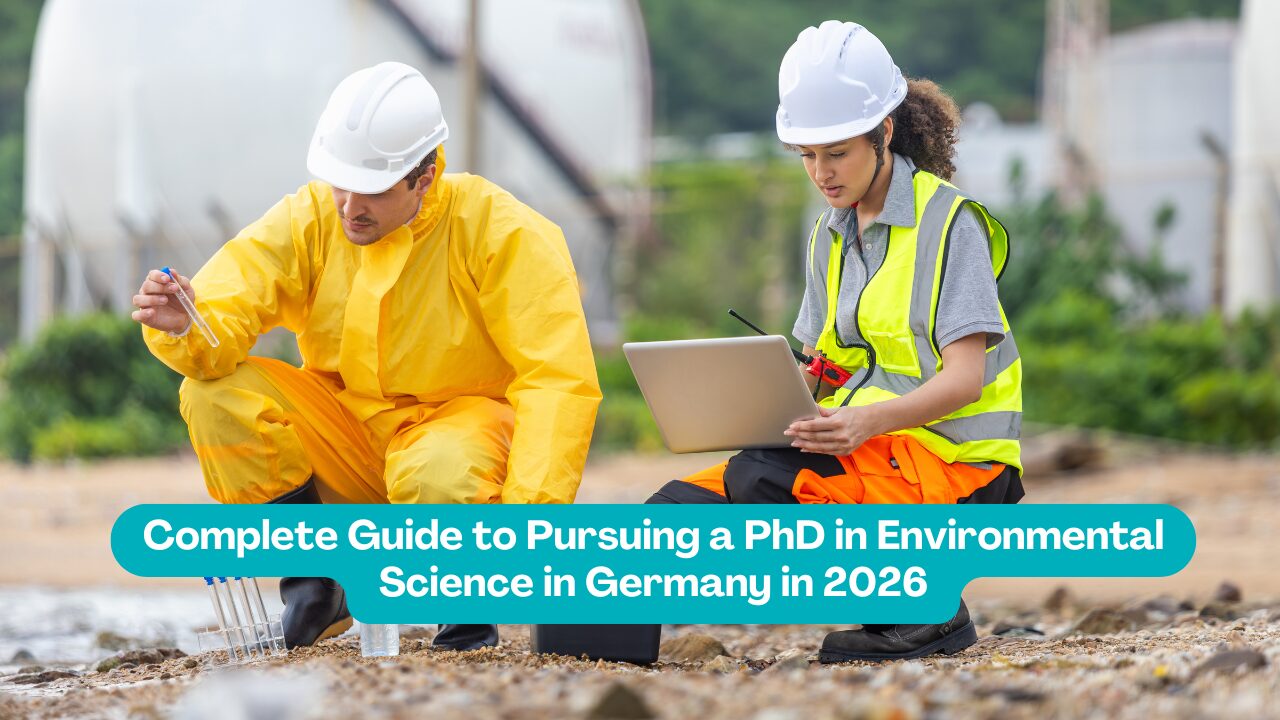
Table of Contents
- Why Choose Germany for Your Environmental Science PhD
- Understanding the German PhD System in Environmental Sciences
- Top Universities and Research Institutes Offering Environmental Science Doctorates
- Admission Requirements and Eligibility Criteria
- Application Process and Documentation Checklist
- Funding Options and Scholarship Opportunities
- Research Areas and Specializations Available
- Language Requirements: German vs English Programs
- Duration and Structure of Environmental Science PhD Programs
- Living Costs and Stipend Expectations in Germany
- Career Prospects After Your Environmental Science PhD
Germany welcomed over 45,000 international PhD candidates in 2024, with environmental sciences emerging as one of the fastest-growing research fields. If you’re considering a PhD in Environmental Science in Germany, you’re looking at more than just world-class universities. You’re stepping into a research ecosystem where sustainability meets innovation, where tuition fees are almost non-existent, and where your doctoral work could shape global environmental policy.
“Germany remains at the forefront of environmental research, offering unparalleled opportunities for international PhD candidates.” – DAAD
Table of Contents
- Why Choose Germany for Your Environmental Science PhD
- Understanding the German PhD System in Environmental Sciences
- Top Universities and Research Institutes Offering Environmental Science Doctorates
- Admission Requirements and Eligibility Criteria
- Application Process and Documentation Checklist
- Funding Options and Scholarship Opportunities
- Research Areas and Specializations Available
- Language Requirements: German vs English Programs
- Duration and Structure of Environmental Science PhD Programs
- Living Costs and Stipend Expectations in Germany
- Career Prospects After Your Environmental Science PhD
- Frequently Asked Questions About Environmental Science PhDs in Germany
Why Choose Germany for Your Environmental Science PhD
Germany stands as a global powerhouse in sustainability, climate research, and environmental engineering. When you choose a PhD in Environmental Science in Germany, you’re not just picking a destination—you’re choosing an advantage.
Consider this: public universities charge little to no tuition fees, even for international students. Your research will unfold in cutting-edge laboratories funded by both the German government and the European Union. The academic environment thrives on multiculturalism, with robust English-medium programs that welcome scholars from every corner of the globe. You’ll collaborate with industry leaders, influential NGOs, and policymakers across Europe. And when you graduate? Germany offers attractive post-study work visas and pathways to permanent residency for skilled professionals.
A Ph.D in Germany isn’t just a credential. It’s your gateway to international research careers, meaningful impact, and lasting professional growth.
Understanding the German PhD System in Environmental Sciences
Germany’s doctoral system operates differently from what you might expect. Understanding these differences early can save you months of confusion.
The German model offers two distinct pathways. The individual doctorate follows a traditional structure—you work closely with one supervisor, focusing intensely on independent research with minimal coursework. The structured PhD program, by contrast, brings you into a cohort. You’ll complete coursework, participate in interdisciplinary training, and benefit from peer support throughout your journey.
Either way, expect to drive your own research agenda. Doctoral candidates, known locally as “Doktoranden,” often work as research assistants. This arrangement provides both funding and hands-on experience. Many programs integrate seamlessly with EU-wide research projects, expanding your network and impact beyond German borders.
If you’re self-motivated and eager to shape your research direction, pursuing a Ph.D in Germany could be your ideal match.
Top Universities and Research Institutes Offering Environmental Science Doctorates
Germany hosts some of the world’s most prestigious institutions for environmental research. Your choice of university will significantly influence your research focus and career trajectory.
The Technical University of Munich (TUM) leads in engineering-focused environmental studies. The University of Freiburg excels in forest ecology and sustainable resource management. Humboldt University of Berlin offers strong programs in climate science and urban ecology. Leipzig University stands out for biodiversity research. Beyond universities, the Helmholtz Centre for Environmental Research (UFZ) and various Max Planck Institutes provide cutting-edge facilities and interdisciplinary collaboration.
Each institution brings unique specializations and industry connections. Explore detailed program information through study-in-germany.de or uni-assist.de to find your perfect research home.
Admission Requirements and Eligibility Criteria
Securing admission for a PhD in Environmental Science in Germany requires careful preparation. Universities prioritize academic excellence, research potential, and a strong fit between your interests and available supervision.
You’ll need a Master’s degree or equivalent in environmental science, biology, chemistry, engineering, or a closely related field. Your academic record should demonstrate consistent excellence—think minimum 70% or a 2:1 equivalent. Research experience matters enormously. Universities want evidence of your capabilities through a strong Master’s thesis, published papers, or relevant internships.
Language proficiency is non-negotiable. For English-medium programs, expect to provide IELTS or TOEFL scores. German-taught programs require TestDaF or DSH certification. Perhaps most critically, you’ll need a well-developed research proposal that aligns with your prospective supervisor’s work.
A Ph.D in Germany values fit and motivation as much as grades. Make your passion for environmental research unmistakably clear.
Application Process and Documentation Checklist
Navigating the application process requires strategy and attention to detail. Here’s your roadmap to success.
Start by identifying potential supervisors or program coordinators at your target universities. Send a concise email introducing yourself, attaching your CV, transcripts, and a brief research proposal outline. If a professor expresses interest, you’re on the right track. For individual doctorates, securing a formal acceptance letter from your supervisor is essential before a formal application.
Prepare your complete application package: academic certificates and transcripts, language certificates, a comprehensive CV, a compelling motivation letter, your detailed research proposal, and strong letters of recommendation. Some universities accept direct applications, while others require submission through uni-assist.de.
After submitting, track your application status diligently. Some programs conduct interviews—prepare to discuss your research vision confidently.
Need personalized guidance? Galvanize offers expert admission counseling to help you craft competitive applications and maximize your chances of acceptance.
Funding Options and Scholarship Opportunities
Here’s welcome news: most PhD programs in Environmental Science in Germany charge zero or minimal tuition fees. Your main concern becomes covering living expenses, and fortunately, numerous funding sources exist.
DAAD scholarships represent the gold standard—prestigious, competitive, and comprehensive. Research assistantships, known as HiWi positions, provide regular income while supporting your supervisor’s projects. Third-party organizations like the Heinrich Böll Foundation and Erasmus+ offer targeted scholarships for environmental research. Many doctoral positions are directly funded through industry partnerships or EU research projects.
A well-funded Ph.D in Germany means you can concentrate on research rather than financial stress. Explore the DAAD scholarship database thoroughly to identify opportunities matching your profile.
Research Areas and Specializations Available
Environmental science encompasses diverse specializations, and German institutions offer expertise across the full spectrum.
Climate change and adaptation research address one of humanity’s most pressing challenges. Environmental toxicology examines pollutants and their ecosystem impacts. Renewable energy systems combine engineering with sustainability goals. Biodiversity and conservation work protect endangered species and habitats. Water resource management tackles scarcity and quality issues. Environmental policy and economics bridge science with governance.
Each university brings different strengths. Tailor your research proposal to align with your chosen institution’s focus areas. A Ph.D in Germany provides flexibility for interdisciplinary approaches—don’t hesitate to propose innovative combinations.
Language Requirements: German vs English Programs
Language considerations can make or break your doctoral experience. Plan accordingly.
Many PhD programs in Environmental Science in Germany operate entirely in English, particularly structured programs in major cities. Individual doctorates present more variability—some supervisors work comfortably in English, while others prefer German for daily communication, fieldwork, or teaching responsibilities.
For English programs, expect minimum scores around IELTS 6.5 or TOEFL 90. German programs require TestDaF or DSH certification. Even if your program runs in English, learning basic German dramatically improves your integration, career prospects, and quality of life.
A Ph.D in Germany with English-medium instruction welcomes international candidates, but German language skills remain a valuable investment.
Duration and Structure of Environmental Science PhD Programs
Time commitment is a crucial consideration. Most programs span three to four years of full-time research.
Individual doctorates offer flexible timelines driven by your research progress and publication record. Structured programs establish defined milestones, coursework requirements, and cohort support systems. Both paths culminate in a final defense—called “Disputation” or “Rigorosum”—where you present and defend your dissertation before an examination committee.
A Ph.D in Germany demands rigor, but rewards you with remarkable autonomy and world-class mentorship throughout your journey.
Living Costs and Stipend Expectations in Germany
Financial planning ensures you can focus on research without constant money worries.
PhD students in Germany typically spend €900 to €1,200 monthly covering accommodation, food, transport, mandatory health insurance, and miscellaneous expenses. Cities like Munich and Frankfurt cost more, while Leipzig and smaller university towns offer better affordability.
Most PhD candidates in Environmental Science in Germany receive stipends ranging from €1,200 to €2,000 monthly through scholarships or research contracts. Budget carefully, take advantage of student discounts, and consider shared accommodation to maximize your stipend.
Career Prospects After Your Environmental Science PhD
Your doctorate opens remarkable doors across multiple sectors and geographies.
Many graduates pursue postdoctoral research positions throughout Europe and globally. Academic careers as lecturers, professors, or research group leaders become viable options. Environmental consulting firms, NGOs, government agencies, and industries spanning energy, sustainability, and policy actively recruit PhD holders. Germany’s EU Blue Card and permanent residency pathways make it easier for skilled graduates to build long-term careers in Europe.
A Ph.D in Germany signals research excellence that resonates worldwide, positioning you for impact wherever your career takes you.
Frequently Asked Questions
Is a German PhD recognized globally?
Absolutely. A PhD in Environmental Science in Germany carries worldwide recognition. German universities maintain rigorous academic standards, and a Ph.D in Germany is highly respected by employers and academic institutions across continents.
Do I need to speak German for my PhD?
Many doctoral programs operate entirely in English, especially in research-intensive fields. That said, learning basic German significantly enhances your daily life experience and boosts employability after graduation.
How competitive is funding for international PhD students?
Funding is competitive but far from impossible. Numerous opportunities exist through DAAD, research project budgets, and university-specific scholarships. A strong academic record paired with a compelling research proposal substantially increases your chances.
Can I work while pursuing my PhD?
Yes. Most students work as research assistants, and German student visa regulations permit limited part-time work hours. This flexibility provides income while ensuring your primary focus remains on research.
What is the visa process for PhD students?
Once you secure admission, apply for a student visa at your local German consulate. You’ll need proof of admission, sufficient funding, and health insurance coverage for your PhD in Environmental Science in Germany.
How do I find a supervisor for my research?
Begin by identifying faculty members whose research interests align with yours. Contact them directly with a concise research proposal and CV. University websites and uni-assist.de provide valuable starting points.
What documents are required for the application?
Expect to provide transcripts, degree certificates, a comprehensive CV, a motivation letter, a detailed research proposal, language certificates, and recommendation letters. Always verify each university’s specific requirements.
What are the long-term residency options after a PhD?
After completing a Ph.D in Germany, you qualify for an 18-month post-study work visa. Securing employment makes you eligible for the EU Blue Card and, eventually, permanent residency.
Conclusion
A PhD in Environmental Science in Germany represents more than an academic credential—it’s an investment in your future impact on our planet. With world-class research infrastructure, minimal costs, global recognition, and strong career prospects, Germany offers what few destinations can match. The path forward requires strategic planning, thorough preparation, and understanding of the unique German system. By aligning your research interests with the right institution, securing appropriate funding, and approaching your application with clarity and purpose, you can transform your environmental science ambitions into reality.
Germany’s commitment to sustainability research continues to grow, with environmental science programs expanding to meet global challenges. Whether you envision yourself developing climate adaptation strategies, advancing renewable energy systems, or shaping environmental policy, your doctoral journey in Germany can make it happen. Remember that success comes through careful planning, authentic passion for your research topic, and leveraging expert guidance when needed. The institutions, funding, and opportunities exist—now it’s your turn to seize them.
Ready to take the next step toward your PhD in Environmental Science in Germany? Get expert admission counseling from professionals who understand the German system and can maximize your chances of success.
Also useful for Germany applicants: