PhD in Industrial Engineering in Germany: Ultimate Guide for International Students

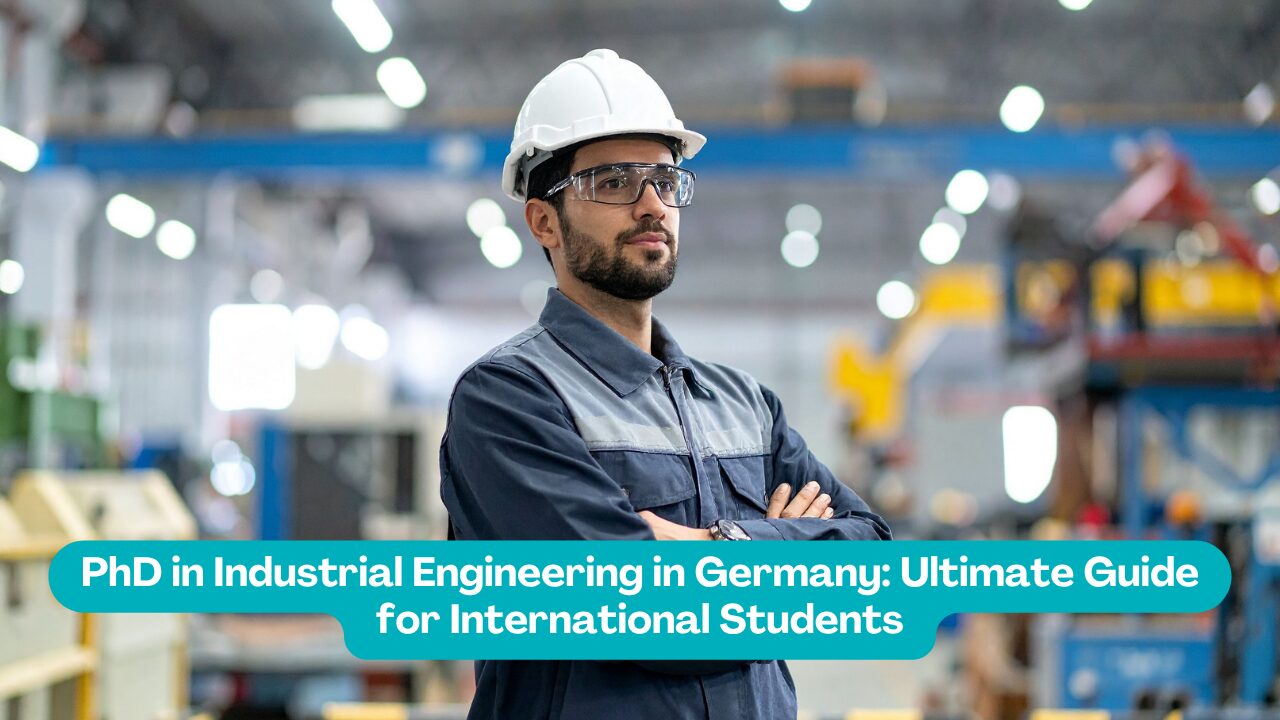
Table of Contents
- Top universities offering a PhD in Industrial Engineering in Germany
- Eligibility criteria for international students pursuing a PhD in Industrial Engineering
- Application deadlines and process for PhD in Industrial Engineering programs
- Required documents for PhD admission in Industrial Engineering in Germany
- English language proficiency tests accepted for PhD in Industrial Engineering
- Scholarship opportunities for a PhD in Industrial Engineering in Germany
- Visa requirements for international PhD students in Industrial Engineering
- Duration and structure of PhD programs in Industrial Engineering
- Research areas in Industrial Engineering PhD in Germany
- Career prospects after a PhD in Industrial Engineering from Germany
- Cost of living for PhD students in Germany studying Industrial Engineering
- FAQs on PhD in Industrial Engineering in Germany
- Conclusion
Germany stands as one of the world’s top destinations for international doctoral students, offering outstanding research infrastructure, generous funding opportunities, and a robust industrial base that connects academic research with real-world applications. If you’re considering a PhD in Industrial Engineering in Germany, you’re exploring a pathway that combines world-class research facilities, minimal financial burden, and exceptional career prospects across both academia and industry.
As a CEO and admissions expert with over 15 years of experience guiding ambitious students toward global success, I’ve witnessed how Germany’s research-driven universities transform doctoral candidates into industry leaders and academic pioneers. This comprehensive guide demystifies every critical step—from university selection and funding strategies to visa procedures and career trajectories—so you can approach your PhD in Industrial Engineering in Germany journey with clarity, strategic insight, and unwavering confidence.
“Germany is one of the world’s top destinations for international doctoral students, offering outstanding research infrastructure, generous funding, and a strong industrial base.” – DAAD
Table of Contents
- Top universities offering a PhD in Industrial Engineering in Germany
- Eligibility criteria for international students pursuing a PhD in Industrial Engineering
- Application deadlines and process for PhD in Industrial Engineering programs
- Required documents for PhD admission in Industrial Engineering in Germany
- English language proficiency tests accepted for PhD in Industrial Engineering
- Scholarship opportunities for a PhD in Industrial Engineering in Germany
- Visa requirements for international PhD students in Industrial Engineering
- Duration and structure of PhD programs in Industrial Engineering
- Research areas in Industrial Engineering PhD in Germany
- Career prospects after a PhD in Industrial Engineering from Germany
- Cost of living for PhD students in Germany studying Industrial Engineering
- FAQs on PhD in Industrial Engineering in Germany
Top universities offering a PhD in Industrial Engineering in Germany
Germany’s technical universities consistently rank among the world’s finest research institutions, distinguished by their exceptional research output and deep industry partnerships. When pursuing a PhD in Industrial Engineering in Germany, you gain access to facilities and networks that few destinations can match.
Leading institutions include:
- Technical University of Munich (TUM):Europe’s premier technical university with cutting-edge industrial engineering research
- RWTH Aachen University:Renowned for its strong industry collaborations and manufacturing excellence
- Karlsruhe Institute of Technology (KIT):Distinguished by interdisciplinary research and innovation ecosystems
- Technical University of Berlin:Located in Germany’s startup capital with vibrant research communities
- University of Stuttgart:Known for automotive and manufacturing research leadership
- TU Dresden:Offers exceptional facilities in eastern Germany with growing industry partnerships
These universities provide more than just academic credentials. They offer access to state-of-the-art laboratories, collaboration opportunities with major German industries like automotive and manufacturing giants, and integration with prestigious research institutes, including Fraunhofer and Max Planck. This ecosystem approach dramatically enhances both academic quality and career prospects.
Explore comprehensive program details at Study-in-Germany.de.
Eligibility criteria for international students pursuing a PhD in Industrial Engineering
Understanding eligibility requirements represents your essential foundation for successful doctoral applications. While specific criteria vary between institutions, most programs follow consistent frameworks that reward academic excellence and research potential.
Standard eligibility benchmarks:
- Relevant master’s degree (or equivalent) in industrial engineering, mechanical engineering, operations research, or closely related disciplines
- Strong academic performance, typically a minimum GPA of 2.5 on the German grading scale or equivalent
- Demonstrated research experience through publications, master’s thesis, or substantive internships
- English or German language proficiency meeting program-specific requirements
- Well-defined research proposal aligned with the potential supervisor’s research interests and departmental strengths
Many doctoral programs in Germany operate on research-based models requiring direct supervisor contact before formal application. Some universities may consider exceptional bachelor’s degree holders for structured doctoral programs, though this remains less common.
The quality of your research proposal and alignment with departmental expertise often prove more critical than meeting minimum numerical requirements alone.
Application deadlines and process for PhD in Industrial Engineering programs
Unlike standardized master’s admissions, doctoral applications in Germany follow more flexible yet varied timelines depending on program structure and university policies.
Timeline framework:
- Individual Doctorate:No fixed university-wide deadlines. You can apply year-round after securing a supervisor’s agreement to supervise your research.
- Structured PhD Programs:Cohort-based programs with specific deadlines, typically December–March for October intake (winter semester). Select programs offer summer intake with corresponding earlier deadlines
Strategic application workflow:
- Identify research areas matching your interests and career goals
- Research potential supervisors and their recent publications
- Develop a comprehensive research proposal demonstrating feasibility and significance
- Submit applications through university portals or uni-assist when required
- Participate in interviews, either online or in-person, to discuss the research vision
- Receive a formal admission letter (Zulassungsbescheid) confirming your position
Success demands proactive outreach to potential supervisors months before intended start dates. Strong applications demonstrate not just academic capability but genuine passion for specific research questions.
For expert guidance on timeline management and application strategy, explore admission counseling for doctoral programs offering personalized support throughout the entire process.
Required documents for PhD admission in Industrial Engineering in Germany
Comprehensive documentation demonstrates your qualifications, research capabilities, and genuine commitment to doctoral study. Missing or incomplete documents frequently delay or derail otherwise strong applications.
Essential application components:
- Complete academic transcripts and degree certificates, officially translated into English or German
- Professional Curriculum Vitae highlighting research experience, publications, and relevant achievements
- Compelling Statement of Purpose or Motivation Letter explaining research interests and career vision
- Detailed research proposal outlining objectives, methodology, expected contributions, and timeline
- Proof of English or German proficiency meeting program requirements
- Letters of Recommendation, usually 2-3 from academic referees who can speak to your research potential
- Valid passport copy
Some programs request additional materials, including evidence of prior research experience, published papers, or conference presentations. These supplementary materials significantly strengthen competitive applications.
Always verify specific requirements through official university websites or DAAD to ensure complete, accurate submissions.
English language proficiency tests accepted for PhD in Industrial Engineering
Most doctoral programs at leading technical universities conduct research and instruction in English, making language proficiency requirements straightforward for international applicants.
Accepted proficiency examinations:
- IELTS:Usually minimum 6.5 overall, with some competitive programs requiring 7.0
- TOEFL iBT:Minimum 90–100, depending on university and program selectivity
- Cambridge English:C1 Advanced or above,e demonstrating academic-level competency
Many universities waive language requirements if your previous degree (bachelor’s or master’s) was completed entirely in English at a recognized institution. Documentation from your previous university confirming English as the medium of instruction typically suffices.
For programs conducted in German, TestDaF or DSH certification becomes necessary instead. However, the majority of PhD programs in Industrial Engineering in Germany at top technical universities operate in English, maximizing accessibility for international candidates.
Always verify specific language requirements for your target programs, as thresholds occasionally vary between departments within the same university.
Scholarship opportunities for a PhD in Industrial Engineering in Germany
Germany provides exceptionally generous funding for doctoral candidates, making pursuing a PhD in Industrial Engineering in Germany financially viable for talented students regardless of background.
Major funding sources:
- DAAD Scholarships:Comprehensive funding packages including monthly stipends, travel allowances, and health insurance coverage for international students
- Research Grants:Funded through German Research Foundation (DFG), industry partnerships, or specific project allocations
- Graduate School Fellowships:Many structured doctoral programs offer full scholarship packages covering living expenses and research costs
- Teaching and Research Assistantships:Paid positions within your department providing both income and valuable professional experience
Most scholarships operate on merit-based selection criteria. Strong academic records, compelling research proposals, and clear alignment with departmental priorities dramatically improve funding prospects.
Funding applications often require separate submissions with earlier deadlines than general admissions. Plan strategically to maximize opportunities across multiple funding streams.
Learn more at DAAD’s Funding Database for comprehensive scholarship listings and application guidance.
Visa requirements for international PhD students in Industrial Engineering
International students must secure appropriate German visas before commencing doctoral studies. Understanding requirements and timelines prevents last-minute complications that delay your program start.
Essential visa requirements for a PhD in Industrial Engineering in Germany:
- Official admission letter from a recognized German university
- Proof of financial resources, minimum €11,208 annually deposited in a blocked account
- Mandatory health insurance meeting German regulatory requirements
- Valid passport with sufficient remaining validity
- Completed visa application forms and biometric photographs meeting specifications
Visa processing typically requires 6–12 weeks, though timelines vary significantly by country and local embassy workload. Indian and Southeast Asian students should initiate applications well in advance, particularly during peak processing seasons.
Some doctoral candidates qualify for research visas rather than student visas, depending on employment status and funding arrangements. Consult your local German consulate or Study-in-Germany.de for country-specific guidance and updated requirements.
Duration and structure of PhD programs in Industrial Engineering
German doctoral programs offer flexibility in structure while maintaining rigorous academic standards. Understanding different pathways helps you select the model best matching your learning preferences and career objectives.
Typical duration: 3–4 years full-time, though individual circumstances may extend timelines slightly
Two primary structural models:
- Individual Doctorate:You work independently under one primary supervisor, focusing on your chosen research topic with maximum flexibility. This traditional model remains popular among international students seeking autonomy.
- Structured Doctoral Programs:Cohort-based approach incorporating interdisciplinary coursework, regular seminars, and supervisory committees providing collaborative guidance. Ideal for candidates seeking structured support and peer communities
Both pathways culminate in dissertation completion and oral defense (Rigorosum or Disputation) before examination committees. German doctoral degrees enjoy exceptional global recognition, opening doors across academia, industry, and consulting worldwide.
The choice between individual and structured programs depends on your work style, research topic, and career aspirations. Neither proves inherently superior—success depends on alignment with your preferences.
Research areas in Industrial Engineering PhD in Germany
German universities cover exceptionally broad research spectrums within industrial engineering, driven by industry needs and technological evolution. Understanding trending research areas helps align your interests with departmental strengths.
High-impact research domains for a PhD in Industrial Engineering in Germany:
- Operations research and mathematical optimization techniques
- Supply chain management and logistics systems
- Smart manufacturing and Industry 4.0 integration
- Human factors engineering and workplace ergonomics
- Sustainable production systems and circular economy models
- Data analytics and artificial intelligence applications in industrial processes
- Quality management and process optimization
Collaboration with industry giants, including Siemens, Bosch, BMW, and Volkswagen,n remains common, ensuring your research addresses real-world challenges with immediate practical applications. This industry integration significantly enhances employability and career trajectory following degree completion.
Research topics increasingly emphasize sustainability, digitalization, and human-centered design—reflecting broader societal priorities and industry transformation.
Career prospects after a PhD in Industrial Engineering from Germany
Completing a PhD in Industrial Engineering in Germany delivers exceptional return on investment across multiple career pathways. The combination of prestigious credentials, industry connections, and European location creates unmatched opportunities.
Primary career trajectories:
- Academic Careers:Postdoctoral research positions, teaching roles, and tenure-track faculty appointments in Germany or internationally
- Industry R&D:Leadership roles in manufacturing, automotive, logistics, consulting, or technology sectors
- High Demand:Germany’s persistent skills shortage means doctoral graduates remain highly sought after, with starting salaries ranging from €55,000 to €75,000 annually
- Permanent Residency:Eligibility after 2–3 years of skilled employment, providing long-term settlement pathways
Germany’s robust economy and European Union mobility transform your doctorate into a launchpad for truly global careers. Many graduates establish themselves across European markets while maintaining flexibility to pursue opportunities worldwide.
The combination of technical expertise, research credentials, and German industry exposure positions you exceptionally well for senior leadership roles that might otherwise require decades of progressive experience.
Cost of living for PhD students in Germany studying Industrial Engineering
While most doctoral programs at public universities charge zero tuition fees, understanding living costs ensures realistic financial planning throughout your multi-year commitment.
Monthly expense framework:
- General living expenses:€900–€1,200 covering housing, food, transportation, and personal costs
- Semester fees:€100–€350 per semester, covering public transport passes and administrative costs
- Health insurance:Approximately €120 monthly for mandatory coverage
Geographic location significantly impacts costs. Cities like Munich and Stuttgart command higher rents and living expenses, while eastern German cities, including Dresden and Leipzig,g offer substantially more affordable options without compromising academic quality.
Many doctoral candidates supplement funding through scholarships, part-time employment, or departmental assistantships. The combination of zero tuition and available funding makes pursuing a PhD in Industrial Engineering in Germany remarkably affordable compared to doctoral programs in North America or other Western European countries.
FAQs on PhD in Industrial Engineering in Germany
- Can I apply for a PhD in Industrial Engineering in Germany with a 3-year bachelor’s degree?
Generally, relevant master’s degrees are required. However, some structured doctoral programs may consider exceptional bachelor’s graduates. Always verify specific university requirements directly.
- Are there English-taught PhD programs in Industrial Engineering in Germany?
Yes. Most leading technical universities offer English-conducted doctoral programs, particularly in STEM disciplines. Verify the language of instruction before applying.
- Is it possible to work part-time during my PhD in Germany?
Yes. International doctoral students can work up to 120 full days or 240 half days annually, or serve as research and teaching assistants in addition to doctoral research.
- What is the acceptance rate for a PhD in Industrial Engineering in Germany?
Acceptance rates vary significantly by university and supervisor. Competition remains strong. Well-matched research proposals, excellent academic records, and relevant experience improve acceptance probability substantially.
- Do I need to find a supervisor before applying?
For individual doctorate routes, yes—supervisor agreement proves essential. Structured programs may allow application first, with subsequent supervisor matching post-admission.
- How do I secure funding for my PhD in Germany?
Apply for DAAD scholarships, university fellowships, or departmental research projects. Funding remains competitive and merit-based, rewarding strong proposals and academic achievement.
- What are the post-study work options after completing a PhD in Industrial Engineering in Germany?
Apply for an 18-month job-seeker visa and, upon securing skilled employment, transition to EU Blue Card or Permanent Residency pathways.
- Can I bring my family with me during my PhD in Germany?
Yes. Doctoral visa holders can bring dependents. Spouses may work without restrictions, and children can attend local schools.
Conclusion
Pursuing a PhD in Industrial Engineering in Germany represents far more than an academic credential—it’s a transformative investment in your intellectual growth, professional capabilities, and long-term career trajectory. From world-class research infrastructure and generous funding opportunities to exceptional industry partnerships and clear pathways toward European settlement, Germany delivers unmatched value for ambitious doctoral candidates worldwide. Success requires careful strategic planning—identifying universities and supervisors whose research aligns with your passions, crafting compelling proposals that demonstrate both feasibility and significance, and leveraging available scholarships to fund your journey. With methodical preparation and a clear understanding of application requirements, visa procedures, and career prospects outlined in this guide, you can maximize your return on investment while launching a genuinely global career. At Galvanize, our mission centers on empowering students with clarity, actionable strategies, and expert guidance for every critical step along their educational journey toward international success.
Get expert, ROI-driven guidance for your PhD in Industrial Engineering in Germany admission journey and position yourself competitively at top research universities today.