Top 10 Universities in Germany for Masters: Complete Guide for Indian Students 2026

Table of Contents
- Why Choose Germany for Masters Studies
- Technical University of Munich (TUM): Programs & Admission Requirements
- Ludwig Maximilians University Munich (LMU): Research Excellence & Specializations
- Heidelberg University: Life Sciences & Humanities Programs
- RWTH Aachen University: Engineering & Technology Focus
- Karlsruhe Institute of Technology (KIT): Innovation & Industry Connections
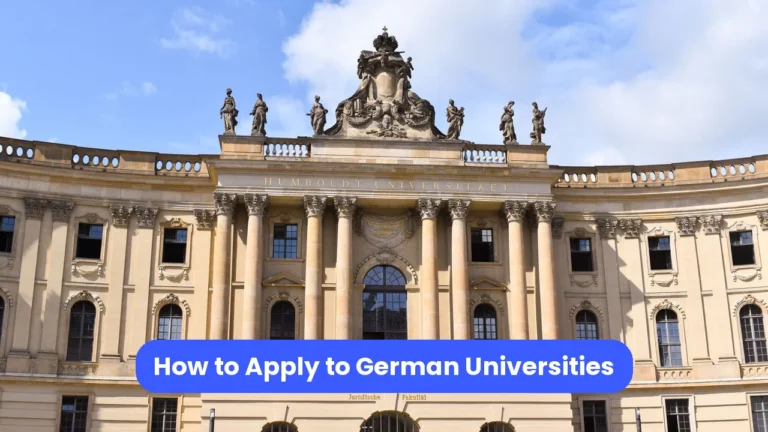
- Humboldt University Berlin: Social Sciences & Interdisciplinary Studies
- Freie Universität Berlin: International Programs & Campus Life
- University of Stuttgart: Applied Sciences & Career Prospects
- TU Dresden & University of Bonn: Emerging Excellence
- Admission Process: APS Certification & Document Requirements for Indian Students
Germany hosts over 450,000 international students, making it one of the world’s most sought-after destinations for higher education. For Indian students pursuing a master’s degree, the appeal is clear: tuition-free education at globally ranked institutions, English-taught programs, and an 18-month post-study work visa that opens doors across Europe. If you’re looking at the top 10 universities in Germany for masters, you’re already on the path to a smart investment in your future. In this guide, I’ll break down the universities, admission strategies, and career outcomes that matter most for Indian students in 2026.
Table of Contents
Why Choose Germany for Masters Studies
Technical University of Munich (TUM): Programs & Admission Requirements
Ludwig Maximilians University Munich (LMU): Research Excellence & Specializations
Heidelberg University: Life Sciences & Humanities Programs
RWTH Aachen University: Engineering & Technology Focus
Karlsruhe Institute of Technology (KIT): Innovation & Industry Connections
Humboldt University Berlin: Social Sciences & Interdisciplinary Studies
Freie Universität Berlin: International Programs & Campus Life
University of Stuttgart: Applied Sciences & Career Prospects
TU Dresden & University of Bonn: Emerging Excellence
Admission Process: APS Certification & Document Requirements for Indian Students
Frequently Asked Questions
Conclusion
Why Choose Germany for Masters Studies
Germany has built a reputation as an innovation hub with a unique academic model. Most public universities charge zero or minimal tuition fees, even for international students. That’s not a marketing line—it’s policy. Students pay a nominal semester contribution of around €250 to €350, and that’s it.
Beyond affordability, Germany offers over 1,500 English-taught master’s programs, making it accessible for Indian students who may not speak German. After graduation, you get an 18-month job search visa to explore career options. With strong industry ties in automotive, engineering, IT, and life sciences, graduates from these universities often step into roles with starting salaries ranging from €45,000 to €60,000 annually.
The ROI is undeniable. A master’s from one of the leading German universities can open doors not just in Germany, but across the EU and globally. If you’re serious about maximizing your investment, explore tailored support through masters admission counselling service.
Technical University of Munich (TUM): Programs & Admission Requirements
TUM consistently ranks among the best technical universities in Europe. It’s a powerhouse for STEM disciplines, with flagship programs in Mechanical Engineering, Computer Science, Data Science, and Sustainable Resource Management.
Admission isn’t easy. You’ll need a bachelor’s degree in a relevant field, a strong academic record—typically 75 to 80 percent or higher—and proof of English proficiency through IELTS or TOEFL. Some programs also require GRE scores. But if you meet the bar, you’ll gain access to industry partnerships with BMW, Siemens, and SAP, which translates to internships, research opportunities, and job placements.
TUM’s global reputation makes it a top choice for Indian students targeting high-impact careers in technology and engineering.
Ludwig Maximilians University Munich (LMU): Research Excellence & Specializations
LMU is one of Germany’s oldest and most prestigious universities. It excels in research-driven programs across Physics, Economics, Life Sciences, Psychology, and Law.
What sets LMU apart is its collaboration with Max Planck Institutes, giving students direct access to cutting-edge research projects. Many programs are offered in English, though some require German proficiency. Admission criteria include a strong bachelor’s degree and a well-crafted motivation letter.
Located in Munich—a global tech and finance hub—LMU offers more than just academics. The city itself is a launchpad for careers in innovation and business.
Heidelberg University: Life Sciences & Humanities Programs
Heidelberg University is Germany’s oldest university, and it wears its history well. It’s a leader in life sciences, medicine, and humanities, with top master’s programs in Molecular Biosciences, American Studies, Economics, and Medical Informatics.
Over 20 percent of Heidelberg’s student body is international, creating a diverse and intellectually stimulating environment. The university is known for interdisciplinary research, which means you’ll often find yourself working across departments and disciplines.
Admission is competitive. You’ll need a strong GPA, a compelling motivation letter, and subject-specific qualifications. But for students who want a blend of tradition and innovation, Heidelberg is hard to beat.
RWTH Aachen University: Engineering & Technology Focus
If engineering is your calling, RWTH Aachen should be on your radar. It’s a technical powerhouse with specializations in Mechanical Engineering, Automotive Engineering, Electrical Engineering, and Computer Science.
RWTH has deep industry connections. German automotive and manufacturing giants regularly recruit from this university, and the internship and placement support is exceptional. Admission requires a bachelor’s degree in STEM, above-average grades, and English proficiency.
For students targeting high-ROI careers in engineering, RWTH Aachen is one of the smartest choices among German universities.
Ready to explore your best-fit programs and build a winning application? Connect with an admissions expert and start planning your journey today.
Karlsruhe Institute of Technology (KIT): Innovation & Industry Connections
KIT is where innovation meets application. It’s particularly strong in Informatics, Renewable Energy Engineering, and Materials Science.
The university has robust research internship programs and direct project collaborations with leading tech firms. If you want hands-on, industry-aligned education, KIT delivers. Admission requirements include a bachelor’s degree in a related field, strong academic performance, and language proficiency in English or German.
KIT’s focus on practical, real-world problem-solving makes it a strategic destination for students who want their education to translate directly into career impact.
Humboldt University Berlin: Social Sciences & Interdisciplinary Studies
Humboldt University is a leader in social sciences, humanities, and interdisciplinary studies. Popular master’s programs include Economics, Social Sciences, Global History, and Philosophy.
Being located in Berlin is a major advantage. The city is Europe’s startup and cultural capital, offering networking opportunities, internships, and a vibrant international community. Admission requires academic transcripts and proof of language proficiency, either in English or German.
If you’re looking for a university that combines academic rigor with cultural richness, Humboldt is an excellent choice.
Freie Universität Berlin: International Programs & Campus Life
Freie Universität (FU) Berlin is known for its international outlook and flexible master’s programs. Highlights include Data Science, Environmental Policy, International Relations, and Biochemistry.
FU has over 100 partnerships worldwide, making it one of the most globally connected universities in Germany. Many programs are taught in English, which is a major draw for international students. Admission requires a bachelor’s degree, a strong statement of purpose, and language scores.
The holistic education model at FU encourages students to think critically, collaborate across borders, and approach problems from multiple angles.
University of Stuttgart: Applied Sciences & Career Prospects
The University of Stuttgart excels in applied sciences, engineering, and architecture. Notable programs include Automotive Engineering, Aerospace Engineering, and Environmental Engineering.
Stuttgart has a strong placement record, especially in Germany’s automotive and engineering sectors. If you want a practical, career-oriented master’s program, this university delivers. Admission requires a bachelor’s degree with good grades and proficiency in English or German.
For students who prioritize employability and industry readiness, Stuttgart is a solid choice.
TU Dresden & University of Bonn: Emerging Excellence
Both TU Dresden and the University of Bonn are rising stars in Germany’s academic landscape.
TU Dresden is a member of the TU9 alliance, which represents Germany’s top technical universities. It offers strong programs in Mechanical Engineering, Electrical Engineering, and Computer Science.
The University of Bonn is renowned for Mathematics, Economics, Neurosciences, and Agricultural Sciences. It has strong research funding and an international faculty, making it a dynamic place to pursue a master’s degree.
Admissions are competitive, but the outcomes are rewarding. Both universities offer excellent pathways for students seeking high-quality education and career growth.
Admission Process: APS Certification & Document Requirements for Indian Students
Applying to German universities requires strategic planning and attention to detail. Here’s the step-by-step process for Indian students:
Start by shortlisting universities and programs using the DAAD and uni-assist portals. These platforms provide comprehensive information on courses, eligibility, and application deadlines.
APS certification is mandatory for Indian students. This process verifies your academic credentials and is a prerequisite for most German universities since 2022. It helps ensure transparency and speeds up visa processing.
Your document checklist should include bachelor’s degree transcripts, your APS certificate, English or German language scores such as IELTS, TOEFL, or TestDaF, a statement of purpose, CV, letters of recommendation, passport, and passport-size photos.
Application deadlines typically fall between November and January for the summer intake, and May to July for the winter intake. Once you receive your admission, you can proceed with your German student visa application.
The process can be overwhelming, especially if you’re managing it alongside final-year exams or work commitments. For end-to-end support, leverage expert admission counselling to stay on track and submit a strong application.
Frequently Asked Questions
What are the tuition fees for international students at the top 10 universities in Germany for masters?
Most public universities in Germany charge no tuition fees for international students. You’ll pay a nominal semester contribution of around €250 to €350, which covers administrative costs and sometimes public transport. Private universities may charge higher fees.
Are English-taught master’s programs widely available in Germany?
Yes. Germany offers over 1,500 master’s programs in English, making it highly accessible for Indian and international students who may not speak German.
What is the ROI of studying at the top 10 universities in Germany for masters?
Graduates from these universities typically earn starting salaries between €45,000 and €60,000 per year, especially in STEM and business fields. The combination of low tuition and strong earning potential makes the ROI highly favorable.
How important is language proficiency for admission?
For English-taught programs, you’ll need IELTS scores of 6.5 to 7.0 or equivalent TOEFL scores. Some programs may require German proficiency, especially for certain specializations. Tests like TestDaF or DSH are used to assess German language skills.
What is APS certification and why is it mandatory for Indian students?
APS certification verifies the authenticity of your Indian academic credentials. It’s been mandatory for most German universities since 2022 and helps streamline the visa process.
Can students work part-time during their master’s in Germany?
Yes. International students can work up to 120 full days or 240 half-days per year. This helps cover living costs and provides valuable work experience.
How competitive is admission to the top 10 universities in Germany for masters?
Admission is highly competitive. You’ll need strong academics, relevant projects, and a compelling statement of purpose. Early preparation and strategic planning significantly improve your chances.
What are the post-study work and PR opportunities in Germany?
After graduation, you receive an 18-month job search visa. Once employed in your field, you can apply for an EU Blue Card or permanent residency after a few years.
Conclusion
Also useful for Germany applicants:
Choosing the top 10 universities in Germany for masters is more than an academic decision—it’s a strategic investment in your future. With world-class education, minimal tuition fees, strong career outcomes, and pathways to permanent residency, German universities offer Indian students an unmatched opportunity to build global careers. However, the application process is competitive and detailed. It requires strategic planning, timely documentation, and often, expert guidance to navigate successfully.
From APS certification to crafting a compelling statement of purpose, every step matters. The good news is that you don’t have to do it alone. With the right support, you can build a strong application, meet all deadlines, and position yourself as a top candidate at your dream university. Ready to take the next step? Get personalized, ROI-focused support for your German master’s journey. Book your strategy session with a Galvanize admissions expert now and turn your ambitions into admissions.