Master’s in Industrial Engineering in Germany: Courses, Careers, and Blue Card Pathways

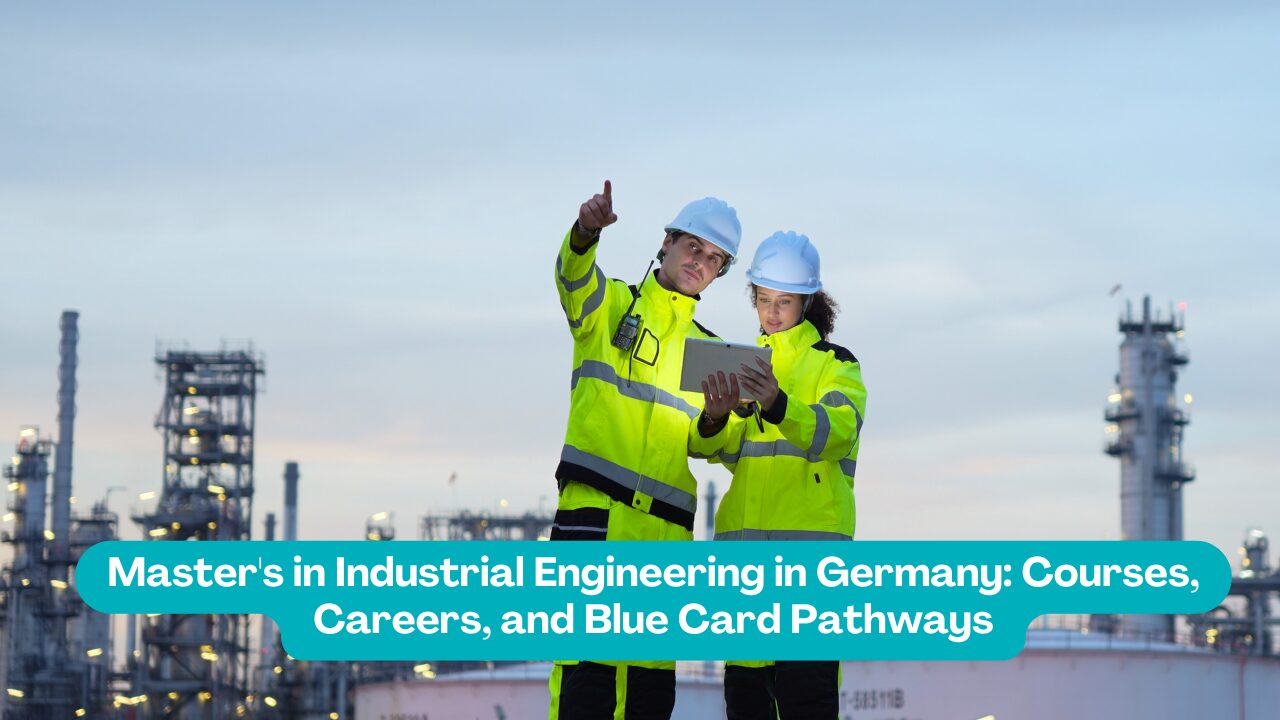
Table of Contents
- What it’s called in Germany: Wirtschaftsingenieurwesen, and how it differs from Anglosphere “IE” programs
- English-taught vs German-taught routes: language requirements and study pathways for international students
- Picking the right institution: research universities vs universities of applied sciences (FH) for IE outcomes
- Applications for India-based students: timelines, documents, and DAAD guidance touchpoints
- Funding your degree: DAAD options, EPOS tracks, and where scholarships fit your plan
- Inside the curriculum: operations, supply chain, analytics, and management integration (program example)
- Practical training: internships, labs, and industry collaboration expectations in IE programs
- Job market signals: where roles are posted and what employers emphasize for IE grads
- Visa pathways decoded: Opportunity Card, work visa for professionals, and EU Blue Card for engineers
- Qualification recognition and the “recognition partnership” under the Skilled Immigration Act
- FAQs
- Conclusion
Considering a Master’s in Industrial Engineering in Germany as your launchpad to a future-proof, globally recognized career? You’re in the right place. With Germany’s world-class education, nearly zero tuition, and industry-aligned curriculum, it’s no surprise that more students are targeting a Master’s in Germany for their next big leap. Germany is one of the world’s top destinations for international students, offering innovative programs and outstanding career prospects, according to the German Academic Exchange Service (DAAD).
Below, we’ll break down everything you need: from course structures and language routes, to applications, scholarships, industry connections, and the EU Blue Card pathway—so you can build your strategy with clarity and confidence.
Table of Contents
- What it’s called in Germany: Wirtschaftsingenieurwesen, and how it differs from Anglosphere “IE” programs
- English-taught vs German-taught routes: language requirements and study pathways for international students
- Picking the right institution: research universities vs universities of applied sciences (FH) for IE outcomes
- Applications for India-based students: timelines, documents, and DAAD guidance touchpoints
- Funding your degree: DAAD options, EPOS tracks, and where scholarships fit your plan
- Inside the curriculum: operations, supply chain, analytics, and management integration (program example)
- Practical training: internships, labs, and industry collaboration expectations in IE programs
- Job market signals: where roles are posted and what employers emphasize for IE grads
- Visa pathways decoded: Opportunity Card, work visa for professionals, and EU Blue Card for engineers
- Qualification recognition and the “recognition partnership” under the Skilled Immigration Act
What it’s called in Germany: Wirtschaftsingenieurwesen, and how it differs from Anglosphere “IE” programs
In Germany, a Master’s in Industrial Engineering translates to Wirtschaftsingenieurwesen. Unlike traditional “Industrial Engineering” programs in the UK or US, Wirtschaftsingenieurwesen fuses engineering, business, and management, focusing on the intersection of technology and economics. Graduates become versatile professionals, equipped to optimize industrial processes, manage projects, and drive digital transformation across German and EU industries.
Why this matters:
- Degree title may differ (e.g., MSc in Wirtschaftsingenieurwesen, MSc in Industrial Engineering & Management).
- Curriculum leans towards integration of management and technical skills.
- Recognized by employers across Germany and Europe.
This holistic approach is a key advantage of a Master’s in Germany—and a reason why German-trained engineers are in demand globally.
English-taught vs German-taught routes: language requirements and study pathways for international students
Germany offers both English-taught and German-taught programs for a Master’s in Industrial Engineering. Your choice impacts not just your studies but also your career trajectory in Germany.
English-taught programs:
- Ideal for international students.
- IELTS/TOEFL required (typical IELTS minimum: 6.5; check university sites).
- Over 70 options across public universities (see the DAAD website).
German-taught programs:
- Require B2/C1 proficiency in German (TestDaF, DSH, or Goethe Zertifikat).
- Broader selection and deeper industry immersion.
Tip: If you’re serious about post-study work, investing in German language skills—even if you study in English—will multiply your job prospects and integration.
Picking the right institution: research universities vs universities of applied sciences (FH) for IE outcomes
Germany’s higher education system comprises:
- Research universities (Universitäten): Focus on theoretical foundations, research, and academic careers. Offer MSc programs with strong analytical depth.
- Universities of Applied Sciences (Fachhochschulen, FH): Practice-oriented, industry-collaborative, internships are integral. Often called “Industrial Engineering & Management.”
Which is better for you?
- If you want a PhD or R&D, pick a research university.
- If your goal is industry, quick employment, and practical exposure, FH is ideal.
Both routes are valued in the German job market. Check Uni-Assist to compare accredited programs for your Master’s in Germany plans.
Applications for India-based students: timelines, documents, and DAAD guidance touchpoints
For Indian (and other international) students, the Master’s in Industrial Engineering in Germany admissions process is structured but competitive.
Key steps:
- Application portals: Many universities use Uni-Assist; some have direct applications.
- Intakes: Winter (October) is the main intake; summer (April) is limited.
- Deadlines: Usually December–March for October intake; always check university sites.
- Documents:
- Bachelor’s degree (preferably in engineering, science, or business)
- Transcripts (with GPA conversion)
- English/German test scores
- CV, SOP, Letters of Recommendation
- Passport, passport photo
- DAAD support: Use DAAD tools for program search and application checklists.
Want personalized support? The Galvanize masters admission team can walk you through each step.
Funding your degree: DAAD options, EPOS tracks, and where scholarships fit your plan
One of the biggest advantages of a Master’s in Germany is affordability—public universities typically charge no or minimal tuition, even for international students.
Funding options:
- DAAD Scholarships: For select programs, a monthly stipend plus travel.
- EPOS (Development-Related Postgraduate Courses): Special DAAD scholarships for professionals from developing countries.
- Erasmus+ and university scholarships: Targeted, competitive.
- Living costs: Budget €900–€1,200/month (housing, food, insurance).
Tip: Early applications improve scholarship chances. Use the DAAD scholarship database and consider part-time jobs (up to 120 full days per year allowed on a student visa).
Inside the curriculum: operations, supply chain, analytics, and management integration (program example)
A typical Master’s in Industrial Engineering in Germany covers:
- Operations management
- Supply chain and logistics
- Industrial data analytics
- Production planning
- Project and quality management
- Finance and business strategy
- Digital transformation in manufacturing
Example: TU Berlin’s “Industrial Engineering and Management” integrates factory simulation labs, SAP workshops, and real-world case studies. Students learn to bridge technical and managerial functions—a hallmark of top Master’s in Germany programs.
Practical training: internships, labs, and industry collaboration expectations in IE programs
German universities emphasize hands-on experience:
- Internships (Praxissemester): Often mandatory, 3–6 months in global companies (Siemens, BMW, Bosch, etc.).
- Labs: Robotics, process simulation, automation.
- Thesis projects: Frequently co-supervised by industry partners.
This practical edge means Master’s in Industrial Engineering in Germany graduates are job-ready and have direct access to the hidden job market. Employers value this alignment—a major ROI factor for pursuing your Master’s in Germany.
Job market signals: where roles are posted and what employers emphasize for IE grads
Where to find jobs:
- University career centers
- Portals: StepStone, LinkedIn Germany, Indeed.de
- Company websites and direct applications
What employers want:
- Technical know-how and interdisciplinary skills
- Communication in English (and ideally German)
- Experience via internships or thesis work
Starting salaries for IE grads range from €48,000–€62,000 per year (higher with German skills and internships). Germany’s industrial sector is robust, making a Master’s in Germany especially attractive for long-term growth.
Visa pathways decoded: Opportunity Card, work visa for professionals, and EU Blue Card for engineers
Germany’s migration framework is designed to attract talent:
- 18-month post-study job search visa: After your Master’s in Industrial Engineering in Germany, you can stay to find work.
- Opportunity Card: New points-based system (from 2024) for job seekers.
- EU Blue Card: For highly skilled professionals—salary threshold around €45,300 per year (as of 2024). Grants fast-track PR and EU mobility.
Pro tip: Most IE grads easily cross Blue Card thresholds. For tailored advice, check out the Galvanize master’s admission service.
Qualification recognition and the “recognition partnership” under the Skilled Immigration Act
To work in regulated professions (or for a visa/PR), your degree may need recognition via the Anabin database or Recognition in Germany. The new “recognition partnership” scheme simplifies this process: you can start working while your degree is being recognized, under certain conditions (as of 2024).
Summary: Opting for a Master’s in Germany future-proofs your career—and the recognition process is now easier for international graduates.
FAQs
- Is a Master’s in Industrial Engineering in Germany taught in English?
Yes, many public and private universities offer English-taught IE programs. However, learning German is highly recommended for career and social integration. Check the DAAD website for program lists. - What are the admission requirements for international students?
A recognized Bachelor’s degree (preferably in engineering, science, or business), proof of language proficiency (IELTS/TOEFL or TestDaF/DSH), transcripts, CV, SOP, and recommendation letters. Some programs may have GRE requirements. - Are there tuition fees for a Master’s in Germany?
Most public universities charge no tuition or a nominal semester fee (€250–€350 per semester). Living costs are extra. Some private universities do charge tuition. - Can I work while studying?
Yes, international students can work up to 120 full days (or 240 half days) per year. Internships integrated into your study program do not count toward this limit. - What are the job prospects after graduation?
Excellent—Germany’s industry needs engineers. Most graduates find jobs in manufacturing, consulting, logistics, or tech. Speaking German increases your options and salary. - How does the EU Blue Card work?
The Blue Card is a residence permit for highly skilled professionals. With a relevant job and salary above the threshold, you get fast-track PR and the right to work across the EU. - Is recognition of my Indian engineering degree needed?
For most IE jobs, German master’s degrees are directly recognized. For some regulated professions, or for PR, degree recognition may be required. The new Skilled Immigration Act has made this easier. - How can Galvanize help me with a Master’s in Germany admissions?
TheGalvanize masters admissionexperts provide end-to-end counseling: program shortlisting, SOP/LOR editing, visa prep, and interview coaching—maximizing your admission and scholarship chances.
Conclusion
A Master’s in Industrial Engineering in Germany is more than a degree—it’s a career accelerator, a ticket to the EU job market, and a smart investment for ambitious students from India, Southeast Asia, the Middle East, and Africa. By choosing the right program, planning your application, and leveraging scholarships, you can maximize ROI and unlock Blue Card and PR pathways.
Also useful for Germany applicants:
Ready to make your global education dreams a reality? Get expert guidance for your Master’s in Germany application.