Germany’s Growing IT Sector: Why Tech Students Are Looking Beyond Silicon Valley

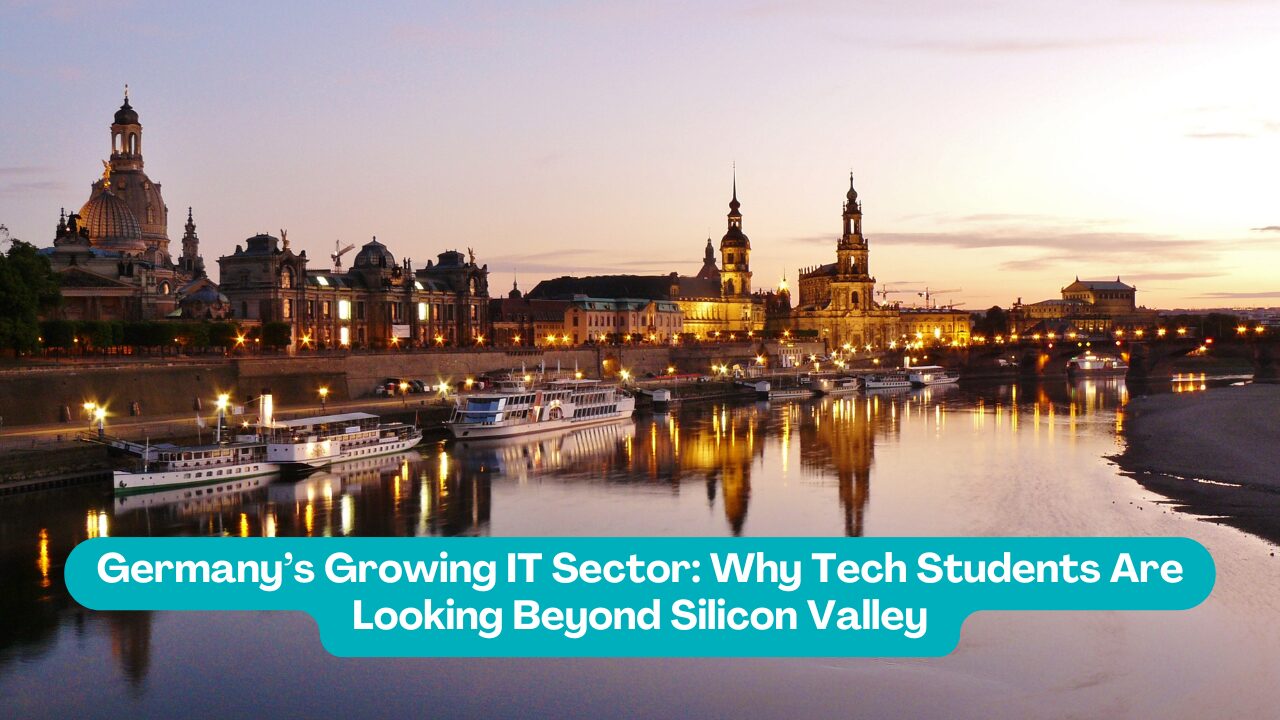
Table of Contents
- Why is Germany’s IT Sector Expanding Rapidly?
- Top Tech Hubs Attracting Students in Germany
- Advantages for Tech Students Studying in Germany
- High-Demand IT Jobs Available for Graduates in Germany
- Work-Life Balance Benefits Over the US Tech Industry
- Study and Work Visa Options for International Tech Students
- Leading German Universities for IT and Computer Science
- Salary Expectations for Entry-Level IT Roles in Germany
- Future Growth Projections for Germany’s Tech Industry
- FAQs about Germany’s Growing IT Sector
- Conclusion
As Germany’s growing IT Sector powers Europe’s largest tech industry, digital jobs are set to surge by 12% by 2026. Ambitious students worldwide now eye this hub over Silicon Valley’s intensity. Picture vibrant cities buzzing with startups, cutting-edge labs, and policies that fuel innovation.
I’m Ram Srinivasan, CEO at Galvanize and an admissions expert with over a decade of experience guiding students to global tech wins. Germany blends top universities, a startup boom, and smart strategies—perfect for your career leap. In this guide, uncover why it’s the savvy pick and how to seize these chances.
“Germany’s tech industry is now Europe’s largest, with digital jobs projected to grow by 12% by 2026.” – Statista (link)
Table of Contents
- Why is Germany’s IT sector expanding rapidly?
- Top tech hubs attracting students in Germany
- Advantages for tech students studying in Germany
- High-demand IT jobs are available for graduates in Germany
- Work-life balance benefits in the US tech industry
- Study and work visa options for international tech students
- Leading German universities for IT and computer science
- Salary expectations for entry-level IT roles in Germany
- Future growth projections for Germany’s tech industry
- FAQs about Germany’s growing IT sector
Why is Germany’s IT Sector Expanding Rapidly?
Germany’s growing IT Sector thrives on smart investments, a powerhouse SME network called Mittelstand, and fresh talent streams. The nation’s digital push targets EU leadership by 2025. Tech leaders like SAP and Siemens, plus startups, tap R&D grants and tight university-industry bonds.
Key drivers include:
- €3 billion yearly government spend on digital shifts (BMWi).
- Digital economy at 4.7% of GDP (Destatis).
- Booming need for software engineers, cybersecurity pros, and data scientists.
This surge opens doors for students chasing Europe’s tech heartbeat. Dive deeper at DAAD.
Top Tech Hubs Attracting Students in Germany
Tech students flock to Germany’s lively hubs, each pulsing with distinct vibes and chances.
- Berlin: Startup haven with 2,500+ ventures, labs, and stars like N26, Delivery Hero.
- Munich: AI and deep tech base for Microsoft Germany, Google, and BMW.
- Frankfurt: Fintech, blockchain epicenter, and data hub.
- Hamburg & Stuttgart: Logistics, mobility, Industry 4.0 leaders.
Germany’s growing IT Sector turns these spots into study-work magnets. Universities link directly to firms, easing internships and jobs.
Advantages for Tech Students Studying in Germany
Germany redefines tech learning with standout perks.
What makes it special?
- Low or No Tuition: Public universities keep fees tiny for all.
- English-taught Master’s & Bachelor’s: Scores of IT paths for internationals.
- World-class infrastructure: Top labs, research, industry tie-ins.
- Inclusive work culture: Diverse teams, flat structures, great mentors.
Studying in Germany’s growing IT Sector delivers huge ROI—elite training, low debt, and worldwide paths. Check programs at study-in-germany.de.
High-Demand IT Jobs Available for Graduates in Germany
Germany battles a massive IT skills crunch. Bitkom notes over 137,000 open roles in 2023. Hot positions:
- Software Developer/Engineer
- Data Scientist & Analyst
- Cybersecurity Specialist
- Cloud Architect
- AI & Machine Learning Engineer
- IT Project Manager
Graduates shine in Germany’s growing IT Sector. Firms sponsor visas and full-time gigs for internationals.
Launch your career now—tap into Germany’s growing IT Sector with tailored admission support (link).
Work-Life Balance Benefits Over the US Tech Industry
Swap US grind for Germany’s chill vibe in tech.
Standouts:
- 35–40-hour workweeks.
- 20+ paid leave days yearly.
- Rare, paid overtime.
- Robust rights, family aid.
This setup boosts wellness and joy. Germany’s Growing IT Sector crafts sustainable paths beyond Silicon Valley burnout.
Study and Work Visa Options for International Tech Students
Germany rolls out the welcome mat.
Options:
- Student Visa: Full study plus 120 full/240 half work days yearly.
- Post-Study Job Seeker Visa: 18 months post-grad to land IT roles.
- Blue Card EU: Quick residency for skilled pros with offers.
Ease into Germany’s Growing IT Sector—study, intern, thrive. Get app help at uni-assist.de or our expert counseling for Germany’s growing IT Sector.
Leading German Universities for IT and Computer Science
Europe’s IT elite call Germany home:
- Technical University of Munich (TUM)
- RWTH Aachen University
- Karlsruhe Institute of Technology (KIT)
- University of Stuttgart
- TU Berlin
- LMU Munich
These powerhouses connect deeply to Germany’s growing IT Sector via internships, research, and placements. Competition bites—plan ahead. See reqs at DAAD.
Salary Expectations for Entry-Level IT Roles in Germany
Germany’s Growing IT Sector pays well from day one:
| Job Title | Entry-Level Salary (EUR/year) |
| Software Engineer | €48,000 – €60,000 |
| Data Scientist | €50,000 – €65,000 |
| Cybersecurity Analyst | €45,000 – €58,000 |
| IT Project Manager | €52,000 – €70,000 |
Add insurance, pensions, and relocation perks. Pair with cheap tuition for top ROI.
Future Growth Projections for Germany’s Tech Industry
Germany’s Growing IT Sector accelerates:
- Digital economy hits €200 billion by 2025 (Bitkom).
- Focus: AI, cybersecurity, cloud.
- “Digital Strategy 2025” targets 500,000 new jobs.
Students gain lasting demand and residency routes.
FAQs about Germany’s Growing IT Sector
Q1: Is knowledge of the German language mandatory for IT studies?
A: No, many Master’s run in English. Basics aid internships, jobs, and life in
Germany’s growing IT Sector.
Q2: Can I work part-time as a student in Germany?
A: Yes, up to 120 full/240 half days, often tech gigs.
Q3: What are the main tech skills in demand in Germany?
A: Software dev, cloud, data science, cybersecurity, AI in
Germany’s Growing IT Sector.
Q4: Are internships mandatory in German IT degrees?
A: Often required or pushed, building real skills, networks.
Q5: How competitive is the admission process?
A: Selective at the top, but strong profiles win—boost with
expert support for Germany’s growing IT Sector.
Q6: What is the cost of living for students in Germany?
A: €850–€1,100/month, with housing deals and discounts.
Q7: Can I stay in Germany after graduation?
A: Yes—18-month seeker visa leads to
Germany’s growing IT Sectorroles.
Q8: How does Germany compare to the US for tech careers?
A: Cheaper study, solid pay, balance, residency ease beats US highs.
Conclusion
Germany’s growing IT Sector reshapes tech dreams with affordable elite education, balanced work-life, and booming jobs. From Berlin’s startup energy to Munich’s AI frontiers, it draws students seeking sustainable success over Valley hustle. Low costs, English programs, visa ease, and fat salaries create an unbeatable ROI—your global edge awaits.
Think ahead: clarity and guidance turn plans into reality. Whether chasing software roles or AI breakthroughs, Germany positions you for Europe’s tech lead and beyond.
Ready to dive into Germany’s growing IT Sector? Secure your tech future with Galvanize’s expert master’s admission counseling—start winning applications today.